



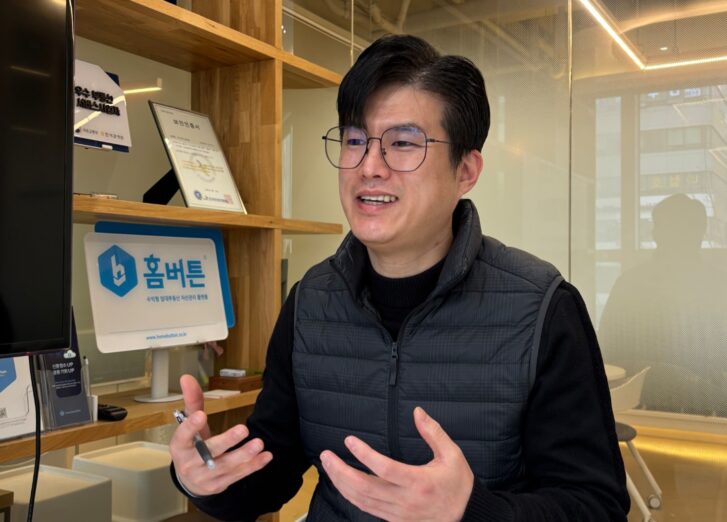
"Through SI planning and shopping mall operations, I learned that the success or failure of a service hinges on how structurally it resolves recurring field problems."
Kim Tae-i, CEO of Rentflow, comes from a developer background and has experienced two previous business failures.
The business idea stemmed from the inconveniences he experienced firsthand while living as a tenant. Even with monthly rent payments, billing, deposit confirmation, documentation, and settlement relied on manual labor, leading to repeated mistakes and misunderstandings. He saw the essence of rental management not as "real estate," but as "trust in cash flow and settlement." He developed a fintech-based solution that automates everything from billing and collection to settlement and remittance into a single workflow.
Last November, a performance-sharing agreement was signed with Anyang Urban Development Corporation. CEO Kim Tae-i viewed this as "beyond the simple introduction of a system and the beginning of a shift in how public rental management operates to digital standards." Actual implementation is scheduled for February or March of this year.
Public rental housing is a crucial area of housing welfare administration. If collection and settlement processes are erratic, complaints and disputes will increase, and the burden on staff will structurally increase. "We will automate the collection confirmation and settlement process using data to increase work efficiency and improve tenants' access to payment information and convenience. During the introduction phase, we designed performance indicators based on actual operational indicators to ensure that the changes are not merely tangible."
The biggest barrier to entry for public institutions was security. Rentflow was the first in the rental management sector to receive CSAP SaaS certification. "This means we objectively met the standards required by the public sector. During the certification process, we comprehensively reorganized our system structure and operating system, which reduced the burden of internal review and audits for public institutions."
CSAP has become a "common language" that increases the likelihood of adoption. "In a reality where each agency requires a complex review process, CSAP is a key foundation for Rentflow to become a "scalable service" beyond a "service that can be adopted" in the public market."
CEO Kim explained the true nature of fintech technology in detail. "The most common problem in rental management isn't the deposit itself, but rather the confirmation and settlement of the deposit. If it's unclear who paid how much, when, and under what contract, repeated phone calls and messages are required to confirm receipt. This process shakes trust, leading to disputes."
He viewed this not as "real estate management," but as "uncertainty in financial flows." "We designed the structure to be controllable from start to finish, rather than simply recording receipts."
In particular, he emphasized that the virtual account infrastructure, jointly developed with a financial institution, is the only one of its kind in Korea. "This technology is not simply a linkage, but was developed jointly to achieve the stability and consistency of payments required in a real-world operating environment. Currently, a patent has been registered, and it serves as the most solid foundation for Rentflow's automated payment competitiveness."
In the field, variables constantly arise, such as the billing amount and deposit amount being different, the depositor's name changing, or only a portion of the amount being paid in installments.
"In these situations, to prevent accidents caused by arbitrary remittances, we designed the system to suspend or block deposits that don't comply with the rules, and to allow operators to verify them. Features like automatic renewal of late fees aren't just conveniences; they're operational devices that make cash flow predictable."
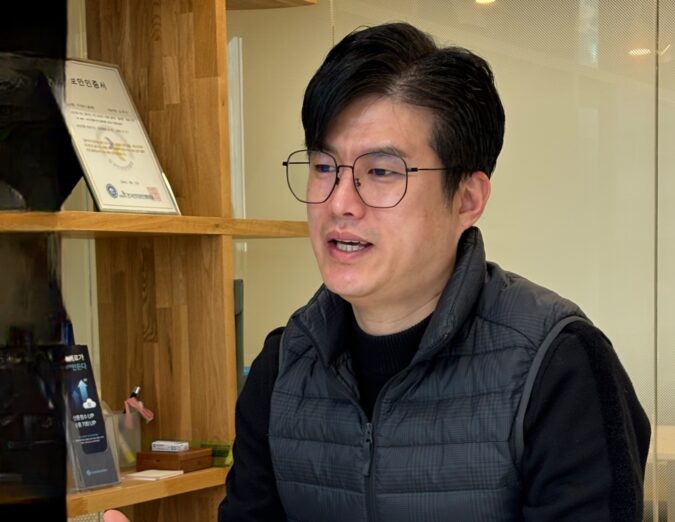
We're also working on the "Credit+" project, which combines social value and finance. "I believe rent payments can become not just a simple expense, but a valuable financial indicator of a healthy lifestyle. Many renters consistently pay a set amount each month, but their records don't build financial trust, leaving them excluded from credit benefits and financial opportunities."
We're currently discussing technology development with NICE Information Services and have filed a patent. "We're not just exploring ideas; we're examining what structure is needed to connect actual data in a way that makes sense from a credit rating perspective. In the long term, our goal is for tenant payment data to be recognized as 'trustworthy financial behavior data.'"
What makes Rentflow more than just a software company is its business process outsourcing (BPO) center. CEO Kim likened it to Tesla's field-driven drive system (FSD). "Just as Tesla strengthens its autonomous driving competitiveness based on its overwhelming driving data, our BPO center is the fastest and most comprehensive way for Rentflow to acquire field operation data."
Tens of thousands of billing and payment data items are generated every month, along with actual operational variables. The exceptional situations that arise during this process become a key ingredient in creating product competitiveness. "This type of data is called 'edge data.' It's not a typical case, but rather 'an atypical situation that inevitably arises in the field.' It's difficult to fully imagine and implement these cases with standard development skills alone."
Professional managers observe issues from the closest possible distance to customers, structure them, and communicate them to the development team so they can understand them accurately. "As this accumulation is repeated, rent flow becomes more robust, and automation evolves to better reflect reality. This is a competitive advantage that is difficult to match."
Market expansion is also taking shape. Beyond residential accommodations, the company is expanding into the market for lifestyle accommodations and hotel consignment operations. "The core problem with consignment operations for lodging and hotels isn't the settlement itself, but the fact that communication after settlement becomes virtually impossible. Operators must pay monthly dividends to multiple tenants and explain the basis for calculations. Since each room owner is an independent stakeholder, they must provide the same level of transparency and a convincing basis for their calculations to dozens or even hundreds of individuals."
The brand name was also changed from Home Button to Rentflow. "While the familiarity of Home Button was a strength, it often suffered from the market's perception of it as a 'small property management program.' Our goal was not simply to be a management program, but a real estate finance SaaS platform that stabilizes cash flow in our customers' rental operations, which is why we rebranded."
CEO Kim sees the core of the market as a structural shift, with rentals rapidly shifting from jeonse (long-term deposits) to monthly rents. "This shift means an explosive increase in rental transaction volumes. Fintech infrastructure that reliably handles this transaction flow will inevitably become the centerpiece of the rental management industry."
He sees the greatest market potential in the fintech sector, while simultaneously pursuing a strategy to rapidly enter the public sector and expand sales. "Once all of this is accumulated as data, expanding into an AI company is less of a challenge than you might think. We're already accumulating pattern data on receipts, settlements, complaints, and operations occurring on-site. Building an LLM-based rental management infrastructure based on this data will enable customers to work more productively and generate more revenue."
Finally, I asked him about his vision. "Data doesn't lie. Most conflicts in the rental market aren't caused by emotions, but by a lack of standards to verify the facts."
What CEO Kim ultimately wanted to create was clear.
"We want to create an environment where information is more transparently disclosed in the real estate community market, and that information becomes the foundation for more efficient asset management. Our goal is to become a company that builds trust through data, so that landlords and tenants don't have to fight unnecessarily, and operators and managers don't have to be unnecessarily exhausted."
You must be logged in to post a comment.