



The biggest enemy in the real estate market is distrust. Online information often differs from reality, and rent collection and overdue management rely on human intuition and manual ledgers.
Donggeodongrak only lists properties that have passed its own inspection criteria and been personally inspected. Data from its approximately 70 branches in Seoul shows that 99% of all contracts are concluded through Donggeodongrak's own website, not through other real estate brokerage platforms. This isn't simply due to extensive advertising. It stems from the consistency of the information posted online with the actual properties, and the trustworthiness of its operations.
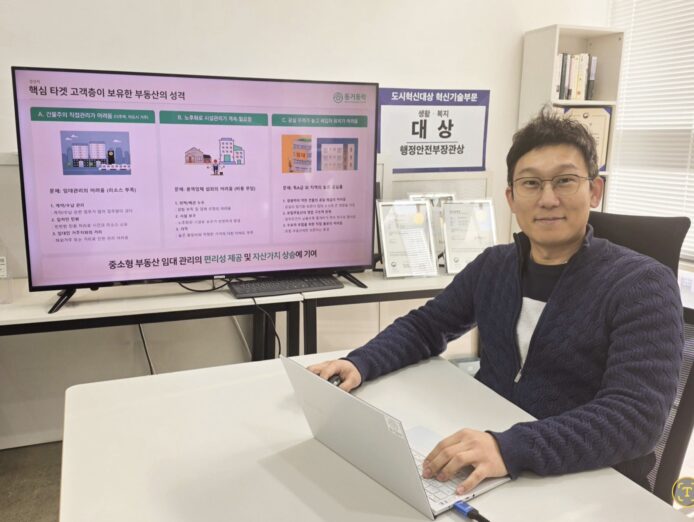
Jeongwon Jun, CEO of Donggeodongrak, is a former member of Timon's first generation. As the organization grew and underwent investments and M&As, he witnessed firsthand how everything needed to be redesigned to fit the growth stage—from customer service methods to internal decision-making structures and systems for maintaining operational quality. This experience naturally led him to found his own business.
In 2010, we launched our first service, the space reservation platform "Pinspot," which later led to an M&A. By allowing hourly reservations for spaces like party rooms and studios, we experienced the essence of O2O, connecting online demand with offline demand.
"The structure was designed to reduce information asymmetry for users and monetize idle time for space providers. Through this process, I experienced firsthand how connecting spaces with technology could improve the user experience, and this became the starting point for my continued interest in the space business."
However, the structural limitations of the platform business were evident. While the simple brokerage model required continuous marketing costs and investment for growth, entities that actually occupied and operated the space enjoyed relatively stable cash flows.
He explained, “In the sharing economy trend, I decided that co-living, which goes beyond simple brokerage and takes responsibility for operations, is the way to solve the problem.”
Housing is not a simple transaction, but an operational industry that combines stability, trust, and management. Given the significant inefficiencies in the existing market, we believe there is significant room for innovation.
"I was convinced that if we applied the UX-centric thinking we learned in e-commerce and the operational optimization know-how we acquired in O2O to the most conservative real estate market, we could create real change in the housing sector, which is the slowest to innovate among all three."
In the early days of our company, we dedicated ourselves to directly operating our own sharehouses, driven by a mission to address the poor living conditions faced by young single-person households. Our goal was to create a "standard housing experience" through sharehouses that emphasized cost-effectiveness and community. In doing so, we standardized all aspects of our operations, including interior design standards, cleaning and inspection methods, complaint handling, and contract and settlement processes. However, as we began operating, we realized that our limitations were clear.
"No matter how well we did, there was a limit to the number of rooms we could manage directly, and there were far more small landlords in the market than we were. These landlords, too, relied on human intuition and manual ledgers for repetitive tasks like managing vacancy and tenants, collecting and managing unpaid rent."
Given the scale of the problem, simply operating more homes directly wasn't enough. He reflected, "I decided that disseminating effective operational practices into a system would be the foundation for growth."
The current direction is clear. If direct operation was the stage for establishing a "quality standard," the platform model is the stage for "disseminating" that standard across the entire market.
"Rather than simply a portal for listing properties, we aim to create an ecosystem that connects everything from marketing to reduce vacancy rates, to occupancy conversion, contract management, and automated rental management, all in one stream."
The advertising structure of existing major platforms is often based on a fixed-term, prepaid basis. For those promoting vacant properties, upfront payment is required regardless of contract performance. Furthermore, for fast-moving small housing options like studio apartments, co-living units, and goshiwon (goshiwon), advertising periods are often short, making fixed-term plans structurally unsuitable.
CEO Jeong Won-jun also repeatedly encountered the problem of advertising spending not necessarily being proportional to the speed at which vacancy fills while executing advertising. He confessed, "The fundamental problem was a conflict between the platform's structure of receiving advertising fees for a long time and the operator's goal of quickly filling vacant spaces."
Therefore, "Promote Vacancy" is designed with a cost-per-action (CPA) model. It offers free exposure until inquiries begin, and costs are only incurred when actual inquiries occur, reducing the risk for operators.
“We believed that we should be a ‘solution to reduce vacancy’ rather than a ‘platform that sells advertisements.’”
In terms of matching logic, Donggeodongrak offers a search experience optimized for small and medium-sized housing, such as studio apartments, co-living units, and goshiwon (gosiwon). Based on years of accumulated user traffic for the 2030 target market, it provides more detailed information on the criteria that influence actual choices in small housing, transparently disclosing whether the property is currently vacant and, if not, when it will be available for occupancy.
Data from approximately 70 Donggeodongrak locations in Seoul show that 99% of all contracts were concluded through Donggeodongrak's own website, not through other brokerage platforms. This demonstrates that users entering the platform are not simply browsing, but rather "highly engaged users" with a specific and immediate intention to move in.
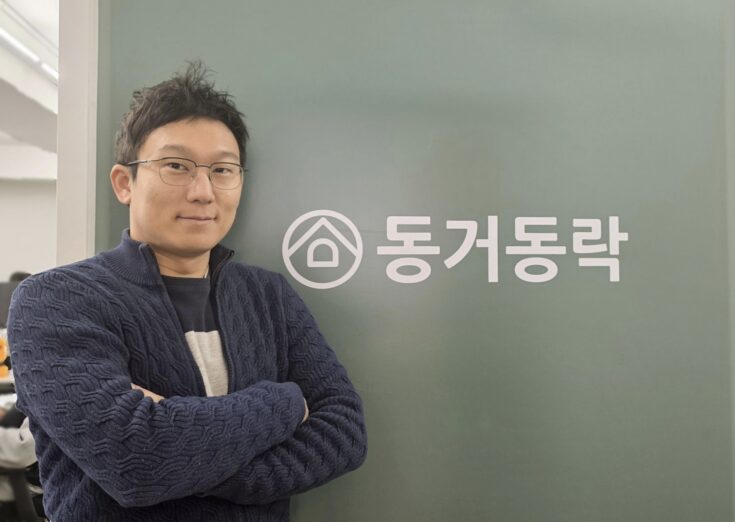
Behind this lies "operational trust." In the online real estate market, users often experience discrepancies between online information and reality. Therefore, we prioritize transparent disclosure of key information, such as move-in dates, options, and management fees, to ensure "the information you see matches the actual experience."
Much of the rental market still relies on Excel or manual ledgers. Manually handling repetitive tasks like confirming monthly rent deposits, managing outstanding payments, and managing contracts increases the risk of errors and time, ultimately leading to poor management quality.
"So, what we valued most wasn't 'a lot of features,' but 'easy for anyone to use.' Complex settings and difficult terminology can be particularly challenging for older landlords."
The UI/UX was designed to be as simple as possible and as automated as possible. For example, the required actions for landlords were reduced to a minimum, such as "register-confirm-take action," and monthly status information was displayed directly on a single screen. He explained, "The key is to reduce repetitive tasks and provide clear notifications and actions only when necessary."
Donggeodongrak is a first-generation, largest, and longest-running brand in the domestic sharehouse industry. The secret to its unwavering growth, even amidst the unprecedented crisis of the pandemic, lies in its uncompromising, standardized operational processes.
He said, "People often worry that strict quality standards will slow down business expansion, but my experience on the ground has proven the opposite. Consistent quality is not a stumbling block to expansion, but rather the most solid stepping stone." Giving tenants the confidence that "Cohabitation is a surefire way to succeed" will lead to high renewal rates and referrals.
"High occupant satisfaction naturally reduces vacancy rates. And with no vacancies, marketing costs for finding new tenants are dramatically reduced, further improving profitability."
The accumulated investment of 1.7 billion won has laid a crucial foundation for Donggeodongrak to grow beyond a simple operator into a technology platform. Particularly during the pandemic, when shared housing companies were facing challenges across the board, the company chose to prioritize operational and systemic improvements over short-term external growth or expansion.
Going forward, One Family will leverage the operational data it has accumulated over the years as its core competitive edge, evolving into a platform that dominates the domestic small and medium-sized rental management market by enhancing AI-based property recommendations and regional supply and demand analysis. Finally, I asked about his vision. CEO Jeong Won-jun's goal was clear.
"For landlords, it's the most efficient option to reduce vacancy and management burden. For tenants, it's a brand that sets a standard for trust and confidence. I believe this isn't simply about brand recognition; it's about trust proven through operational results and data."
You must be logged in to post a comment.