



President Lee Jae-myung declared at his 2026 New Year's press conference that he would usher in an era of startup and venture boom, stating, "We must swiftly transition from a job-centered society to one centered on entrepreneurship." He pointed to startups and ventures as a solution to both resolving the K-shaped growth structure and addressing youth and regional imbalances, and announced a policy shift to support entrepreneurship from the initial idea stage.
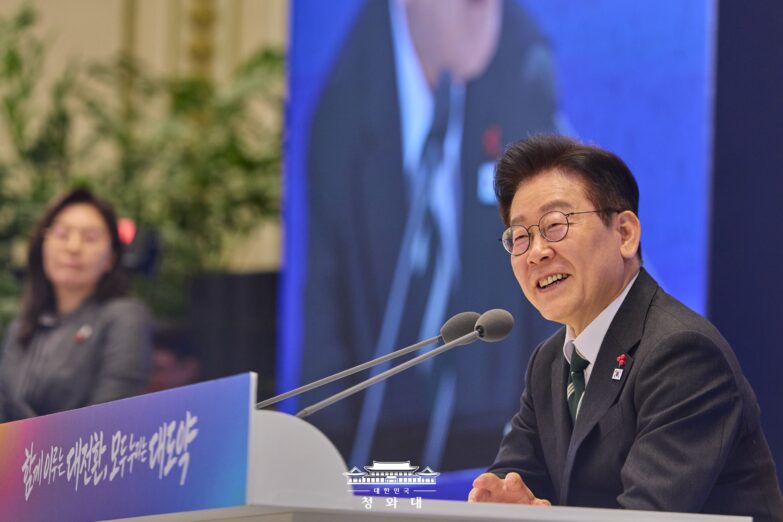
At the 2026 New Year's press conference held at the Blue House State Guest House on the 21st, President Lee declared, "We will overcome the K-shaped growth pattern, where one side grows while the other stagnates, by achieving growth for all, sharing both opportunities and rewards equally." He emphasized, "The key to solving this critical challenge is startups and venture companies that will create new growth engines through continuous innovation."
He stated that Korean companies have the capability to sweep innovation awards on global stages like the Consumer Electronics Show (CES), and added, "We will gradually unveil specific policies that will create an era of startup and venture fever so that young entrepreneurs and businesspeople can freely take on challenges and pioneer innovative paths." He also envisioned that, just as the venture boom under the Kim Dae-jung administration led to Korea's leap to become an IT powerhouse, this startup fever will become a structural turning point that will transform the very constitution of the Korean economy.
The president specifically criticized the existing support system, stating, "Until now, we've only supported startups in the 'up' phase after they've established themselves." He continued, "From now on, we will support startups from the very beginning, from the idea stage," declaring a shift in support cycle, encompassing discovery, incubation, and investment.
The startup policy is also directly linked to the challenges of job creation, youth development, and regional balance. President Lee stated, "The entrepreneurship and startup boom is both a job creation and youth strategy," and added, "We will foster local startups leveraging regional culture and resources as a balanced development strategy, and tech startups as a national growth strategy." To achieve this, he added, the government will focus its capabilities on the local startup ecosystem and nurturing future talent.
The Ministry of SMEs and Startups' recently released 2026 business report also supports this trend. The ministry, with its vision of restoring the growth ladder for SMEs, venture capitalists, and small businesses, presented a plan to provide KRW 1.6 trillion in government seed funds, targeting the expansion of regional startup hub cities and the creation of a KRW 40 trillion venture investment era. With support for idea-level startups and the fostering of local and tech startups emerging as common keywords between the Blue House and the ministry, the key question is how bold deregulation and capital supply will be in the actual implementation phase.
Meanwhile, the startup industry welcomed the promise of a more entrepreneurial-centered society, but expressed concern that institutional improvements that can be felt on the ground in the ecosystem are crucial. Concerns are also being raised that the boom could be a fleeting event unless a tax, financial, and regulatory environment that tolerates early-stage failures is followed by the establishment of local startup infrastructure to mitigate the concentration of startups in the metropolitan area.
You must be logged in to post a comment.