



-Insulation, fire resistance, and air quality combined into one building material
– Opening up markets with "technology already in use" rather than "technology that needs to be explained" through public demonstration and procurement structures.
Redefining eco-friendliness as a 'long-lasting structure' rather than a cost or campaign.
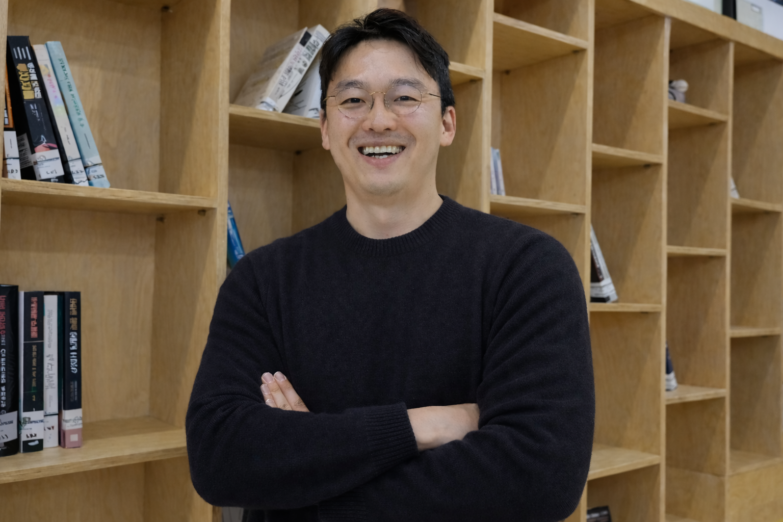
Oh Ju-myeong, CEO of JH Global, vividly remembers a time when fine dust warnings were a daily occurrence, forcing him to keep his windows closed and keep his children out. Environmental issues, like so often the case, begin in the everyday lives of individuals. For many years, he served as the head of a national research project on fine dust and air pollution, accumulating a wealth of technology and data. However, even after the research concluded, the field remained unchanged.
His decision to start a business wasn't driven by a lack of technology, but rather by a sense of crisis about the way technology remains. It was a fundamental question about the structure in which research results remain confined to the lab, never replicated, and instead end up as pilot projects.
Questions asked before technology , and a change in direction
JH Global's starting point wasn't the so-called "innovative technology." CEO Oh's first question was: Why is air quality improvement technology always limited to outdoor applications? Why are insulation, fire retardancy, and air quality each separated into separate materials and processes? Why is eco-friendly technology always expensive and limited to public demonstrations?
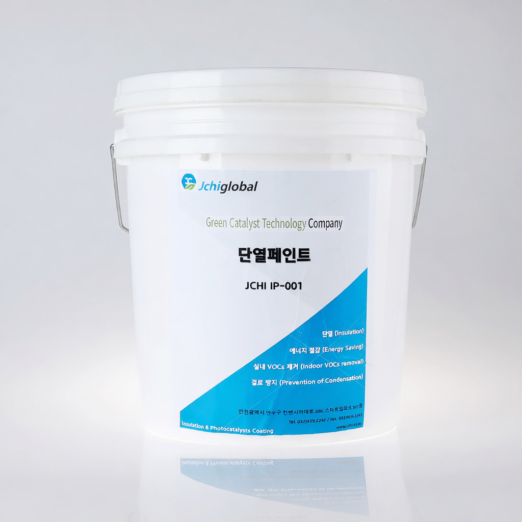
He found the answer to this question not in the development of new technology, but in a shift in application. He took photocatalytic technology, previously used to reduce fine dust, and transferred it to the entirely different field of "building materials." He converted the outdoor-focused technology to indoor applications, implementing it in paint form to combine insulation, fire retardancy, and air quality improvement into a single process. This combination was unprecedented in the market.
"The technology already existed. The question was where and how to use it."
At the time, the industry's response was skeptical. Photocatalysts were widely perceived as requiring sunlight to function, and many criticized the structural limitations of indoor applications. However, CEO Oh viewed this not as a technological limitation, but as a flawed premise. He concluded that if the technology couldn't function indoors, it ultimately couldn't be applied to human life.
After personally visiting researchers across the country, he encountered a patented indoor reaction-based technology held by the Industry-Academic Cooperation Foundation. This led to investments in mass production facilities, repeated testing, and a period of validation, often predicated on failure. CEO Oh describes this period as "a time when we had to persevere before developing the technology."
Prove it on the spot, without explaining
JH Global's strategy was clear: show, not explain. The technology left the lab and headed to traditional market arcades, apartment playgrounds, public parking lots, and construction sites. They tested its effectiveness and collected data in spaces where people actually lived. The question they received from the field was always the same: "So, does it work?"
He didn't leave the field until he could answer this question. The results led to demonstrations at public institutions. Starting with the LH new technology demonstration, it progressed to testing at the Incheon Metropolitan City Corporation and Incheon Port Authority, and finally to the Public Procurement Service's innovative product demonstration. Among the numerous demonstration companies, JH Global was the only one to lead to an actual contract. This was the result of trust built on-site, not technical explanations. Ultimately, the contract with Hyundai Engineering & Construction became a symbolic demonstration of the company's reputation as a "applicable technology."
More important than investment is the ' sales structure '
From the outset of his business, CEO Oh didn't prioritize investment. Instead, he prioritized designing a structure that would actually generate cash flow each year, and he found the answer in public procurement.
"Local governments and public institutions don't experiment. They use products once they've been verified, and once a contract is signed, they pay out immediately."
The Public Procurement Service's designation as an innovative product was a crucial turning point for JH Global. It established a structure that enabled it to simultaneously secure validation, sales, and references. Since then, the company has expanded its innovative products annually, building a stable revenue base. This decision, rather than focusing on a one-off project, created a revenue structure where the same technology is repeatedly applied.
In addition, he chose a non-monopolistic approach. He established a royalty-based revenue structure through more than a dozen technology licensing agreements, and some partners even went so far as to designate them as innovative products.
"We don't have to do everything. If we just set the right standards, the market will grow."
This strategy was more akin to the judgment of an entrepreneur who prioritizes industry structure over short-term performance. As a result, JH Global has reached a stage where it can continue to expand its proven technologies and enhance its products year after year without relying on external investment. This structure also enabled JH Global to expand its proven technologies in the public sector to the private construction and remodeling markets, and to lower the barriers to entry overseas by combining verification and licensing.
"What's more important than the company's growth is whether this method continues to be used. Only then will the technology and the industry survive."
The choice to create a structure where sales come before investments has made JH Global a company that doesn't need to be explained, but rather one already being used and proven in the field. And at this point, CEO Oh's entrepreneurship is moving to the next stage.
In overseas markets, ' verification method ' is considered more important than ' technology ' .
Overseas markets were even more critical. The term "eco-friendly" wasn't persuasive. Instead of explanations, proofs of concept were demanded, and data and empirical results were all that was needed. The empirical experience in Korea was merely a starting point.
After reviewing several countries through KOTRA and government programs, he chose Saudi Arabia and China. His criteria were simple: technological relevance, practical applicability, and the ability to establish a long-term structure. In Saudi Arabia, he built a local network through repeated visits and conducted demonstrations. In China, he established connections with state-owned and publicly listed companies through a startup competition. Rather than focusing on short-term contracts, he focused on creating a structure that could be applied locally.
"The data you accumulate in Korea can serve as your business card. But overseas, you have to start all over again to prove yourself."
For him, going overseas was not an expansion, but another verification process.
Eco-friendliness is not about ' using less ' but about ' using for a long time '
The eco-friendliness CEO Oh speaks of isn't about "using less." It's about "using for a long time." Insulating and flame-retardant paints not only save energy, but also reduce condensation and mold, shortening the need for renovations. This approach goes beyond conserving resources; it changes maintenance costs and the very structure of the budget.
“ESG is a question of quantity. It's a question of how often we repeat things.”
He views eco-friendliness not as a campaign, but as a matter of longevity and structure. He argues that as materials require less frequent replacement and spaces eliminate the need for redevelopment, the environmental burden naturally decreases. This is why JH Global has used living spaces like traditional markets, senior lifelong learning centers, and apartment playgrounds as demonstration sites. Technology only truly becomes meaningful when it operates within people's daily lives.
A market doesn't spontaneously emerge from nowhere. Someone has to stay, create a product, and prove it with a structure. Oh's entrepreneurship isn't a story of technology. It's more a record of a person who persevered and made a decision to create a structure that works. And that record continues to be used in the field today.
You must be logged in to post a comment.