


Have you heard of the dark web? The dark web is a web space inaccessible through standard search engines and accessible only through specialized tools, characterized by a high degree of anonymity. This characteristic fosters widespread illicit transactions. From stolen financial information to the sale and sharing of drugs, illegal pharmaceuticals, and weapons, the dark web also hosts frequent cybercrimes like hacking and ransomware. The thought of my own information being circulated in such a place is terrifying.
Fortunately, there's a company dedicated to monitoring and responding to the dark web: S2W (CEO: Sang-deok Seo). Listed on the KOSDAQ in September 2025, S2W is expanding its business by providing industrial AI solutions. For more information, please refer to the article (Source: Venture Square, June 20, 2025. S2W Expands Data Analysis Technology Accumulated on the Dark Web to Implement Industrial AI )
A company that tracks cybercrime, including drug trafficking, hacking, and ransomware, makes you think of a serious and serious organization. However, S2W is known for its strong organizational culture. Coincidentally, the brand book "Inventing Differently," which contains S2W's corporate philosophy and organizational culture, was recently published, allowing me to indirectly experience S2W's organizational culture.
I contacted S2W's Chief Marketing Officer (CHRO) Lee Ki-wook to discuss S2W's organizational culture.
Me: A book about S2W's organizational culture has just been published. I'd like to learn more about it. Would you be available for an interview?
Executive Director Lee Ki-wook: I'm the "team doctor" for S2W. While I interview managers, coaches, and players, I don't interview team doctors.
Me: We're a KOSDAQ-listed company, and many people are curious about how dark web specialists work. We recently published a book on the subject.
After much persuasion, Executive Director Lee Ki-wook finally agreed to the interview, though he seemed a bit embarrassed. Thank you again.
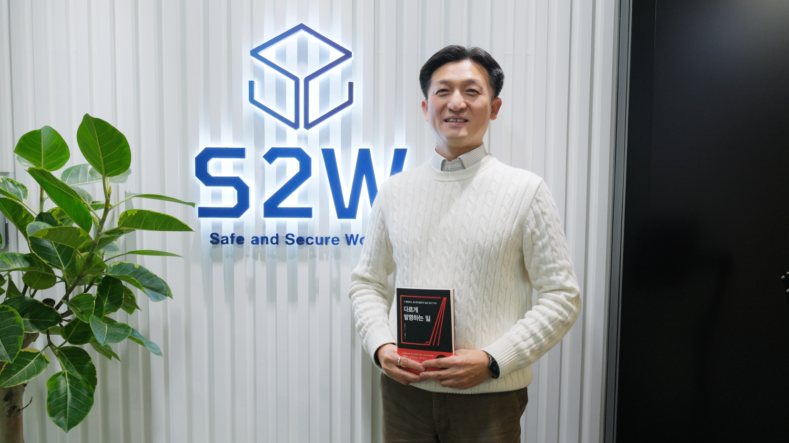
Lee Ki-wook, a 33-year veteran of the company, began his career as an open recruit at Lotte Group in 1994. After starting and failing a venture, he returned to Lotte Group and rose to the position of executive, leading new businesses like Lotte.com and Lops. He chose S2W, saying he wanted to "make something from nothing to something," and he prefers to be called a "team doctor" rather than a "CHRO." I first asked him about the role of team doctor.
Q. You introduced yourself as a team doctor. Could you tell us why you named yourself a team doctor and what your role is ?
"A sports team has a manager, coaches, and players. And at the center of the team is the team doctor. The team doctor handles everything from scouting to medical checks and cultural adaptation. Counseling is also an important role."
When a player collapses during a match, the team doctor is the first to arrive. Even behind the scenes, he constantly monitors the players' physical and mental condition to ensure they remain in peak condition. When recruiting or recruiting players, the team doctor also assesses their medical condition and determines their suitability for the team. Once a player joins the team, the doctor also helps them adjust.
I thought the CHRO position had a lot of authority, as it allowed them to make a lot of decisions about people, but I was impressed that they defined themselves as "a role that supports the team from behind the scenes." I think what's more important than the title is the "perspective" on what the role should be.
Bright energy , safe communication , and mutual growth
S2W is looking for a different kind of person. Someone who shares our mission of "solving the world's problems with technology" and possesses the "bright energy" to carry it out. People with this bright energy believe they can positively change the world.
We also consider it important to have the 'character that allows for safe communication'.
"The important question is, 'Does he have the character to communicate that he's on my side? Is he someone who can accept my failures with me?'"
The final consideration is "mutual growth potential." We prioritize whether talent can thrive within S2W and contribute to its growth. Even if someone possesses excellent qualifications, if both the talent and the organization cannot grow, they can't work together.
To join, candidates must first pass a practical test involving the entire team. As a technology-based company specializing in dark web monitoring, practical skills are naturally crucial. If the candidate passes the practical test, Managing Director Lee Ki-wook assesses whether the candidate is a good cultural fit with S2W. If so, he convenes an HR committee meeting. The HR committee, comprised of the CEO, CTO, and co-founders, unanimously selects the candidate. A unique aspect is that there is no salary negotiation. The candidate sets their own salary, and the company's decision is based solely on whether the candidate can afford it.
Altruism, thinking of us rather than individuals
Q. What kind of people work at S2W ?
"S2W is a truly diverse group of people. We have writers, musical actors, climbers, and scuba divers. Some graduated from the Air Force Academy and now work there, some were police officers, and some were soldiers. It's not just their professions that are diverse; they're all recognized in their respective fields. We believe we're doing what our country needs to do. Like Ohtani and Son Heung-min, they're not only great players, but also have good personalities. They're frugal, helpful, and make people smile. That's the kind of people we have here."
Q. What brought together people from such diverse backgrounds in one place ?
"It's a spirit of altruism, of thinking of 'us' rather than individuals. Our core goal is to create a service that doesn't exist in the world. It's not about making money. My hope is that we don't lose sight of that core value. I hope that those with technical expertise will embrace the desire to contribute to the world, even if only a little."
What the people gathered at S2W have in common isn't skill or ability. It's a desire to "benefit the world," and a selfless spirit that prioritizes the organization's mission over individual success.
“ To achieve the best performance, you must be safe .”
Q. You said that safety is essential for performance . Could you explain what that means ?
"Usually, we think competition is necessary for performance. People work hard in fierce competition. But my experience is the exact opposite. If there's distrust in an organization, performance doesn't happen. That's because in an organization where there's distrust, energy is dissipated. Instead of focusing on the work itself, people spend their energy defending themselves. They're constantly concerned with things like, 'Will that person push me out?', 'What if I make a mistake?', 'Will this be interpreted differently?' On the other hand, a safe organization is different. Because employees don't have to defend themselves, they can pour all their energy into their work. That's true performance. That's why we emphasize 'safety,' and we express this specifically as a relationship of 'on my side.' Having on my side means, 'I'm safe here.'"
Q. The expression ‘ my side ’ is impressive . Could you explain it in more detail ?
"My side offers both encouragement and criticism. But the key here is the intent of the criticism. In a typical organization, a supervisor's criticism is an evaluation. It conveys a judgment: "You can only do this much." Employees feel they're being scolded. They become defensive. However, my side's criticism promotes growth. It's not about scolding, but rather about saying, "You can do more, which is why I'm pointing this out." When that happens, no one misunderstands or interprets what you say, but rather believes it for what it is. That's what "safe communication" is. And this environment allows employees to focus on their work. Because in the presence of someone who doesn't judge them, they become more courageous. They're not afraid of mistakes and are empowered to take on challenges. That leads to true performance."
Safety isn't just about physical security. It also requires the psychological safety fostered through interpersonal relationships. Safe relationships mean trust. Such trust is essential for good performance.
It is also autonomous to determine one's own values.
S2W employees make their own decisions and work independently. Commuting is also flexible.
Q. Do I really have to skip work ?
"Yes, really. Team Leader OO only comes to work three days a week. He focuses on childcare and submits reports at night. I'm not at all interested in how many hours he works during the day. What matters is the 'result'—the report. In other words, what we value is not 'attendance,' but 'performance.'"
Q. You said earlier that you set your own salary . Is that really helpful for the company ?
"In a typical company, HR is given the authority to cut salaries. They believe that a salary cut will benefit the company. But I don't believe that. It's far more effective to pay that amount for better performance than to have employees undervalue themselves. When employees feel valued, they become more engaged in their work. They work harder for a company that believes in them."
Hearing this story made me wonder: If I were to join S2W, what salary should I set? If I set it too low, I'd feel like I'd be undervaluing myself, and if I set it too high, the company would be reluctant to hire me. Even if I earn a high salary, if I can't prove it with subsequent performance, I'd inevitably be labeled a "scam." Ultimately, I've come to the conclusion that a salary commensurate with my value is the most reasonable. So, what should my salary be? I wanted to delve deeper, but with the deadline for this article, my imagination only reached this point.
Q. If a team is to run well without managing anything , it seems like it needs some other foundation ?
"That's right. The foundation is trust. And the staff is much smarter than you might think. But there's a problem. The smarter they are, the more perfectionists they become. They try to win every game. If you try to win every game, you'll get injured and be unavailable for important games. If you try to do everything perfectly, you'll experience tremendous stress. So what we do is simple: We give opportunities to younger players and give the reserve players a chance to experience things. And in the meantime, we give the starters a break. This way, no one in the organization gets tired. It builds resilience, the ability to get back up even if they fall."
In a place where you work long-term, it seems incredibly important to work tirelessly. To achieve this, each member must effectively fulfill their role according to the situation.
Time creates culture
Q. How long did it take to establish a safe and autonomous culture , and what efforts did you make along the way ?
"It took about two years. At first, the staff were really nervous. They kept worrying, 'We can't give them this much autonomy.' But as time went on, they started to see the effects. From that moment on, a fandom was formed. They didn't just follow the system; they believed in and protected the culture itself."
The process by which culture takes root
The process by which a culture takes root is like that of a sports team.
"Our first task was to gather star players. A team starts when you have talented, motivated people. Then, as more players joined, we had to divide up roles. Everyone wants to be the cleanup hitter. But the reality is, you need a cleanup hitter, a pitcher, and a catcher. Conflicts arise during this process. This is where the concept of 'autonomy' really takes hold. No matter how much the company tells you, it's useless. Change begins when employees realize their own roles. When they realize, 'Even if I'm not the cleanup hitter, I can still contribute as a cleanup hitter,' and 'My role is different, but it's also important,' they focus on their own roles. Then, as strong candidates emerge, the team becomes stronger. Starters can trust and work with their juniors, and the substitutes learn naturally through healthy competition. That's why it took two long years."
Many startups are creating programs to internalize their organizational culture. Ultimately, I believe organizational culture is built over time, rather than through systems. Once it becomes a culture, it's maintained, and new people can grow within it.
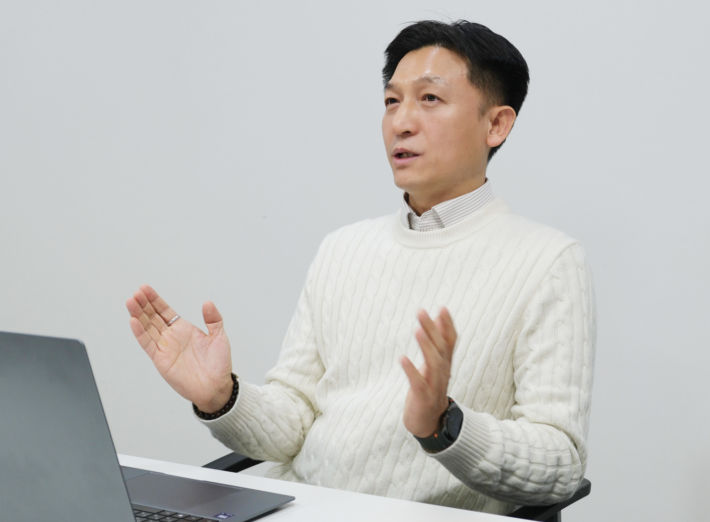
When people feel safe in an organization, they act autonomously. And when they act autonomously, the organization becomes safe. Within this virtuous cycle, S2W continues to quietly grow.
You must be logged in to post a comment.