



“I wanted to completely change the ownership and distribution structure of energy.”
While leading the solar power business team at LG CNS, CEO Ham Il-han witnessed the limitations of large-scale land development projects. Building solar power on bare land, by carving into mountainsides, was plagued by environmental destruction and public acceptance issues, and the lobbying and permitting process seemed like a closed game exclusively for big capital. Following this experience, and having gained experience in platform business at an energy big data startup, CEO Ham Il-han became convinced that the renewable energy market could also be revolutionized through technology, and founded HENERGY in 2018. In Ham's own words, a mathematician and developer with "no knowledge of electricity" set out to challenge the electricity market.
The electricity industry has long been the domain of experts and large capitalists. Only electrical engineers and large construction companies were considered capable of building power plants, and investment was limited to large-scale project financing. However, CEO Ham envisioned a renewable energy market open to everyone, a seemingly reckless endeavor, and he achieved it.
HENERGY surpassed KRW 100 billion in sales by 2024 and aims to go public next year. In 2024, it received an AA rating from the Korea Institute of Energy Technology Evaluation and Planning and was named a "Super Gap Startup 1000+ Project" by the Ministry of SMEs and Startups. It was also named one of the Ministry of Science and ICT's Top 100 National R&D Excellence Achievements and a Global ICT Future Unicorn Fostering Company. It also received the Bronze Tower Order of Industrial Service Merit.
We met with CEO Ham Il-han at HENERGY's office in Gangnam, Seoul, and heard about HENERGY's dream of a shared energy economy.
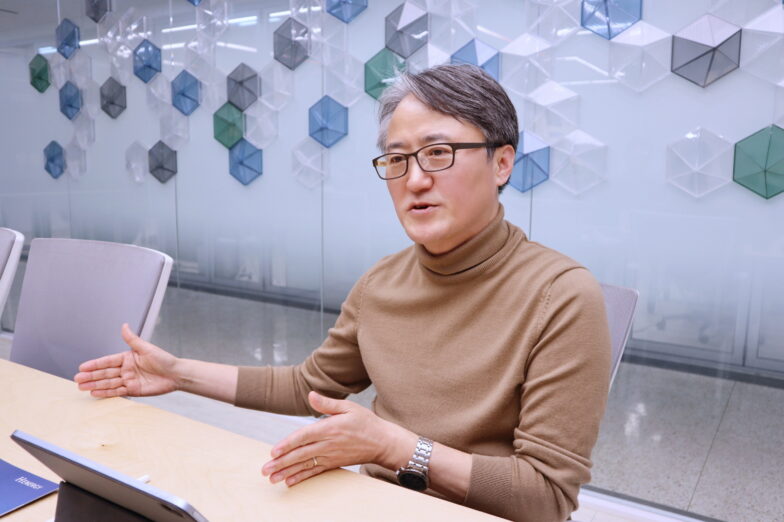
Focus on the ' long tail ' market rather than large-scale ' construction '
So how did HENERGY create an energy market that anyone can participate in?
While existing solar power companies have focused on large-scale land development projects, HENERGY has focused on the "long tail" market, which is difficult for large capital to access, by focusing on data and platforms.
"Many people view renewable energy as an infrastructure market. But solar energy is different. Because of its volatility, simply buying land and building a power plant isn't enough. It's like the difference between running a single large hotel and operating tens of thousands of rooms spread across the country like Airbnb. Connecting all of this with technology is crucial."
Representative Ham explained that the renewable energy market is an “energy industrial revolution” that completely changes the existing energy framework and capital structure itself, and emphasized that the government cannot lead the industrial revolution, and therefore the government’s role is limited to laying energy infrastructure such as lines and organizing regulatory systems, and that actual innovation comes from private companies such as startups that solve market inefficiencies with technology and create new business models based on this foundation.
HENERGY has integrated four key tasks into a platform: securing space for solar power facilities, raising funds, operating the facility, and selling electricity. "SolarShare" identifies rooftops and standardizes the design. "MoHat" recruits investors and raises funds. "SolarOnCare" operates the power plant based on predictive control to ensure stable revenue. For businesses with high electricity consumption, the company offers the "SolarShareBaro" platform. This platform, based on the Energy as a Service (EaaS) model, allows companies to subscribe to RE100 electricity. Business owners can install solar power on their rooftops without an initial investment and access the renewable energy generated there at a fixed price for 20 years. HENERGY has automated and standardized the entire process, from rooftop exploration to revenue distribution, integrating previously fragmented stages and creating a structure that allows anyone to participate in the energy market without the need for large capital.
Find and design a roof suitable for solar installation all in one place
So how do you find idle space to install solar panels?
Simply enter the address of the roof and a design plan will be automatically generated, allowing even small local construction companies to construct the roof without the need for an on-site visit by an electrical design expert or extensive engineering processes.
SolarShare uses generative AI to analyze satellite maps, identifying unused rooftops nationwide without on-site visits and automatically suggesting optimal designs. HENERGY systematized this process into an AI-based business innovation called the "Core Project."
First, "Pathfinder" automatically extracts the area on a building's roof suitable for solar power installation using satellite imagery and calculates its power generation capacity. Next, "Synapse" automatically generates administrative documents required for the rooftop solar power plant process, such as blueprints, specifications, and safety plans. Finally, "Guardian" applies Vibe Coding to automatically verify the product design of platform services and the deposits and withdrawals for each service.
Anyone can invest … Democratic decision-making ensures safe investment.
Mohat recruits investors to invest in designed power plants. Through its cooperative structure, it allows individual investors to participate with investments starting from 1 million won. Investment periods can be chosen from six months, one year, three years, or five years. Currently, there are 210,000 subscribers, accumulated investments exceeding 420 billion won, and the average return is 10.9%.
Investor protection is at the core of the cooperative structure. Unlike typical investment models, it operates on the principle of one person, one vote, ensuring equal decision-making power regardless of investment amount. Important decisions require a majority vote, and approximately 15,000 actual investors directly decide on business plans and budgets through general meetings of delegates.
HENERGY has recently expanded its investment into corporate investments. Currently, B2B accounts for approximately 20% of its revenue, but the company plans to increase this to 70% this year. This year's investment is expected to reach approximately KRW 450 billion, divided into KRW 150 billion in B2C and KRW 300 billion in B2B.
Korea's top-level power plant operation and management
After power plant construction is complete, operation is paramount. The AI-based SaaS "SolarOnCare" and its core tool, "Helios Matrix," ensure power plant operation at peak efficiency and minimize power loss by responding 100% to any failures. Furthermore, any abnormalities are identified within 30 minutes and responded to immediately. Mohat's investors were able to achieve the promised 10.9% return thanks to SolarOnCare's sophisticated operations.
SolarOnCare has achieved the highest level of power generation prediction accuracy in Korea by training a deep learning AI model with operational and sensor measurement data collected from over 5,000 distributed power plants nationwide. Beyond simple prediction, it connects the entire process from prediction to control. Based on power dispatch instructions from the Korea Power Exchange, the online control system instantly adjusts power plant output and also provides predictive maintenance.
The profits from selling electricity go to investors.
The electricity generated this way is sold to businesses through "SolarShareBaro." They can purchase electricity at a fixed price of 140 won per kWh, up to 28% cheaper than KEPCO rates. Even if industrial electricity rates rise, the price is fixed for 20 years, providing complete protection from fluctuation risks. As a bonus, achieving RE100 is also a natural step forward.
Within this structure, the difference between KEPCO's rates and HENERGY's contract price generates profit, which is then returned to Mohat's investors. This completes the cycle from solar power plant construction to operation and sales.
While the four services each play distinct roles, they form a virtuous cycle. SolarShare standardizes the physical asset of the roof, MoHat gathers the financial asset of funds, and SolarOnCare generates revenue through operational capabilities. SolarShareBaro helps companies reduce their electricity bills by utilizing renewable energy on rooftops at low prices. Because each step is fully automated and process-driven, from the moment someone decides to provide a roof, the power plant is completed and revenue begins generating within six months.
Completing the Energy Sharing Economy
HENERGY's ultimate goal is to "complete the energy sharing economy." Beyond renewable energy production, the goal is to create an ecosystem where anyone can easily participate in everything from investment to trading, fostering a virtuous energy cycle within the region.
"We are trying to achieve 'domestication of energy capital,' where the electricity we pay goes back to domestic individual investors and building owners, rather than being exported overseas."
The first is to create a world where all the electricity in our homes, our cars, and our companies is traded through the HENERGY platform.
"In a structure where investors, producers, and consumers all participate, building owners, construction companies, and the local community can all generate profits. This is the true meaning of a sharing economy."
The second is the expansion of the trading market. HENERGY has accumulated precise data by operating and managing power plants nationwide through SaaS. This allows it to calculate the characteristics of each power plant and the changes in power generation resulting from improvements.
Calculating power generation allows for increased value creation and even mergers and acquisitions. This means creating a market for renewable energy power plants, similar to real estate.
HENERGY is even envisioning an electricity futures market.
"The current electricity market involves power generation companies and corporations entering into 20-year long-term contracts. However, small and medium-sized companies with low credit ratings find it difficult to enter into such contracts. While one-year contracts are possible, they still face the risk of price fluctuations over the remaining 19 years. The electricity futures market can be a tool to offset this risk. By directly purchasing electricity from power plants and selling both futures and spot, this can become a channel for attracting institutional investors."
The third is expansion into the distribution market. As the era of electric vehicles arrives, charging infrastructure will be handled by KEPCO or third-party operators. HENERGY could become a player supplying electricity in this market.
"Even the electricity we use in our cars can be purchased on the HENERGY platform. This also enables 'local commerce.' The electricity I pay goes to local power plant investors, and the profits from that go to local markets, creating a virtuous cycle where we benefit from consumption."
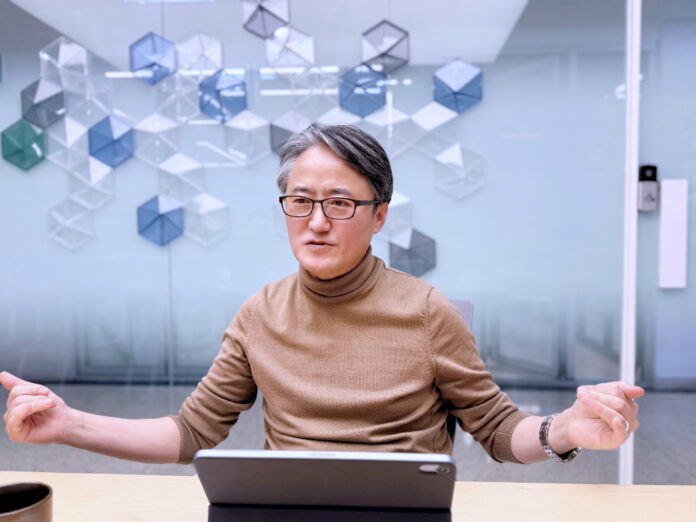
HENERGY transformed idle rooftops across the country into energy assets, enabling anyone to build solar power plants without the need for an electrical engineer. This broke the structure where energy capital was concentrated solely in the hands of large corporations and institutional investors, opening up an era where ordinary individuals and building owners can own energy assets and generate profits. In an era where the transition from oil to renewable energy is no longer an option but a necessity, HENERGY has implemented this transition through a platform that anyone can participate in. It will be interesting to see how the future of the renewable energy market envisioned by HENERGY will transform our society.
You must be logged in to post a comment.