



-Started with the question, “Why does the value of a car decrease the moment you buy it?”
– Check operation step by step from paid test drive → content → maintenance/management
Building a full-cycle model that connects consumer choice and sales structure through repeated proof, not explanation.
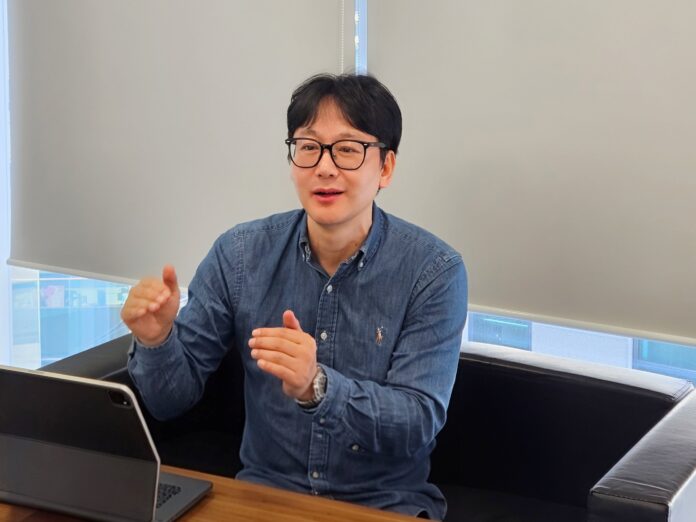
“Ride is a service that helps you maintain the value of your car as an asset throughout its lifecycle.”
RIDE, Inc., a mobility commerce platform, doesn't describe itself as a company that sells cars. Instead, it describes itself as a company that designs the entire process of owning, managing, and re-selecting a car as a single flow. This is the question that CEO Lee Min-cheol, a former Tesla Korea employee, has been pondering since founding RIDE in 2020: Why do cars become depreciating assets from the moment they are purchased? And why is this process always designed around the supplier, not the consumer?
“ The problem isn’t the car , it’s the way it’s sold .”
For CEO Lee Min-cheol, Tesla isn't just a career milestone. He says, "My work life has completely changed since I joined Tesla." What he most strongly realized during his four years at Tesla was that the driving force behind the auto industry isn't technology, but distribution.
The existing automobile market was dealer-centric. Even for the same car, contract terms and prices varied from consumer to consumer, and financial products were designed with opacity. Information was always on the supplier's side, and consumers were forced to accept this structure.
Tesla shifted this structure to a direct sales model, disclosing prices and terms upfront and minimizing intermediaries. While initially criticized as "unrealistic," this approach began to work in the US market. Consumers responded to the transparent pricing and simple purchasing experience, and the change in distribution structure soon led to market adoption.
CEO Lee Min-cheol didn't view this case as a specific brand's success strategy. Rather, he viewed it as a structural solution applicable to the entire automobile distribution industry.
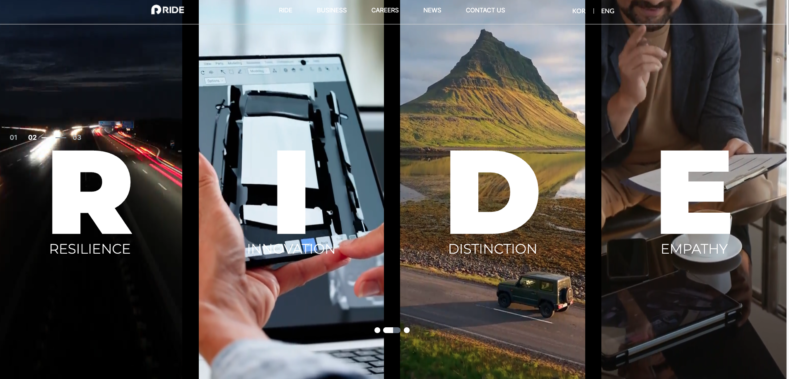
Paid test drives , the market responded first
Ride's first experiment was a "paid test ride." It was a test to see if a paid test ride model could actually work. The results came out faster than expected. The service generated approximately 200 million won in sales in its first year, and, most importantly, consumer response was clear.
Traditional test drives involved driving along a set course with a dealer accompanying the vehicle. However, consumers had different goals. Whether camping gear could be loaded, whether the vehicle could be parked in a parking lot, or what the electric vehicle charging environment was like—all of these things couldn't be confirmed in a short test drive.
The CEO didn't view this reaction as mere hype. It was a moment when data proved that "people want to try a car thoroughly before buying it."
"The market always provides the answer first. It's a question of whether we listen."
To continue the proof-of-concept, we needed to enter the industry, starting with paid test drives. However, to ensure this proof-of-concept wasn't a one-time thing, we needed to take responsibility for the next steps in the car's development. That's why Ride defines itself as "a car company that doesn't make cars." This wasn't a decision to remain a platform, but rather a decision to enter the core of the industry.
CEO Lee Min-cheol says, "Innovations that don't fit with the existing market won't last." That's why Ride began by focusing on education and maintenance.
The acquisitions of GMC, an automotive education and consulting company, and Sky Auto Service, a specialized auto repair company, are both extensions of this approach. Rather than building a new network from scratch, they leveraged existing market foundations.
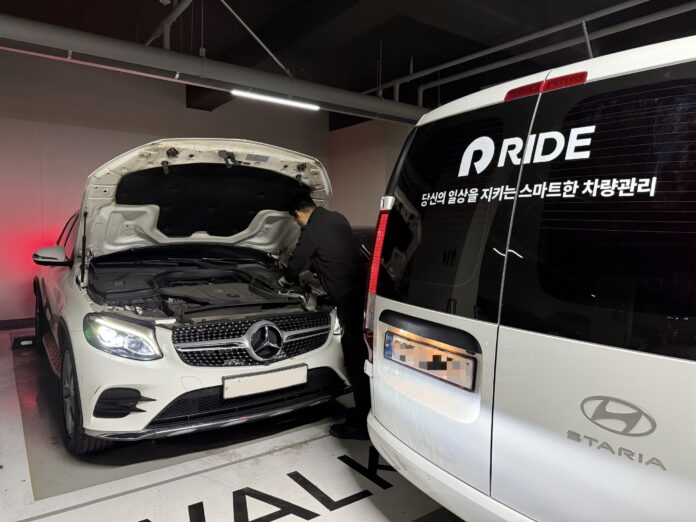
From content to management , the entire automotive lifecycle is tied together in a ride.
Ride also focused on eliminating information asymmetry for consumers. It launched the Ride Now app, offering test drives and maintenance services, and produced in-house content covering in-depth vehicle information. To achieve this, it recruited automotive professionals and personnel from auto and parts manufacturing backgrounds, and acquired a leading company that provided dealer training.
The content created in this way is also used to train sales representatives for actual auto brands. Training is conducted through B2B contracts with companies like BMW, Renault, and Jaguar/Land Rover, which in turn contributes to Ride's revenue structure.
We've also added a subscription-based maintenance service. Currently, we provide maintenance and accident management services to approximately 60,000 vehicles annually for financial companies operating rental cars. This service will soon be expanded to new car buyers through "Ride Now," integrating test drives, purchases, content, and aftercare into one service.
The proof was repeated , and the trust followed without explanation.
Ride chose to be a "prove it" company rather than a "tell it." It tested consumer feedback through paid test drives and established a repeatable revenue structure in the B2B maintenance and management sector. As a result, it achieved a fourfold increase in sales in 2025 compared to the previous year, and achieved operating profit within just five years of its founding.
The CEO says, "We didn't prove ourselves to attract investment. We grew because we proved ourselves, and investment followed." However, the final hurdle of proof, he says, isn't investors. It's consumers.
“Making it possible to buy a good car at a more reasonable price.”
Trust in the marketplace isn't built on explanations. It's built on repeated proof.
Ride first proved its effectiveness, investors responded, and now it's being revalidated by consumer choice. As long as this cycle continues, Ride's growth won't be a one-time event. This is what CEO Lee repeatedly emphasizes: Ride's growth isn't about expanding the service, but rather accumulating proof.
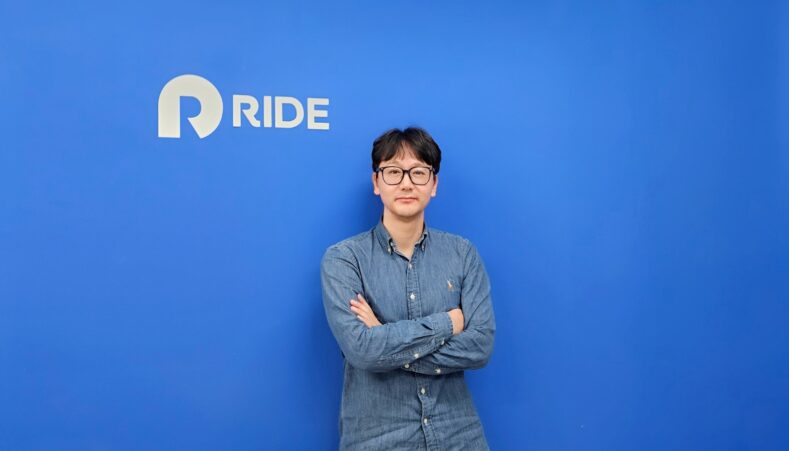
Accumulation of evidence , not expansion of services
The initial validation, which began with paid test drives, led to an understanding of consumer needs. It then expanded into content, maintenance, and management, establishing a structure encompassing the entire automobile lifecycle. While each stage appears to be an independent business, they are all interconnected based on consumer choice.
Ride doesn't explain this trend as a simple "platform expansion." Rather, it's a shift in perspective, viewing cars not as mere transactions but as assets to be managed over the long term. They concluded that unless they create a structure that takes responsibility for post-purchase management and re-selection, not just the moment of purchase, consumer trust cannot be sustained.
The representative stated, "The automobile industry is still a supplier-centric market with strong inertia." This explains why Ride directly manages the entire cycle. Unless we address the points where consumers experience real inconvenience, where information is lacking, and where costs become unclear, the structure will remain unchanged.
Therefore, Ride's next steps are less about launching new services and more about strengthening the existing structure. From enhancing AI dealers based on full-cycle data, to distributing certified parts, to verifying the same structure in overseas markets, they all stem from the same question: can this structure continue to be chosen by consumers?
The formula, built on proof, isn't yet complete. However, one thing is clear: Ride is no longer a company simply demonstrating possibilities. It's repeatedly proving a structure that already works, bringing the next phase of automotive distribution to reality.
You must be logged in to post a comment.