



Secured sales growth in 2025 through the successful launch of multi-mission and collaborative advertising.
-2026 sales target is approximately 30% growth compared to the previous year, marking a full-fledged leap forward.
– We plan to pursue an IPO by comprehensively considering market conditions and global expansion performance.
Even amidst the advertising market downturn, buzzvil's growth has remained unabated. After recording KRW 101.22 billion in sales and KRW 4.39 billion in operating profit in 2024, it continued its modest growth in 2025. This year, the company has set a target of approximately 30% year-on-year sales growth. This is the result of significant achievements in new businesses such as multi-mission, retail media platforms (cooperative advertising), and global expansion. Building on this growth, buzzvil plans to pursue global expansion before pursuing an IPO.
"We accelerate our clients' growth in a way everyone loves."
Today's users are sensitive to privacy and have installed adblockers. The advertising ecosystem itself is under threat. CEO John Lee proposed a change in the form of advertising as a solution to this problem.
"We want to create advertising that users love, or at least don't hate. We can achieve this by providing information, engaging experiences, and rewarding them accordingly. This creates a win-win situation. Users benefit, advertisers see increased effectiveness, and publishers see increased revenue. This is the advertising ecosystem we want to create. Advertising feels like a part of the user experience."
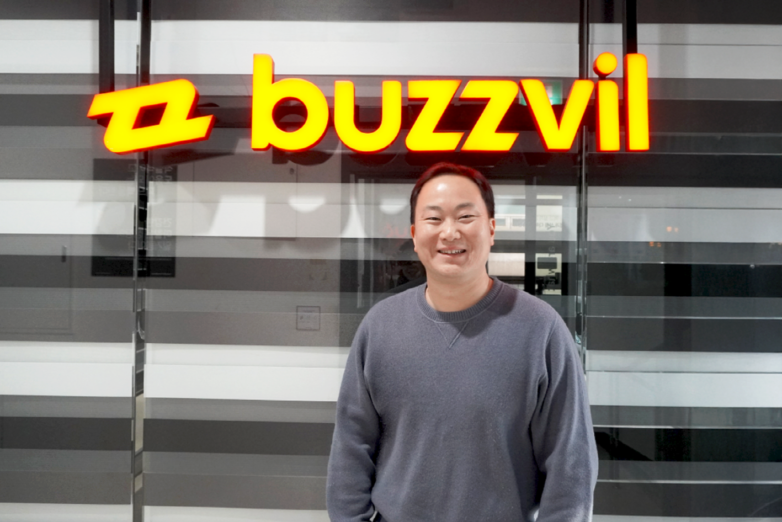
We met with John Lee, CEO of Buzzvil, at the company's office in Songpa-gu, Seoul, to discuss their 2025 achievements, plans for 2026, and the meaning and future prospects of interactive advertising.

Achieving optimal advertising efficiency with advanced multi-missions.
Buzzvil's flagship product, "BuzzAd," is designed to achieve advertisers' desired results. BuzzAd offers multi-mission campaigns tailored to advertisers' goals, from app installation and launch to item purchases. Unlike traditional advertising, which rewards only a single action (app installation), multi-mission campaigns design the entire app experience—from installation and launch to play and even in-app purchases—as multiple "missions," rewarding each step. BuzzAd predicts each user's "Aha Moment" and optimizes reward types, mission composition, and creative for each user. It also analyzes engagement and conversion rates in real time to create the most effective advertising experience.
"Each user has different triggers for purchase. Some users are more likely to buy if they add a product to their wishlist, others only buy after reading reviews, and still others only buy when there's a time constraint (like, "Buy today and get 10% off"). Buzzvil predicts these individual "aha moments" and provides personalized, multi-mission structures tailored to each user."
Buzzvil has adopted a policy where advertisers only charge when a specific goal (such as a purchase) is achieved. For example, if the goal of an ad is "purchasing an item," users acquired through Buzzvil will not be charged for installing and playing the game. Instead, they will be charged only when the user purchases the item. This increases the effectiveness of the ad because advertisers only pay for genuine results that achieve their goals.
Multi-missions begin even before the ad is displayed. Buzzvil designs the context in which users will encounter the ad, even before it's shown (pre-impression). This involves engaging users with engaging content like quizzes, shorts, and games, adding a fun element. After viewing the ad (post-impression), the experience is designed as a multi-mission experience that leads to engagement and purchase. The entire process, from app installation and launch to play and in-app purchase, is structured into multiple missions, engaging users at each stage.
Buzzvil achieved significant success by launching a multi-mission product targeting the gaming industry in 2024. Because gamers were already familiar with rewards and missions, they quickly embraced Buzzvil's multi-mission approach, and the results were explosive. As a result, the number of game advertisers increased by over 300% in 2025 compared to 2024.
This year, Buzzvil plans to build on its proven effectiveness in gaming to make multi-mission advertising the standard across all industries. It will initially focus on the commerce and finance sectors. In the commerce space, users experience each step as a mission—from visiting a product page, checking detailed information (such as a quiz), adding to cart, and finally making a purchase. The same applies to the finance sector, which also has clear action steps like opening an account or making a first transaction, making the multi-mission structure a natural fit. Overseas markets are a key strategy for this year. Starting with East Asian markets like Japan and Taiwan, which share cultural similarities with Korea, Buzzvil plans to gradually expand into these markets through collaborations with global payment service providers.
BuzzBenefit: A Essential Solution in the Era of Interactive Advertising
Another flagship product of Buzzvil is "BuzzBenefit," an app monetization solution for publishers that places advertising space within apps. Interestingly, even apps that didn't previously have the concept of rewarded advertising are now adopting BuzzBenefit. Services like banking apps like Kakao Bank, community apps like Everytime, and delivery apps like Yogiyo have created benefits tabs in collaboration with Buzzvil, offering users benefits. Rewarded advertising has become a necessity, not an option. The significant increase in user engagement in rewarded apps is a testament to this.
With interactive advertising becoming the norm, where users engage with ad content by playing minigames, taking quizzes, or reading reviews, and receive rewards for their participation, advertising is no longer just "advertising" but an "experience." Users will voluntarily participate if the content is engaging and fun. Advertisers reap the benefits of engaging users from simple impressions to actual purchases. Buzzvil is currently at the center of this ecosystem, partnering with over 15,000 advertisers and reaching over 24 million monthly active users through over 500 premium media outlets.
Buzzvil uses AI to learn users' past behavior and optimizes the reward amount in real time to maximize conversion for each user. They've discovered that some users respond to a mere 1 cent, while others require 10 cents. This allows advertisers to achieve maximum impact with minimal rewards.

Helping advertisers advertise themselves
With the advent of the AI era, interaction has become mainstream, not peripheral, as it allows for real-time, personalized, and interactive content to be delivered to each user.
The goal of advertising has evolved from awareness to purchase. Most edtech companies have focused on discovery technology to figure out who will respond to ads. However, Buzzvil took a different path. It introduced a new grammar called interaction to the market, and now, Buzzvil is the only company that uses interaction technology and advertising formats to drive final purchase conversions. When Buzzvil first introduced the rewarded advertising model, it was initially considered abusive, but now it has become a mainstay of the advertising ecosystem.
Buzzvil has gone one step further. They've evolved this technology into an "interaction AI agent" that platform companies can directly use. While Buzzvil previously ran its own ads, they now offer platform companies the ability to run their own ads by combining their own data with Buzzvil's technology.
The interactive AI agent detects user reactions in real time and dynamically optimizes reward types, mission composition, and creatives using AI. It also automatically selects and displays different interactive ad formats, such as reviews, benefit notifications, shorts, and true/false quizzes, based on the user's cognitive stage. When sellers input product information, the agent automatically designs a personalized experience for each user and guides them to purchase. When customer data is input, the agent operates the ad in real time. Buzzvil is no longer a company that "directly" creates ads; it has become a company that helps platform companies create ads "on their own."
In 2025, buzzvil achieved meaningful results by introducing a new business model called Retail Media Platform, which allows commerce platforms to directly operate advertisements by combining their own customer data with buzzvil's technology in the commerce sector.
Buzzvil plans to expand its retail media platform to most of its retail partners this year. This move goes beyond simply selling advertising solutions and solidifies its position as a partner that supports the growth of platform companies. This represents a significant shift in Buzzvil's business model.
"By redefining the advertising market, we're becoming the essential solution for our clients."
Providing direct interaction has long been taboo in the advertising market. Buzzvil has redefined this from a fringe to a core part of advertising. Buzzvil's ultimate goal is to make Buzzvil a must-use solution for everyone. Initially, it was considered an abuse, but now it's become mainstream. Buzzvil's next goal is to make it a global standard.
Buzzvil is pursuing further growth through the global expansion of its game multi-mission platform, domestic expansion of its retail affiliate advertising, and collaborations with global ad networks like Google. It achieved sales of KRW 100 billion in 2024 and, despite challenging market conditions, has maintained stable growth and strengthened its position in 2025. This year, it aims for approximately 30% year-on-year growth. Given its steady growth despite the advertising market downturn, the timing of Buzzvil's IPO is a matter of curiosity.
You must be logged in to post a comment.