



– Branding local stores in a gifticon market centered on franchises
1,500 affiliated stores, 40,000 users. A local commercial model proven through operational success in Siheung City.
– Proposing a sustainable, win-win ecosystem with a low-fee structure.
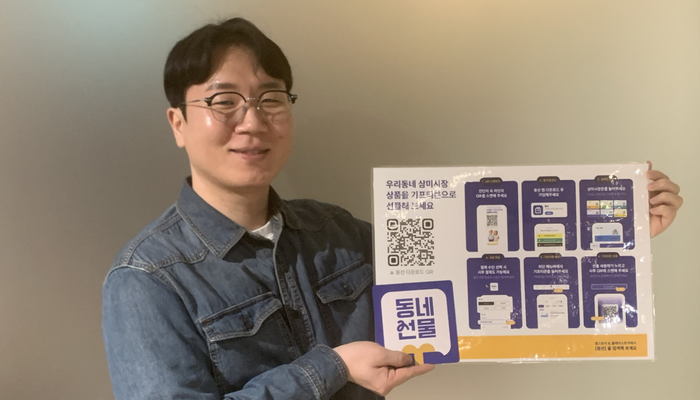
Mobile gifticons have become a common gifting tool. The domestic gifticon and online gifting market is worth approximately 14 trillion won. However, the majority of gift transactions are still concentrated in large franchises. Franchise products account for approximately 90% of total transactions, and it's difficult for local business owners to exchange their own food or products in gifticon format. What if gifticons could be issued specifically for local businesses? This would allow them to offer unique local gifts, such as handmade cakes, local restaurants, handcrafted goods, and Pilates and yoga vouchers. Dongsun Inc. CEO Kim Seong-min saw the potential here.
CEO Kim Seong-min said, “I want to become a company that is like a gift to small and medium-sized businesses,” and added, “My goal is to create a gift culture for local stores that are left out of the gifticon market centered around large franchises by making it easy for them to create gift items and by creating a structure where regular customers call in more regular customers.”
Dongnegift, operated by Dongsun Inc., is a local gifticon platform born from this awareness. Currently, Dongnegift operates primarily in Siheung City. Approximately 1,500 stores participate in the city, with approximately 40,000 users. Monthly transactions in this area alone amount to 300-500 million won. Furthermore, this success is the result of adhering to the operating principle of focusing on self-employed individuals who directly operate their stores in their own neighborhoods, excluding directly managed large franchises.
To hear more about how dongnegift came to be and how it is creating a new market called local gifticon, we interviewed CEO Kim Seong-min, who runs 'dongnegift.'
■ Launch of the local gifticon platform
When CEO Kim Seong-min ran a large cafe in Gwangju, he issued paper coupons and gift certificates in bulk for in-store promotions. However, even during the challenging times following COVID-19, customers still visited his store with crumpled paper coupons, prompting him to recognize the inherent value of gift certificates in encouraging repeat visits. However, accounting and management were cumbersome, and concerns about loss, forgery, and falsification arose. This led Kim to believe that even local stores, like franchises, should be able to safely exchange gifts digitally. He concluded that the reliance on paper coupons was naturally excluding small and medium-sized businesses from the gifticon market. Furthermore, he observed that consumers were reselling gifticons from large franchises on the second-hand market. This prompted him and his team to launch a new business to address this issue.
The turning point came in Seoul. While operating a service in Gwangju, they participated in a local revitalization project proposed by the city of Seoul. Through this process, they gained experience in converting local stores' products into gifticons. Based on this experience, Siheung City first proposed collaboration, leading to a new phase in the project. Dongsun Inc. signed an MOU with the city and launched the "Public Gifticon Gift App" model, even considering the possibility of integrating with local currencies. CEO Kim developed various hypotheses and verified them with actual operational data, gradually improving the service. As a result, dongnegift established its current direction as a local gifticon platform, transcending individual stores and integrating products and stories from local businesses into a single, "giftable" format.
■ Not only food, but also experiential services
dongnegift is a service focused on local gifticons and marketing infrastructure for small and medium-sized businesses and local commercial districts. Its features have been refined to allow local businesses to take the initiative in creating and operating their own "giftable items." Dongnegift's gifticon creation and management features allow individual businesses, such as cafes, restaurants, and specialty shops, to easily issue their own products and menus as gifticons. Users can set prices, usage conditions, and expiration dates, and manage sales, gifts, and usage management all in one place, without the need for separate development or complex system integration. CEO Kim Seong-min explained, "The moment local business owners feel like this is too difficult, the service becomes meaningless. We prioritized creating a structure that anyone can use right away."
The product portfolio is also broad. Gifticons can encompass not only physical goods like food and bakery items, but also experiential services like Pilates, yoga, massage, and classes. CEO Kim stated, "A gifticon doesn't have to be just coffee or cake. I believe anything you can experience in your neighborhood can be a gift." Through this, dongnegift has expanded the scope of its existing gifticon, which focused on edible gifts, to encompass all local experiences. Dongnegift has also added a marketing twist. Gifticons not only contain product information but also actual consumer reviews and the owner's story. The structure conveys the store's background, the reasons behind the product, and the user experience along with the gift. The company has worked hard to make it seem natural for the recipient to visit the store.
Store owners can conduct marketing and promotions based on customer data using gifticons. For new product launches or off-season promotions, store owners can customize discount conditions and issue gifticons. Dongnegift also offers a "first-come, first-served" feature, allowing for targeted exposure at specific times. This feature opens daily at 10:00 AM and automatically closes when the sale runs out, providing a short but powerful boost. CEO Kim emphasized, "Our goal isn't simply to sell at a low price; it's to drive store visits and secondary purchases." Store owners can also create gifticons that can only be used on specific dates or periods and share them through social media. Based on these features, dongnegift aims to expand beyond individual stores to encompass entire local commercial districts as "giftable units." CEO Kim stated, "We want to create a structure where each neighborhood and each commercial district becomes a brand and a gift," adding that dongnegift is the process of building that infrastructure.
Users can access dongnegift through the mobile app. After logging in, they can select an available region and browse, purchase, or gift gifticon products and services offered by local stores in that area. Consumers can gift local products and services from the app they use every day, and store owners can easily manage gifticon issuance and operations through the app.
■ Expanding beyond the neighborhood to become a 'local commercial district'
dongnegift goes beyond issuing gifticons for individual stores. It focuses on expanding its service to local commercial districts. This approach combines multiple stores into a single gifticon package, presenting the entire neighborhood or specific commercial district as a single gift item. This allows consumers to gift the "region," not a specific store, and the entire commercial district becomes perceived as a single brand. This structure expands its reach to include local festivals, events, and institutional gifts, effectively transforming the neighborhood into a theme park. Gifticon packages, available only in specific neighborhoods, naturally motivate visitors and spread consumption beyond individual stores to the entire commercial district. Through this, dongnegift is building a model that encourages repeat visits and stay-at-home spending across the region, rather than one-time spending.
The key to regional expansion is "local control." CEO Kim explained, "If a platform sells the same products nationwide, it's difficult to create a unique local identity." Dongnegift's direction is to collaborate with local governments to create gifticons and a gifting culture unique to that region." Building on MOUs with local governments, dongnegift is expanding its service scope to include public sectors, including local currency integration, public events, and institutional use. Siheung City is the first stage for this expansion. CEO Kim explained that around 1,500 stores in Siheung City are participating in dongnegift, issuing and operating gifticons, and approximately 40,000 consumers are using the service. Despite being a regional service, monthly transactions are around 300 million to 500 million won. "It's been less than a year since we discovered dongnegift's first target region and launched full-scale operations," Kim added. "We're currently in the process of reorganizing the system so that, based on the proven structure in Siheung City, we can apply it to other regions." Based on these indicators, dongnegift plans to begin full-scale regional expansion in 2026.
■ Mutually beneficial fee policy
Dongnegift's revenue model was designed from the beginning with a "mutually beneficial commission structure." CEO Kim pointed to the high commission structure as the biggest barrier to entry in the gifticon market, which is dominated by large platforms. Currently, the widely used gifticon platform has a platform commission of 10-25%, which is a significant burden for small and medium-sized businesses. Dongnegift operates a low commission of around 5%, including credit card fees. Kim explained, "From my own experience running stores and conducting business, I've found that the higher the commission, the less likely business owners are to even try new platforms. Our primary goal, rather than maximizing profits, was to foster a gifting culture through the participation of many stores." This decision proved challenging in terms of short-term profitability. Indeed, many startups that attempted the local gifticon market struggled to maintain the revenue structure. Kim stated, "I've seen many teams attempt similar things, but most of them gave up because they weren't profitable." Despite this, dongnegift prioritized regional expansion and usage data accumulation while maintaining low fees.
The criteria for its store opening policy are clear. dongnegift focuses its services on individual business owners who directly operate stores in their neighborhoods. However, franchises are not excluded entirely. CEO Kim emphasized, "Even if they have a franchise sign, a business owner who directly operates a store in their neighborhood is still a self-employed person." He added, "What matters is not the size of the brand, but who is actually operating it." Accordingly, franchise stores directly operated by the headquarters are excluded from the store opening process.
The symbiotic fee structure and store opening policy are yielding tangible results. Building on these indicators, dongnegift is demonstrating the potential for the Gifticon model to expand into local commercial districts.
■ Expanding beyond small cities to the entire country
With significant success in Siheung City, the question naturally arose as to whether this model could be expanded to other regions. Indeed, dongnegift's operational structure is designed to be replicated regionally. Dongnegift's expansion is less about "how quickly it can spread" and more about "how sustainable it is." Maintaining a low commission structure, adhering to a self-employed-focused entry policy, and slowly expanding regionally are strategies that prioritize long-term infrastructure over short-term profitability.
CEO Kim stated that supporting capital is essential for nationwide expansion, stating, "Now is the critical time for investment." Dongsun Inc. is currently preparing for its next round of funding following angel investment. The company believes that external capital is essential for simultaneously pursuing regional expansion and institutional compliance. The company believes that dongnegift goes beyond a simple platform business and is more about designing a structure that allows local businesses to create their own gift economy. Ultimately, dongnegift's challenge lies not in speed, but in balance. Maintaining a structure that allows business owners to participate without burden while meeting realistic requirements such as institutional and capital requirements is crucial. Building on this balance, dongnegift's next step is to perfect a model where local businesses and the platform grow together.
■ Regional expansion, franchise expansion, and cultural development
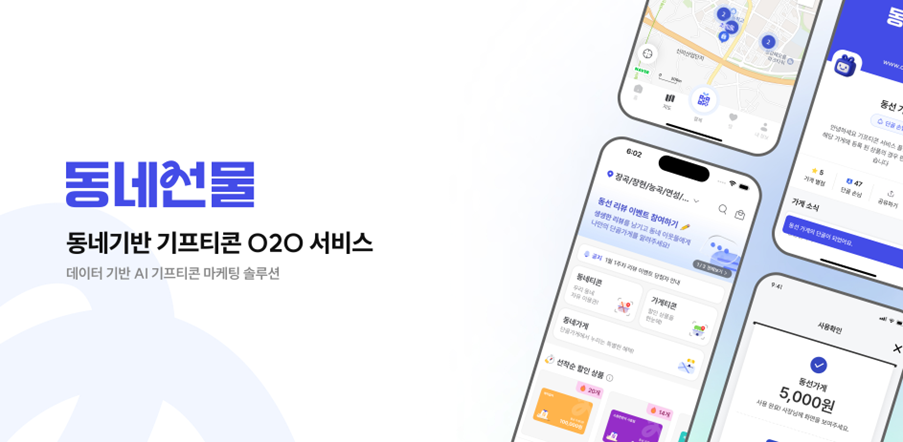
Dongnegift has set three clear goals for 2026: first, regional expansion, second, increasing the number of franchisees, and third, developing a consumer usage culture. Rather than simply growing its service, this is a step-by-step strategy aimed at establishing itself as a sustainable regional economic infrastructure.
First, regional expansion is key. Dongnegift, based on its proven operating model in Siheung City, aims to expand into three of the 67 districts, cities, and metropolitan areas nationwide this year. Internally, the company plans to standardize this structure and lay the groundwork for future expansion to even more regions.
The second goal is to secure 5,000 franchise stores. This isn't simply a matter of increasing the number of stores; it's an indicator that dongnegift's vision of a "self-employed-centered gift economy" is actually working at the commercial district level. With 1,500 stores already participating in Siheung City, the goal is to create similarly dense commercial districts in other regions.
The third is a culture that encourages consumers to continue using the service. Beyond simple discounts, we need to create a culture that compels consumers to use dongnegift services.
dongnegift is still just a local service, originating in Siheung. However, when its three goals of regional expansion, franchise expansion, and cultural development intersect, its significance expands to the national level. Dongnegift's structure is not focused on concentrating consumption on a specific brand or headquarters, but rather on creating a local economic ecosystem where money circulates and relationships are fostered within the region. By grouping gifticons by commercial district and linking them with local governments and the public sector, dongnegift becomes a practical interface between local economic policy and private consumption. The concept of "gifting the neighborhood" goes beyond a simple payment method; it attempts to transform the very way people consume local products. If this model spreads across multiple regions, dongnegift will likely become more than just a local service; it will become a core infrastructure that circulates local businesses. The future of dongnegift, which will expand to 67 regions in the near future, is highly anticipated.
You must be logged in to post a comment.