



"Until now, financial innovation in Korea has been limited to simply changing the design of counters and checkout counters. We need to change the products we sell. Making loans accessible to those who previously couldn't is the true innovation."
Kwon Oh-hyung, CEO of Winkstone Partners, diagnosed the current state of the domestic financial industry as follows.
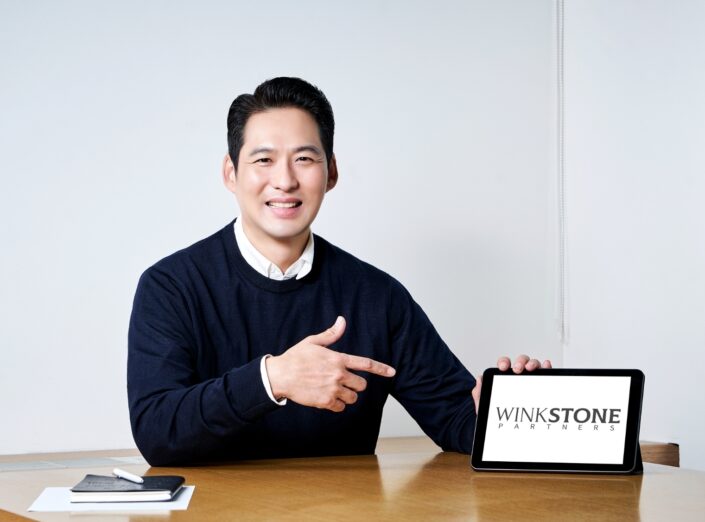
While internet-only banks have improved their UI and UX to improve accessibility, small business owners remain in a financial blind spot. His solution, which he has been developing for seven years, is clear: opening up the small business finance market with an AI model that evaluates the business itself, not just individual credit scores.
"The US has been doing this for 20 years, so why don't our banks do it?"
The catalyst that sparked CEO Kwon's interest in small business finance was the 2008 US financial crisis. At the time, he was working in the Financial Accounting Services (FAS) team at Samil PricewaterhouseCoopers. He was then dispatched to PricewaterhouseCoopers (PWC) in the US, where he spent two years analyzing the loan portfolios of local financial institutions.
"American financial institutions were extending massive amounts of credit to small businesses. While secured lending was a contributing factor to the global financial crisis, small business loans remained largely intact. This was because each bank already had automated models in place to assess business viability using industry-specific data."
Meanwhile, domestic banks focused solely on secured loans and unsecured loans for salaried workers. The reason was simple: the market was oligopolistic, so there was no need to pursue these areas. Small business assessments were complex, recruiting clients was difficult, and the average loan amount was only 20-30 million won, resulting in low profitability. With operating profits already reaching trillions of won annually, there was no reason to explore new areas.
Evaluate the business itself, not just your credit score.
Most Winkstone customers are small business owners with credit scores in the 600s and 700s. They often have difficulty obtaining loans from major financial institutions. However, CEO Kwon emphasizes, "They are not a high-risk group."
"A personal credit score isn't simply a measure of how well a business is doing. No matter how high your credit score, if your business fails, you'll start defaulting on payments. While a salaried worker won't see an increase in income by borrowing money, a business owner can increase their income by using loans to expand their business or improve their marketing. We evaluate the business itself, not your credit score."
Winkstone uses simple authentication to collect real-time data on card sales, labor costs, and purchases, and AI then evaluates business viability. Industry-specific segmentation is particularly crucial. For example, delivery-only restaurants often have operating profit margins of less than 5% due to platform and delivery costs. However, a neighborhood hair salon, with monthly sales of just 30-40 million won, has virtually no costs and maintains a stable profit structure.
"During the COVID-19 pandemic, restaurants focused on stores struggled, but delivery restaurants and online sellers thrived. Essential services like optical shops, hair salons, and academies, which also have high barriers to entry or low fixed costs, are resilient even during economic downturns. This industry-specific data analysis is at the core of our model."
Performance has also been proven. Winkstone has executed a cumulative KRW 120 billion in loans to small business owners over the past seven years, maintaining a loss rate of around 2% relative to the accumulated loan amount. In 2023, it received the grand prize at the Financial Services Commission's D-Testbed for its "Individual Business Credit Rating Model Utilizing Industry-Specific Data."
Apply for a loan right from your workplace

Winkstone employs an "embedded finance" strategy for busy small business owners. This approach integrates financial services into the platforms they use daily.
"There are only two CRMs in Korea that specialize in beauty salons. Online sellers rely on a single order collection solution to manage their scattered sales channels. Incorporating a loan application feature into these platforms eliminates the need to search for a separate bank or banking app. Currently, loan comparison platforms like Banksalad and Finda are also integrated, allowing small business owners to simply authenticate via mobile phone, and data is automatically collected."
They also have an early warning system for business closures. It monitors sales data in real time, and if signs of closure are detected, an immediate alert is sent, enabling a recovery strategy to be implemented. He emphasized, "As recovery becomes more difficult as time passes after a business closure, a quick response is crucial."
From a loan company to a technology company
Winkstone is no longer just a lending company. It's transitioning into a B2B business, supplying its proprietary credit rating model and Banking as a Service (BaaS) solution to other financial institutions.
"Domestic banks have well-established loan systems for office workers, but small business owners are a blind spot. Employee evaluation models are insufficient for differentiation. This is because small business owners possess the dual characteristics of being both individuals and businesses. The Financial Services Commission's Credit Rating System Reform Task Force is also addressing this issue."
“The Financial Services Commission is building a small business MyData infrastructure,” said CEO Kwon. “It’s like laying the groundwork, and now financial institutions need to quickly build models on top of it.”
"Small and medium-sized financial institutions, such as savings banks and mutual finance companies, can expand their businesses while saving time and money. This is where our proven solutions come in."
This year, the company plans to significantly increase its volume by collaborating with savings banks. After securing an additional 2 billion won in investment in the first half of the year, the company plans to conduct a Series B round in the second half. The total investment to date stands at 7 billion won. When asked about other companies targeting small businesses that are considered competitors, CEO Kwon responded:
"Other companies started with revenue management services, HR services, purchasing agents, POS, payments, and commerce. We're the complete opposite. We started with lending and now aim to build front-end services. The crucial difference lies in our actual lending experience. Financial authorities will value proven experience in handling real money."
He emphasized, "We've personally built and implemented the entire process, from recruiting customers to data collection, analysis, credit ratings, lending, and aftercare, to enhance the model." He added, "Operational data and feedback loops built through real-world experience cannot be created in a short period of time."
Soso Bank's re-entry into internet banking and preparations for expansion into Southeast Asia.
Winkstone participated as a working committee chairperson in the 4th Internet-only bank (Soso Bank) consortium in September of last year, and although it failed to obtain preliminary approval, it is preparing to challenge again.
"Existing online banks are optimized for office workers. However, small business owners utilize different solutions and platforms, and their profit structures vary significantly across industries. Our consortium has further strengthened its structure to address this issue."
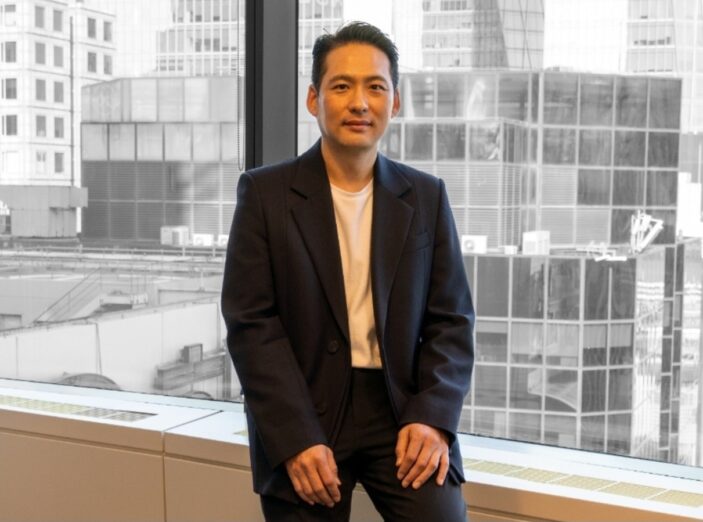
Separately, the company is also considering expanding into Southeast Asia. "Southeast Asia has a shortage of financial data, while mobile commerce is widespread, making BaaS-based systems more necessary. We are prioritizing providing our systems to local financial institutions."
The data from 1 million small business owners will be used for more than just loan screening, but also for business district analysis, marketing, and customized policy support recommendations.
"From the moment we load data, we're designing the database so it can be used for a variety of analyses. We can even create a service that automatically diagnoses small business management and recommends customized financial products."
When asked how he would like Winkstone to be remembered, CEO Kwon responded as follows:
"If we compare the financial industry to the retail industry, changing shelves and checkout counters is an innovation, but diversifying the products you sell is a more important innovation. Winkstone is a technology company that develops and supplies the core engine that enables this product innovation to the financial sector."
CEO Kwon confidently stated that Winkstone's unique "impenetrable wall" is based on seven years of experience managing money, accumulated data, proven models, and a management philosophy that balances finance and IT.
You must be logged in to post a comment.