



– With approximately 20 years of experience in the Technology Guarantee Fund, we have accumulated a sense of judgment on ‘relative position within the industry’ and ‘technological moat’.
Materials, defense, physical AI, and power infrastructure are identified as promising sectors, accelerating the integration of AI with manufacturing strengths.
Shift from diversified investments to concentrated and scaled investments… "Companies that will go will go, and those that will become will become." Polarization is expected to deepen.
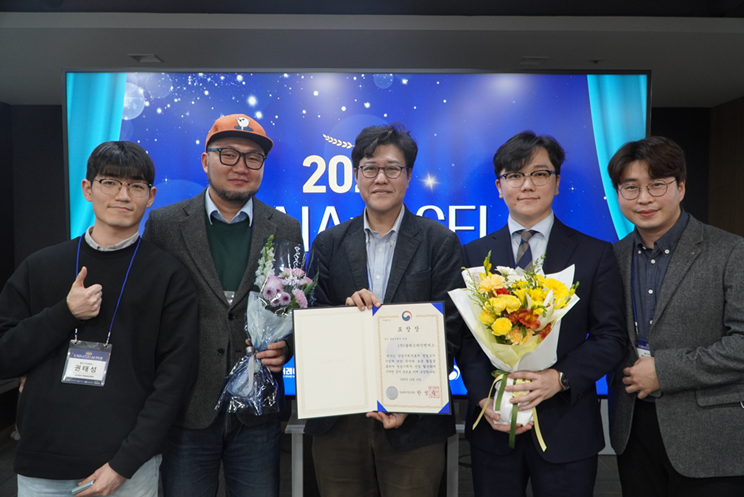
In the deep tech market, there are many "good technologies." However, few attract funding. The technology's position within the industry is more important than its inherent performance. As technology becomes a "product," products become "sales," and sales lead to subsequent rounds, the relative position of the technology ultimately determines success or failure.
Blissvine Ventures CEO Hyung Kyung-jin explains this concept of "position" in investor terms. Drawing on nearly 20 years of experience in technology assessment and technology financing at the Korea Technology Finance Corporation (KOTIB), Hyung has developed sophisticated criteria for quickly identifying technological moats and market potential in early-stage investments.
“My experience evaluating countless companies over nearly 20 years has given me the ability to quickly assess where each company stands relative to its industry.”
CEO Hyung said his experience at the Korea Technology Finance Corporation (Korea Technology Guarantee Fund) went beyond simply "sighting good companies" to developing a sense for "determining industry alignment." He then suggested "moat" and "marketability" as the most important principles in the initial investment stage.
From catch-up growth to the era of ultra-gap technology companies
When asked about the decisive moment that led to the founding of Blissvine Ventures, CEO Hyung cited an industrial transformation rather than a personal turning point. He cited the shift in the Korean economy's center of gravity from "catch-up growth" to "super gap" as the starting point for his startup.
"The decisive moment for my founding was the realization that the Korean economy was moving beyond a phase of catch-up growth and into an era where technology companies capable of achieving a significant lead in the global market were emerging in earnest."
The same decision also defined Blissvine Ventures' differences from larger institutions. CEO Hyung points to "early discovery" and "decision-making" as the key differentiators.
Promising sectors are created by combining manufacturing infrastructure and AI.
When asked about the most promising sectors, CEO Hyung immediately pointed to "areas where Korea excels." He believed that the trend of AI combining with Korea's manufacturing infrastructure and R&D accumulation will create future deep tech competitiveness.
"Korea has long accumulated infrastructure and R&D capabilities, centered on manufacturing. Building on this foundation, combined with advanced hardware competitiveness and AI technology, I believe Korea will continue to demonstrate its strengths in the small, medium, and large-scale industries and deep tech."
CEO Hyung believes the areas with particularly high growth potential are materials, defense, physical AI, and power infrastructure. He believes these sectors, in particular, hold significant growth potential in the global market, stating that a more important question should be, "How will the introduction of AI change the industry's position?"
“Now is the time to scale.”
CEO Hyung stated that Blissvine Ventures is transitioning from diversified investments to concentrated investments.
As an early-stage investor in deep tech, we've been relatively diversified in our investments to manage risk. However, with the changing market environment, we believe it's time to make more focused and large-scale investments in technology companies with significant potential to become unicorns.
The focus CEO Hyung speaks of is closer to "selective accuracy" than "aggressiveness." He believes that concentrating resources on technology companies in which he has confidence will determine the outcome of the next phase.
ESG is seen in resource circulation, and climate adaptation technology is seen in food tech.
Competitiveness is a key criterion for investments in ESG and eco-friendly technologies. CEO Hyung stated that recently, companies with global competitiveness in the resource recycling sector have emerged in earnest.
"In recent years, companies with global competitiveness in the resource recycling sector have been emerging in earnest. We plan to continue to discover and invest in companies with resource recycling technologies that can lead the global market."
Representative Hyung cited LDCarbon and Lipiyu as examples of resource recycling. Climate technology has expanded its scope beyond reduction technologies to include adaptation technologies.
"In the climate technology field, we're focusing on next-generation reduction technologies like DAC and hydrogen, as well as food tech as an adaptation technology to address climate change and population growth."
Examples of food tech investments include AD Su-san and Megaplan. CEO Hyung cited high-density indoor shrimp and mackerel farms as examples, arguing that technologies addressing the macroeconomic variable of climate change create business opportunities.
When expanding overseas, partner selection comes before exhibitions.
When asked about support for overseas expansion, CEO Hyung cautioned against an approach centered on "exhibition participation." He emphasized that for technology companies, overseas expansion requires partner selection and prior communication.
"For technology companies, expanding overseas is much more effective than simply participating in numerous exhibitions. Instead, I believe it's much more effective to select suitable B2B partners, engage in thorough pre-market communication through technology, and then enter the market."
The specific capabilities provided by Blissvine Ventures are also linked in this direction.
"Blissvine Ventures connects optimal overseas partners and supports strategic communication through collaborations with global technology collaboration platforms and U.S. POC support organizations."
Globalization begins with defining the problem at the start of a startup.
When asked about common mistakes Korean startups make when expanding overseas, CEO Hyung pointed out the perception that globalization is reduced to participating in programs or exhibitions. He also emphasized that "successful overseas expansion begins with defining the problem you want to solve from a global market perspective from the very beginning," emphasizing that "defining the problem from a global perspective" is the starting point for successful overseas expansion.
"If you lack the capacity to directly pursue globalization, I believe you need to establish a clear strategy and gradually improve it throughout your growth process to increase your chances of success," he said, offering a realistic path for companies lacking the necessary capabilities.
Balancing technology and business viability, ultimately comes down to team receptivity and execution.
When asked how he defines the balance between technological prowess and business viability as a technology-based VC, CEO Hyung first presented the criteria of "market" and "scarcity."
“First, we identify companies with rare, ultra-differentiated technologies within industries with sufficiently large markets or high growth potential.”
He viewed business viability as a function of the team's execution and receptivity, as well as a certain amount of luck. However, he added that business viability is influenced by the founding team's execution skills, receptivity to strategic suggestions, and, to a certain extent, luck, and that he repeatedly observed that "receptivity" ultimately leads to "execution."
Finally, CEO Hyung stated that the essential role of venture capital is "early." This means that the investment firm's responsibility is to help startups define their problems, align with a global perspective, and broaden their horizons and scale.
"I believe that a critical role for venture capital is to provide sound advice and support from the early stages, enabling startups with exceptional technologies to clearly identify the problems they seek to solve in the global market and broaden their business scale and vision."
A significant gap isn't created by the technology itself, but by securing a "winning position" within an industry. Once that position was apparent, Blissvine Ventures made a clear choice to bet on concentration, not diversification.
You must be logged in to post a comment.