



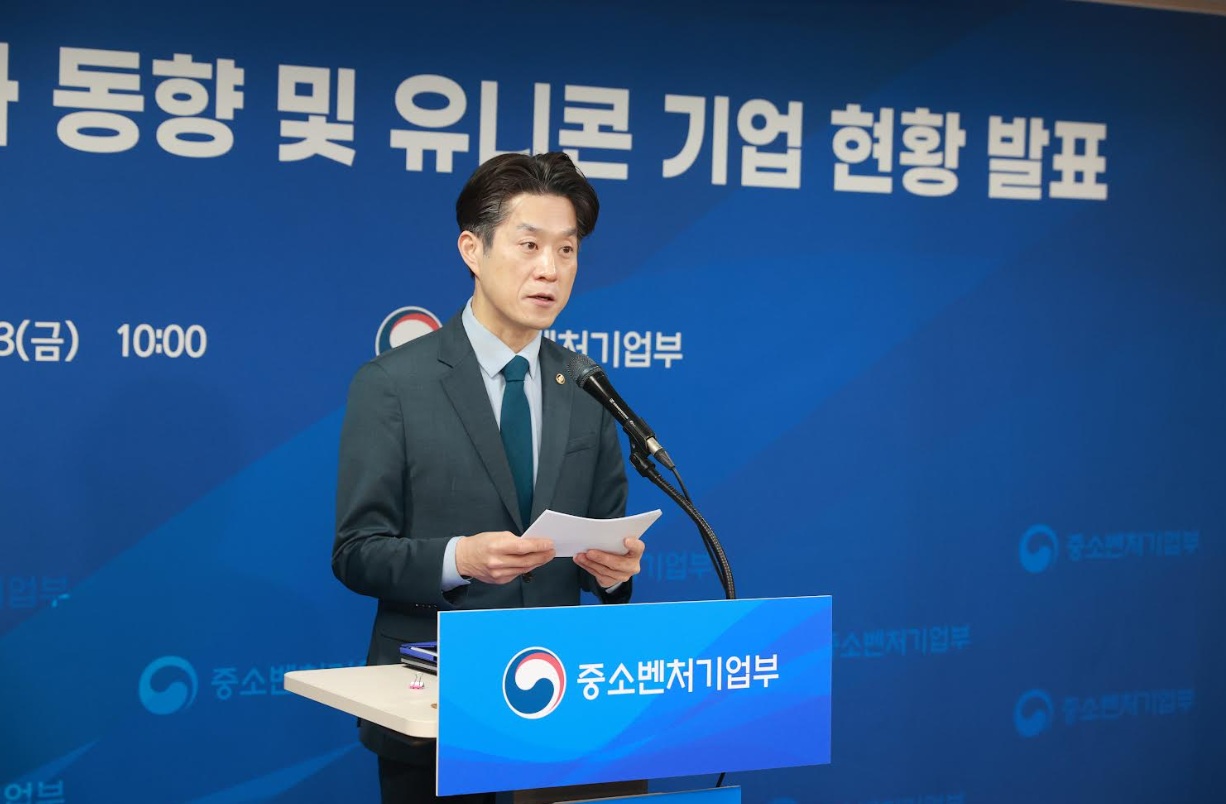
On the 13th, the Ministry of SMEs and Startups announced domestic venture investment and fund formation trends and the status of unicorn companies for 2025. This marks the first annual venture investment performance report since the new administration took office in June 2025.
New venture investment in 2025 reached KRW 13.6 trillion, a KRW 1.7 trillion increase from the previous year, representing a 14.0% increase. This represents the second-highest level ever, following KRW 15.9 trillion in 2021. The number of investments reached a record high of 8,542. KRW 5.7 trillion was invested in the first half of the year, and KRW 7.9 trillion in the second half. Of the KRW 1.7 trillion increase, KRW 1.4 trillion was concentrated in the second half.
In the same year, the amount of new venture funds formed reached 14.3 trillion won, a 34.1% increase, or 3.6 trillion won more than the previous year. Notably, in the second half of the year, 7.9 trillion won worth of funds were formed, a 45% increase over the same period last year. The private sector accounted for 80% of the fund's investment, with 2.7 trillion won from policy finance and 11.5 trillion won from the private sector. Private investment increased by 40.5% year-on-year, driven by increased contributions from pension funds, mutual aid associations, general corporations, and financial institutions.
By industry, the top three sectors accounted for 52.8% of total investment: ICT services (20.8%), biotechnology and medical (17.4%), and electrical, machinery, and equipment (14.6%). The sector with the largest year-over-year investment increase was biotechnology and medical, while gaming saw the highest growth rate. In the ICT services sector, investment in platforms and software, previously concentrated in the wake of COVID-19, shifted to real-world sectors such as ICT manufacturing and electrical, machinery, and equipment.
By business history, 45.6% of investments went to companies founded less than seven years ago, while 54.4% went to companies founded more than seven years ago. Investment in startups reached KRW 6.2 trillion, an 11.3% increase year-on-year, and investment in early-stage companies founded less than three years ago also saw a slight increase. Conversely, investment in late-stage companies increased by over KRW 1 trillion to KRW 7.4 trillion, expanding the share of investments.
To stimulate investment in early-stage startups, the Ministry of SMEs and Startups plans to double the amount of capital invested in the early-stage startup sector of the Mother Fund, creating a dedicated fund worth over KRW 333.3 billion. Of this, KRW 50 billion will be allocated to the Startup Fever Fund, which will be dedicated to investing in early-stage startups.
As of 2025, there are 27 domestic unicorn companies. E-commerce accounts for the largest number, with eight companies, followed by cosmetics and fintech with three each, and AI semiconductors, data, travel and accommodation, and cloud computing with two each. The average time it takes for a company to become a unicorn after founding is estimated at seven years and eight months.
The four newly confirmed unicorn companies in 2025 are Rebellion, Furiosa AI, Vinau, and Galaxy Corporation. These companies have grown in diverse fields, including AI semiconductor design, cosmetics manufacturing, and AI/entertainment technology.
The Ministry of SMEs and Startups announced that it plans to continue the trend of expanding venture investment while strengthening support to help venture companies become unicorns and drive economic innovation.
- See more related articles
You must be logged in to post a comment.