



Most small and medium-sized businesses (SMBs) face the same dilemma. Sales and customer bases are growing, but organizations struggle to keep pace. Blindly expanding staff and resources is burdensome, and sticking to existing methods only leads to increasingly complex operations.
SMEs face structurally limited resources. While they must compete in the same markets as large corporations, they lack the human resources, budget, and specialized infrastructure to compete. Consequently, SMEs have recently begun to view technology not as a mere aid, but as a core tool to complement organizational execution and enhance operational efficiency. In particular, they are focusing on ways to reduce repetitive tasks and reliably manage more customers and transactions with limited staff.
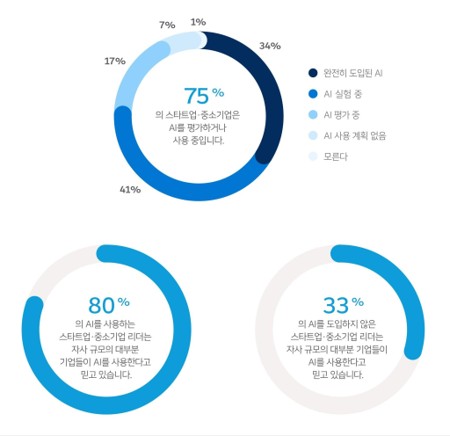
According to a survey conducted by Salesforce last year of 3,350 small and medium-sized business leaders across 26 countries, including Korea, 75% of SMBs are already evaluating or utilizing AI, and 76% are increasing their technology investments year-over-year. Ninety percent of companies that have adopted AI reported improved operational efficiency, and 85% expect a positive return on investment (ROI). This demonstrates a clear expectation for accelerated growth through technology.
However, along with the expectations surrounding the adoption of technology, practical constraints also emerged. A greater challenge than the technology itself was the question of how to operate and manage it. According to the survey, SME leaders recognized that for AI and new technologies to function effectively, a robust data management system and internal operational structure are essential.
Differences are particularly evident in how technology is utilized. According to the survey, companies experiencing growth tend to integrate sales, marketing, and customer management into a single platform, rather than deploying multiple, separate applications. In fact, 66% of growing companies opted for this integrated architecture, while companies experiencing stagnant or declining performance were more likely to use fragmented tools across functions.
AI adoption shows a similar pattern. Forty-one percent of small business leaders cited security concerns as the biggest obstacle to AI adoption. Furthermore, while 84% perceived themselves as having security capabilities, less than half actually implemented basic security practices like multi-factor authentication and password managers. This demonstrates that while there's a strong desire to utilize AI, there's a lack of systems in place to securely operate it.
Ultimately, the challenge facing SMEs and startups today isn't the availability of technology. It's how to manage data within limited resources and how to ensure the entire organization operates on a single, trustworthy source of truth (SSO). The case of domestic startups that have found a solution to these concerns by adopting Salesforce, the global leader in AI CRM, is attracting attention.
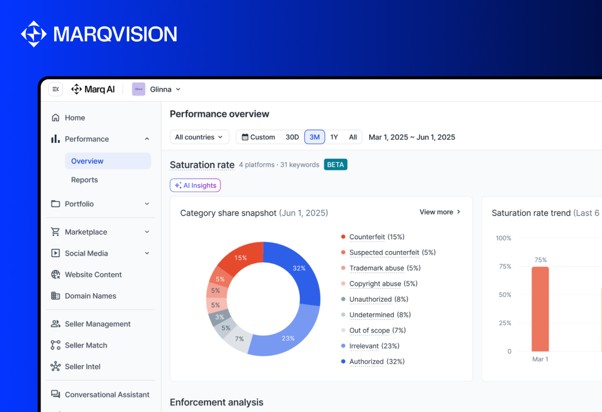
MarkVision, a leading AI intellectual property (IP) integrated management solution company, rapidly grew from a five-person team to a global organization of over 80 employees. As enterprise customer sales intensified, the company faced challenges in integrating and managing diverse business environments across regions and markets.
Accordingly, MarkVision adopted Salesforce's Sales Cloud to integrate sales activity and transaction data into a single standard, standardizing sales stages and approval processes. This established a structure that allows pipeline management to be conducted with consistent standards across regions and contacts. As a result, 60-70% of meetings converted into actual sales opportunities, and the company maintained a consistent 30-35% close rate.
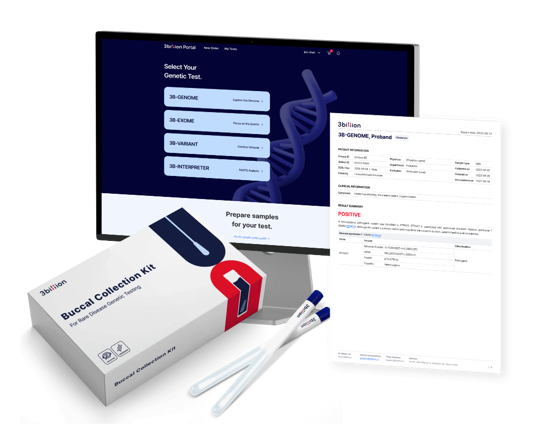
3billion, which operates a genetic diagnosis platform for rare diseases, also built a data-centric operational system by integrating marketing, sales, and service into a single flow, leveraging Salesforce. With a diverse network of stakeholders, including medical professionals, patients, pharmaceutical companies, and public institutions, the complexity of information management was rapidly increasing as customer touchpoints increased. This system seamlessly manages data generated throughout the entire process, from customer acquisition to actual transaction conversion and subsequent service management, enabling a comprehensive overview of customer status.
This structure allowed customer interest information accumulated during the marketing phase to be naturally translated into sales opportunities. Once customers were converted, their service history and other business status could be managed based on integrated criteria. As a result, existing customer sales increased by 73%, and overall sales more than doubled year-over-year. The time spent on repetitive, simple tasks was also reduced by approximately 80%, reducing operational burden despite the increased customer base.
Salesforce research suggests these cases are not an exception. Eighty percent of small business leaders believe improving data quality will lead to increased revenue, and 81% consider scalability and reliability more important than price when selecting a technology partner. Establishing a system that can handle technology within limited resources is rapidly becoming a necessity, not an option, for startups and small businesses with limited resources.
You must be logged in to post a comment.