


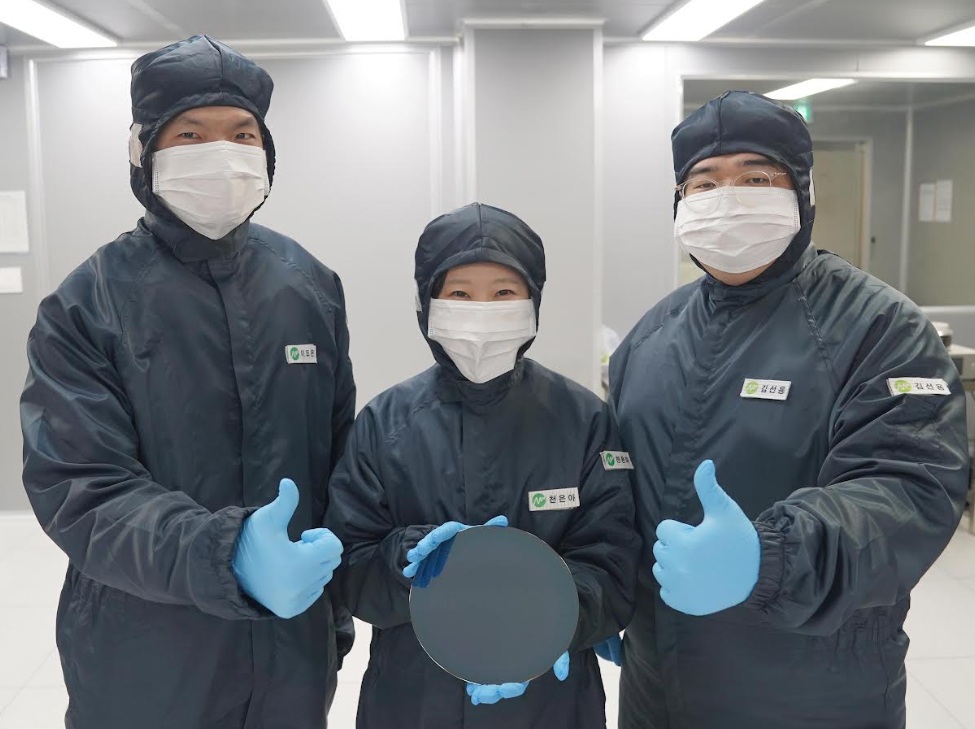
Semiconductor materials startup IVWorks announced that it has obtained green technology certification for its gallium nitride single crystal wafer manufacturing technology, a key material for power semiconductors.
Green Technology Certification is a system that certifies and supports promising green technologies based on the Carbon Neutrality Basic Act, and eight ministries, including the Ministry of Trade, Industry and Energy and the Ministry of SMEs and Startups, participate in the evaluation.
The newly certified technology is a gallium nitride single-crystal wafer manufacturing technology, a key material for gallium nitride power semiconductor applications. It utilizes hydride vapor deposition and in situ separation methods instead of conventional ingot manufacturing methods, enabling increased wafer yield and larger wafer diameters.
Based on this, GaN-on-GaN epiwafers for vertical power semiconductors meet the requirements of 1-kilovolt high-voltage power semiconductors, such as electric vehicle inverters, AI data center power supplies, and renewable energy power conversion devices. The company explained that gallium nitride can increase power conversion efficiency and reduce energy loss due to its superior electronic properties compared to silicon.
IVWorks stated that this technology can improve electric vehicle battery performance by approximately 20 percent and, by enhancing the efficiency of solar inverters, reduce carbon dioxide emissions by thousands of tons annually. Furthermore, it can improve the efficiency of high-power LEDs by 1.5 times, contributing to reduced power consumption in the optoelectronics sector.
Previously, IVWorks announced plans to mass-produce 8-inch gallium nitride nanowire epiwafers for green hydrogen production based on artificial photosynthesis.
IVWorks plans to advance its high-efficiency gallium nitride material technology and contribute to reducing energy consumption in response to the increasing demand for power semiconductors due to the spread of electric vehicles and mobile communications.
- See more related articles
You must be logged in to post a comment.