



Market stabilization and ecosystem completion by 2026… IPO pursued.
– Plans to expand the global market for Korean digital therapeutic devices through combination therapy with global pharmaceutical companies.
-Development of AI Foundation Model for Dementia Prediction through Korean ARPA-H Project with a budget of KRW 15.9 billion
While medications address the underlying pathology, digital therapeutics restore cognitive function. Only when these two approaches work together can patients truly return to their daily lives. Even after treatment, continued training is necessary to maintain a normal life, and digital therapeutics can handle this post-treatment care. By leveraging the data accumulated during this process and collaborating with global pharmaceutical companies, Korean digital therapeutics companies can also grow and share in the global healthcare market.
This is what Yoo Hun Noh, co-CEO of emocog, said. Given Korea's struggle to secure global competitiveness in traditional new drug development, digital therapeutics could become a new concept in medicine. The core strength of digital therapeutics lies in data. While it's difficult for pharmaceutical companies to gauge individual patient responses when medications are administered at home, digital therapeutics can monitor patients' cognitive status daily and accumulate data. Emocog is demonstrating its potential in the areas of dementia and mild cognitive impairment.
Approximately 1 million people in Korea suffer from dementia and 2.98 million suffer from mild cognitive impairment (MCI). Approximately 28% of the population aged 65 and older suffer from memory and cognitive decline, yet available treatment options for these patients are extremely limited. Dr. Lee Jun-young, a psychiatrist, and Dr. Yoo Hun Noh, a professor of neuroanatomy, have been working together on research for patients with MCI for over a decade. Believing that digital technology could be a new breakthrough in dementia treatment, they founded Emocog (Emocog), a portmanteau of "emotion" and "cognition," in 2021.
For emocog, 2025 was truly a year of leap forward. It was the year when accumulated clinical data and technological prowess finally bore fruit in the market. The most significant achievement was the approval of Cogthera, a digital therapeutic device for patients with mild cognitive impairment (MCI), from the Ministry of Food and Drug Safety (MFDS) in May 2025. This marks the first digital therapeutic device in Korea for MCI, aimed at preventing dementia. Following the designation as an innovative medical technology and the completion of the Ministry of Health and Welfare's technical notification, full-scale prescriptions began in mid-October, primarily in neurologists and psychiatrists.
Cogthera has also achieved significant results overseas. With the results of a clinical trial conducted in Germany, Cogthera's effectiveness has been proven even in Europe, a diverse cultural region. Based on these results, the company has completed its application for Germany's "DiGA" (a reimbursement system for digital healthcare apps, introduced in 2019. Digital health apps that have undergone medical device certification are eligible for insurance coverage if they demonstrate clinical efficacy and data security). Upon approval, the product will be fully covered by insurance in Germany. Furthermore, the company has completed its diagnostic ecosystem by signing an exclusive Korean distribution agreement for Simoa, a blood-based biomarker analysis platform, with Quanterix, a NASDAQ-listed biotech company.
Investment performance is also noteworthy. Despite challenging market conditions, the company secured approximately KRW 22 billion in Series B funding (with completion expected by the end of December 2024), bringing its total investment to approximately KRW 43 billion. Investors included Naver, Kakao, Stonebridge Ventures, and IBK Industrial Bank of Korea.
Building on last year's success, emocog is actively pursuing the domestic market penetration of its digital therapeutics this year. Its goal is to reach 35,000 cumulative prescriptions by the end of the year. CEO Noh stated, "Germany is the only country globally that has achieved this scale of digital therapeutic prescriptions. Reaching this milestone in Korea will set a meaningful precedent for other digital therapeutics companies."
At the same time, the plan is to create a truly functional example of a full-cycle ecosystem spanning from early screening to treatment and management, from clinics to general hospitals. CEO Noh stated, "Once this ecosystem is complete, both patients and doctors will be able to experience a seamless treatment experience."
Based on these achievements, emocog plans to pursue an IPO by the end of this year or early next year.
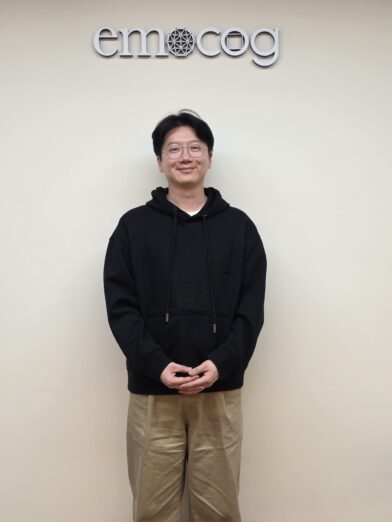
We met with Co-CEO Yoo Hun Noh at the emocog office in Gwacheon to discuss the significance of building a full-cycle integrated cognitive care ecosystem and the global potential of Korean digital therapeutics.
Seamless , Connected Care
Traditional dementia care involves cognitive testing, imaging studies, treatment prescriptions, and follow-up care, all spread across disparate systems and institutions. Patients and their caregivers are forced to navigate complex medical processes, and medical staff struggle to gain a comprehensive understanding of the patient's condition.
While most digital therapeutics companies focus on a single product (either testing or treatment), emocog differentiates itself by connecting the entire process—from screening to diagnosis, treatment, and management—within a single platform. emocog's "Full-cycle Integrated Cognitive Care Ecosystem" combines four solutions—early screening, diagnosis, treatment, and management—to form a single, continuous healthcare journey.
CogScreen (early screening) → Simoa platform (precise diagnosis) → CogTera (treatment) → CogCheck (management/monitoring) → cycle back to CogScreen
In the first step, CogScreen rapidly identifies those at risk for cognitive decline. Once identified, the Simoa blood test detects the presence of pathological substances such as amyloid beta and tau proteins. Specifically, by securing exclusive Korean rights to the Simoa blood diagnostic platform and combining it with the distribution of CNS specialty pharmaceuticals through its subsidiary, PL Group, a structure has been created where digital therapy and drug treatment are integrated into a single clinical workflow. Based on the diagnosis, patients with mild cognitive impairment are treated with CogThera, while patients at risk for early Alzheimer's disease are linked to drug treatment, including antibody treatments, based on clinical judgment. The CogCheck platform then continuously monitors treatment progress, cognitive function changes, and side effects, accumulating data that is then used to inform subsequent treatment decisions.
The key concepts are "seamless" and "connected." The goal is to create a structure where treatment flows seamlessly, enabling both patients and doctors to experience the entire process. By 2025, with all four solutions in place, the technological foundation of the ecosystem will be complete. By 2026, the key goal for this year is to demonstrate how this ecosystem can actually work, from clinics to general hospitals.
A full-cycle integrated cognitive care ecosystem of early screening , diagnosis , treatment , and management
Cogscreen, a web-based digital cognitive assessment tool, allows users to complete a cognitive function test in less than five minutes by simply accessing a link without installing a separate app. Designed for ease of use even for seniors, all test results are based on clinical evidence. CEO Noh stated, "Because it's easy and convenient, it can be utilized not only in medical settings but also in various areas of healthcare." Cogscreen is the starting point for comprehensive cognitive care.
A definitive diagnosis of dementia requires both cognitive decline and the presence of pathological substances (amyloid beta, tau protein, etc.). Previously, amyloid PET imaging was required, which required a three- to six-month appointment, costing approximately 1.5 million won, and taking approximately two hours to complete. Furthermore, it also carried the burden of radiation exposure. In contrast, blood testing requires only a blood draw, with results available within a day or two, at approximately one-tenth the cost. The shift from imaging to blood testing is a global trend, and emocog is leading this trend by securing exclusive Korean rights to the Simoa platform, which boasts the most extensive global clinical data.
Currently, the only drug available for patients with mild cognitive impairment (MCI) is the antibody treatment Leqembi. However, the cost of one year and six months of treatment is approximately 31 million won, and the incidence of side effects, such as microvascular hemorrhage, is as high as 20%. Furthermore, due to strict eligibility criteria, it is estimated that less than 5% of patients with MCI are actually eligible for the treatment. In contrast, the digital cognitive intervention device Cogthera costs 120,000 to 150,000 won for three months and has no side effects. Cognitive training using Cogthera has been shown to alter brain structure, and these therapeutic effects have been verified in five SCI-level international academic journals. Currently, 52 hospitals are prescribing the drug, and sales are growing by nearly twofold each month. CEO Noh explained, "The cognitive function improvement effects are similar or even better in some cases. It is a digital new drug that anyone can prescribe at an affordable price without side effects." He then emphasized its significance, saying, “This is the first case that proves that digital therapeutic devices made in Korea can be used overseas as well.”
Cogcheck, an integrated management platform for medical professionals, allows patients to view previously fragmented patient information, including digital cognitive assessments, blood tests, digital treatments, and medication history, all on a single screen. It digitizes patient training sessions and changes in cognitive function at home, analyzes them using AI, and provides reports. Patients taking antibody treatments can also continuously monitor cognitive changes and side effects. CEO Noh emphasized, "While pharmaceutical companies cannot individually assess the effectiveness of medications taken at home, digital therapeutics report daily patient status data. This unique strength lies in the ability to collaborate with pharmaceutical companies and expand the market based on this."
emocog is building a comprehensive cognitive care system encompassing early screening, precise diagnosis, treatment, and management. This is made possible by four core solutions, all connected into a single platform called "Cogcheck."
Development of an AI Foundation Model for Dementia Prediction
Emocog is not just focusing on commercial solutions; it is also accelerating the development of next-level technologies. Selected as the lead research and development institution for the "Korean ARPA-H Project," a national strategic R&D program sponsored by the Ministry of Health and Welfare and the Korea Health Industry Development Institute, emocog is currently conducting research totaling 15.9 billion won.
The core goal is to collect and study data from patients with dementia or cognitive impairment to develop an LLM-based foundation model specialized for brain function decline. Combining UK and Korean data, we have secured approximately 6.6 million multimodal data points. Based on this, we are building an "Expert Foundation Model" that can identify patients' conditions and suggest solutions, including which cognitive interventions are effective for prevention or improvement. A beta version is scheduled for release this year.
This foundation model is planned to be utilized in various fields, including research, service development, and the development of next-generation digital therapeutic devices. Research advisors include Professor Yaakov Stern of Columbia University, who established the concept of cognitive reserve, and Professor John Gallacher of Oxford University, who established the UK's national dementia data platform, DPUK. CEO Noh stated, "I believe we will be able to match the level of similar projects currently underway in the US."
Global expansion toward advanced digital therapeutics markets
emocog's global strategy began with Germany as a bridgehead. In 2022, it established Cogthera GmbH, a local subsidiary in Germany, and obtained CE Mark, laying the foundation for entering the European market. CEO Noh explained why emocog chose Germany as its first target, saying, "Germany was the only country with a reimbursement system for digital therapeutic devices and a company that was generating significant revenue and growing."
Currently, we are in discussions with three pharmaceutical companies in Japan and are also seeking partners in the United States. Having received a letter from the US FDA confirming our device's safety, we are preparing for the next stage. CEO Noh stated, "Currently, Germany and Korea are leading players in the digital therapeutics market, and the number of Korean digital therapeutics companies has already surpassed Germany's."
“Everyone can easily and conveniently receive medical services and find happiness through them.”
This is emocog's mission. The challenges of two medical scientists, CEO Lee Jun-young and Yoo Hun Noh, have yielded concrete results in just five years: Korea's first digital therapeutic device for mild cognitive impairment (MCI), successful clinical trials in Germany, 43 billion won in investment, and a 15.9 billion won national R&D contract.
Dementia is a disease that robs individuals of their memories and dignity, while placing a tremendous burden on families and society as a whole. Emocog envisions not just a single product, but a seamless "treatment ecosystem" encompassing everything from early screening to precise diagnosis, treatment, and management. Building upon this ecosystem, they have laid a broader vision of combination therapy with global pharmaceutical companies. Whether this Korean digital new drug can become a new pillar of the global dementia treatment market is a matter of intense interest, and emocog's next steps are drawing keen attention.
You must be logged in to post a comment.