



GOI Funeral Research Institute redesigns the funeral industry's revenue structure with a fixed-rate system, post-pay, and a 100-won prepaid funeral plan.
– Presenting a new funeral culture with transparent estimates and a non-commercial funeral director model.

“Why do funeral services make bereaved families feel lonelier?”
A funeral is a moment that comes to everyone, yet no one wants to prepare for. Seul-ong Song, director of the GOI Funeral Research Institute, posed a question at this point.
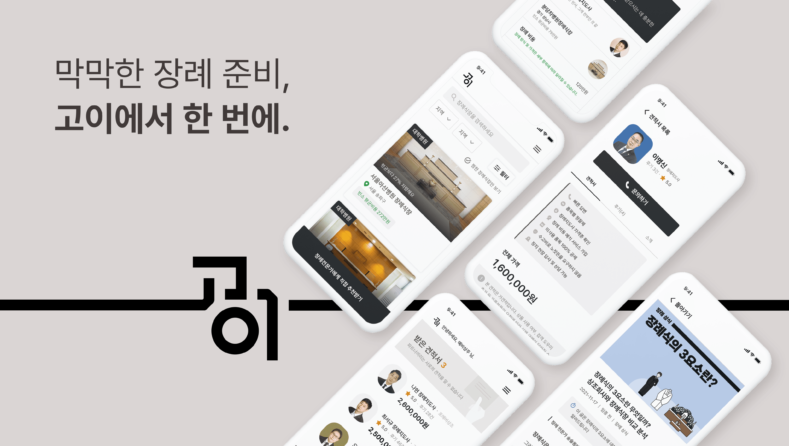
Founded in August 2021, GOI Funeral Research Institute (GOI) is a funeral service startup founded with the goal of "creating an environment where bereaved families can focus on remembrance, not sales, during their loneliest moments." It introduced the industry's first Fixed-Price Funeral Service and price inquiry service, and in June 2024, it launched the "100-Won Prepaid Funeral Plan," which guarantees a lifetime subscription price of 100 won per month. With over 100,000 subscribers and a cumulative 11.9 billion won in Series A funding, GOI is gaining attention as a new model for the funeral industry.
The funeral is over, but why is my mind still unsettled?
Song's awareness of the funeral industry stemmed from personal experience. His father was a funeral director, and his mother ran a flower shop, supplying condolence wreaths. Death was always a close companion to his daily life. However, around the age of twenty, he experienced the structural problems of funerals firsthand after losing his grandmother.
"Even after the funeral, my mind still wasn't at peace. It wasn't until a year later, when I visited the gravesite with my family and shared memories, that I was finally able to cry properly."
He felt regretful that he hadn't had time to truly commemorate the deceased due to the strict adherence to established procedures. Added to this were three other situations: the structure of offering funeral goods as if they were merchandise, the mechanical nature of the funeral, and the administrative burden that lingered even after the funeral. He realized: the problem wasn't "death," but "the way funerals were handled."
Reduce sales time, increase memorial time
Goi's philosophy can be summarized in one sentence.
“Let’s give the bereaved families time to process the death.”
Korean funerals have become increasingly streamlined over the past few decades. The system centers around hospital funeral homes, a mutual aid package system, and standardized procedures. While funerals are handled quickly and accurately, the bereaved family has less time to grieve.
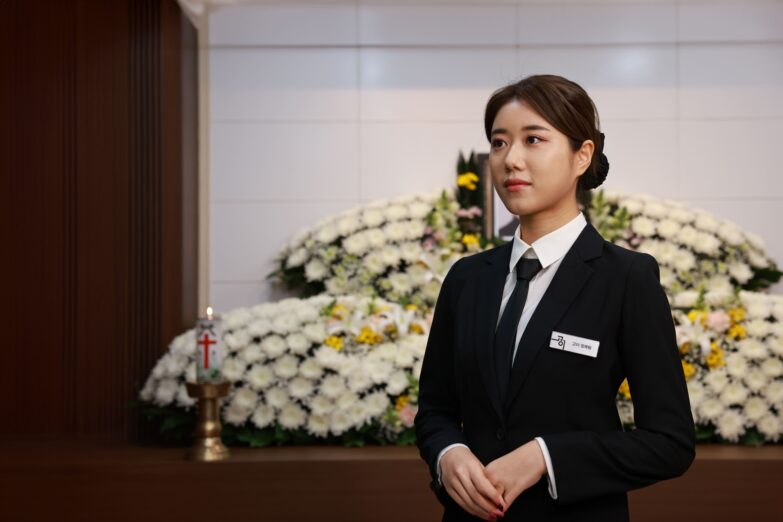
Goi changed this structure, starting with incentives. Most existing funeral directors are freelancers, and their earnings depend on the sales of options. Structurally, the more they sell, the more they earn. Goi completely overturned this system. They pay a fixed salary unrelated to sales performance, and guarantee a salary 1.5 times higher than the industry average.
The role of funeral directors has also been redefined. They are now called "professional emotional guides." On-site, they operate a "memorial table," displaying photos of the deceased, favorite items, and food alongside fresh flowers. The thoughtful act of providing cloth handkerchiefs instead of tissues also originated from the funeral director's idea. Their support doesn't end after the funeral, offering one-stop support, from inheritance procedures and administrative guidance to mourning clothing collection.
The '100-Won Prepaid Funeral Plan' Changes the Formula for Mutual Aid
The biggest difference between Goi and existing mutual aid plans is the flow of funds. Traditional mutual aid plans typically require upfront payments of millions of won, with additional costs charged at the time of the actual funeral. Because consumers have already paid, they have little negotiating power. Goi's "100-Won Prepaid Funeral Plan" requires only a monthly deposit of 100 won, with payments made after the actual funeral. The initial price is guaranteed for life.
“I wanted to be a company that would be there for you when you needed it, rather than a company that you just entrust your money to.”
This model has rapidly spread. Currently, over 100,000 people have signed up. A cumulative 360,000 people have searched for funeral information, and over 100,000 people visit the website each month to check costs. It has had a significant impact on the market, fostering a culture of price comparison. Indeed, many later entrants are now adopting policies such as fixed-price bidding and transparent quotations.

People don't want to prepare for a funeral; they don't want to prepare for it.
In the early days of the business, Goi focused on providing a "price information inquiry service." However, he soon realized that bereaved families didn't want to create their own quotes. They didn't have the luxury of fiddling with calculators in their grief. So he restructured his service. The website only required four basic questions, and a counselor provided detailed guidance. A funeral guidebook and checklist were also provided. Ultimately, what bereaved families wanted was not "information," but "a person they could trust."
Funeral culture changing with the MZ generation
CEO Song believes that the changing values of the younger generation are having a significant impact on the funeral industry.
First, expectations for transparency differ. They take for granted the right to ask about the basis of prices, compare prices, and make choices. Second, they prioritize meaning over formality. They focus on how to remember the deceased rather than following traditional procedures. Third, they are less reluctant to discuss death in advance. The fact that a significant number of subscribers to the 100-Won Prepaid Funeral Plan are in their 30s and 40s attests to this.
"Companies that cling to traditional methods will be eliminated. Only those that evolve in line with customer values will survive."
Average rating of 4.9 points, and 'Funeral Companion Report'
Goi currently collaborates with over 100 partner funeral directors, with an average rating of 4.9 out of 5. Quality control is driven by three pillars: restructuring the compensation structure, systematic feedback, and empowerment. After a funeral, a "Funeral Accompanying Report" is created. It visualizes and shares six key elements, including professionalism, piety, and warmth, and provides specific suggestions for improvement. This system was further refined following a customer's feedback.
The request to “donate to the deceased’s non-profit foundation instead of a refund” became an opportunity to reexamine Goi’s internal quality control system.
A society less lonely in the face of death
Goi's long-term vision is clear.
“Creating a society that is less lonely in the face of death.”
In the short term, we focus on healthy cash flow and sustainable growth. In the medium term, we aim to expand the fixed-rate, postpaid, and non-commercial funeral director models into industry standards. Longer term, we aim to create a culture where death is discussed naturally. The automatic payment reminders for the 100-Won Prepaid Funeral Plan aren't just billing messages. They're small reminders that "this moment will come someday."
Don't follow someone else's formula for success.
Finally, CEO Song gives this advice to entrepreneurs:
"At first, we tried to imitate the existing mutual aid industry. Naturally, we failed. Someone else's formula for success can be poisonous to a startup. We need to get back to basics. We decided to become a company that 'does one funeral well,' and we started from there."
Although it tackles the weighty subject of death, Goi's message is clear: the power to transform an industry ultimately comes not from grand strategies, but from persistent questions about its essence.
You must be logged in to post a comment.