



There's a reason most jeonse scam victims flock to villas and officetels. While it's easy to check market prices for large apartment complexes on portal sites, villas are in the dark. Transactions are rare and information is fragmented, making it difficult for the general public, and even financial institutions, to make reasonable price judgments. Since it's impossible to tell if the jeonse price is excessively high compared to market value, there's no real risk of losing the deposit. In fact, the more affordable a housing unit is, the higher the financial costs and insurance rates. This irrational structure stems from a lack of information.
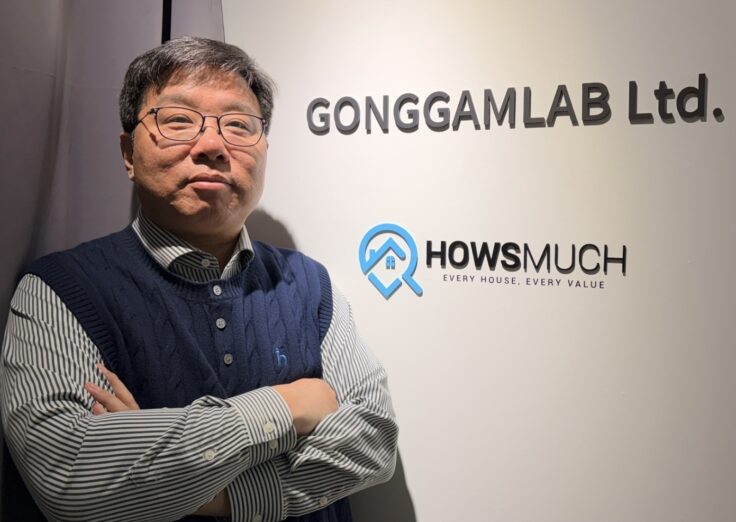
There's someone who's disrupted that structure with AI. Maeng Jun-young, CEO of Gonggam Lab, founded the company in 2015 after working as an appraiser at the Korea Appraisal Board for 15 years. His real estate valuation service, House Much, is currently used by over 20 financial institutions, including Shinhan, Woori, Nonghyup, Jeil, and Kakao Bank, to calculate secured loans. Now, even villas can be valued in just one second. This gap was what frustrated Maeng as an appraiser.
"For large apartment complexes, market prices are readily available, making brokerage, transactions, financing, and insurance seamless. However, transactions are rare in areas like villas, officetels, and knowledge industry centers, and information is fragmented, making it difficult to make informed decisions."
I researched and proposed solutions within public institutions, but none were accepted. It became clear that government institutional reform alone had limitations. Believing that periodically providing market prices for all real estate properties, like those for large apartment complexes, would solve the problem, I decided to start a business.
The decision to give up a stable career as a real estate appraiser wasn't easy. I was earning a decent salary, and I had to support my family. However, I felt like, "If I don't do it now, I'll never be able to do it." With colleagues who shared the same dream, I prepared technically to last at least two to three years, and winning the startup competition gave me the final push.
The key to HouseMuch's AVM is its ability to provide both price and reliability. It doesn't simply throw out numbers; it also demonstrates how trustworthy the price is.
"Even appraisers find some items easy to evaluate and others difficult. Even the same item can have different prices depending on the appraiser. Our 'House Much' algorithm incorporates this philosophy, ensuring we don't pretend to know things when we don't."
During my 15 years at the Appraisal Board, I personally observed and appraised tens of thousands of properties, gaining a firsthand understanding of the factors that determine price. Beyond simply assessing square footage and age, I also identify and train models to consider factors such as building type, floor area, orientation, and whether a property is properly maintained, as well as outliers and long gaps in transaction history. This is a difficult task to design without hands-on experience.
For highly individual real estate properties like villas and officetels, we start with the premise that "no two properties are exactly alike." Instead, we quantify similarities from multiple perspectives, calculate how different prices can be estimated based on different perspectives, and then ensemble these results. The most challenging aspect was how to handle the data gaps in a comprehensible way. This was achieved not through simple machine learning, but by combining appraisal logic and statistical inference.
The core of the four patents is pricing approach and ensemble application from various perspectives, outlier detection and scarcity correction, extraction of population characteristics that influence price uncertainty, and price stability assessment logic. The reason estimation is possible within one second is because the system has undergone dozens of stages of refinement and learning in advance.
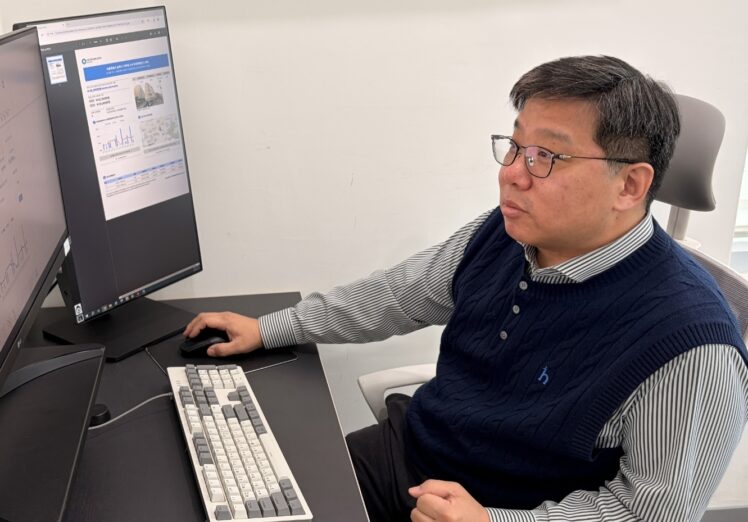
From a proptech perspective, the significance of this technology is clear. The key to real estate transactions is information transparency. Apartment market information is publicly available, leading to active transactions and low financing costs. However, a lack of information in non-apartment properties makes transactions difficult and financial costs high. HouseMuch bridges this information gap with technology.
According to CEO Maeng, the reason financial institutions chose HouseMuch is simple: it's easy to use. It's immediately applicable in practice, with regards to speed, explainability, and risk management. He explained, "It passed the Financial Services Commission's Innovative Financial Services Act, leading to revisions to the Bank Supervision Enforcement Regulations, and technically enabled the automation of non-face-to-face secured lending." He added, "The increased reliability and explainability, as test data and references accumulated at each bank, also played a significant role." The fact that HouseMuch is being used by multiple banks in the primary financial sector effectively means that HouseMuch has entered the market standard validation phase. Contracts with financial institutions are structured on a B2B subscription and usage basis, with financial sector sales accounting for a significant portion of the total.
Our collaboration with KB Real Estate was also a key turning point. By covering 2.5 million multi-family homes nationwide, we demonstrated that AVMs work effectively in high-traffic, real-world environments. While the end of the collaboration was disappointing in the short term, it ultimately led to a significant increase in inquiries from both the financial sector and HouseMuch's direct services. While we remain open to both collaborations with large platforms and our own services, we are always mindful of the risks of platform dependence. Data control is key. During the 2023 jeonse (lease) fraud crisis, HouseMuch served as a tool to easily identify villas whose jeonse prices were excessively high compared to market prices. This led to a surge in inquiries about high-risk properties, as well as an increase in inquiries from financial institutions and the public sector.
Empathy Lab's growth strategy is unique. It has focused on revenue-based growth rather than external investment. It has generated stable revenue since its second year of operation, and by its fifth year, it had surpassed the break-even point and was generating profits. The energy spent on securing external investment has been channeled into strengthening its fundamentals.
CEO Maeng emphasized, "As of 2024, annual sales will reach tens of billions of won, and we are on a steady growth curve as we fully embrace the financial sector." He added, "While we are open to attracting additional investment, we are not considering simple financial investments, as profitability has already been secured. If strategic investment from the financial or public sectors is made, we plan to focus on expanding our data coverage, enhancing our model, and expanding our B2C business."
The organization currently operates with 13 employees, including data science, valuation, and real estate domain experts, as well as development and business operations personnel. The turnover rate is low, with only a handful of employees leaving the company over the past decade. The company prioritizes professionalism and transparency, encouraging employee self-development and fostering a seamless collaborative structure.
The reason for locating the office in Seongdong-gu, Seoul, is because it's home to a cluster of startups and IT professionals, yet offers easy access to the city center and reasonable costs. "Startups and IT companies should be located where the talent is," is the philosophy of CEO Maeng and his fellow founders.
The future that CEO Maeng Jun-young dreams of is simple.
"In five to ten years, I hope Gonggam Lab will become the first reference when discussing real estate pricing. Our goal is to establish ourselves as a trusted resource, a reference point for people who are always looking for information when trading real estate or applying for mortgage loans."
He believes that the true indicator of success lies in how much the opaque real estate market has been reduced, rather than in sales or market share. Korean proptech has now moved beyond the experimental phase and entered the verification phase, and the combination of expert collective intelligence and AI is essential. The tenacity of a real estate appraiser, who gave up a stable career in the public sector to jump into this field, is bridging the information gap for ordinary citizens living in villas and officetels with technology.
You must be logged in to post a comment.