



We live in a world where creating websites is easy with no code. Even if you don't know how to code or have a strong design sense, you can create one. Imweb (CEO: Lee Su-mo) is a leading no-code website builder company. Over the years, one million websites have been built with Imweb, and its online store has surpassed 7 trillion won in transaction volume. Montcookie, the pioneer of the Dubai chewy cookie craze, surpassed 1.3 billion won in monthly sales just one year after launching its online store on Imweb. Beyond commerce companies, brands that go beyond merchandising to commercialize IP, space, and experiences, such as entertainment agency Antenna, F&B brand Noted, and photo studio Insaengnecut, are also leveraging Imweb as a digital hub.
Imweb is evolving from website and online shopping mall development to a "brand operation hub" encompassing commerce operations, marketing, analytics, and an AI-based operating environment. This year, imweb is preparing for a leap forward with two key strategies. First, it is an intelligent solution incorporating AI agents. The recently launched "Custom Data Exploration" feature supports natural language-based data analysis, and in the second half of the year, it plans to launch an AI agent that will assist with everything from data interpretation to strategy development and execution. Second, it is creator commerce. This platform allows creators to naturally express their tastes, and followers can then purchase products through these experiences. It is currently in preparation for its launch next month. With these two strategies on track, imweb will solidify its position as a "brand growth platform" beyond a "brand launch platform."
Imweb recently launched a large-scale hiring campaign. They're hiring double-digit experienced positions across a variety of roles, including development, product, data, and business. They're offering a groundbreaking 20% base salary increase to all new hires. We met with Park Miran, People Team Lead at Imweb, to discuss the hiring process, Imweb's ideal candidate, and the company's core values.
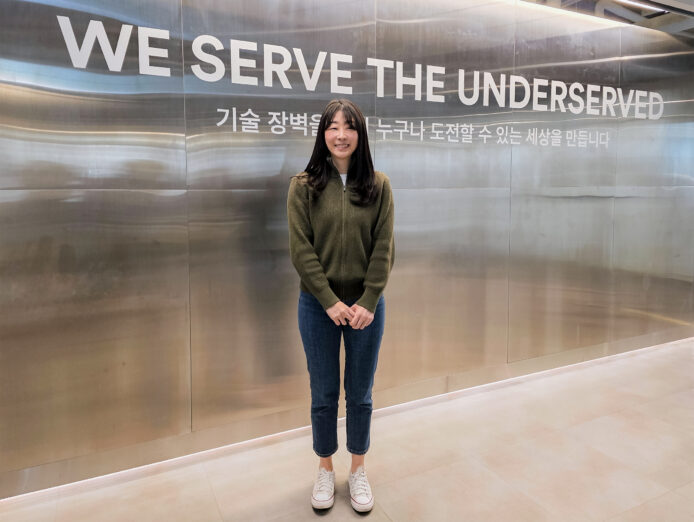
Q. You announced a 20% increase in base pay during this large-scale hiring . What does this mean ?
"All finalists will receive a 20% base salary increase upon joining the company. This is tied to one of imweb's core values, 'greed.' It's our aspiration that imweb will be the first to acknowledge and reflect the effort, expertise, trial and error, and experimentation that our members must put forth in the process of demonstrating their ambition. Of course, greed alone isn't enough; it needs to be backed up by results. However, the message is that we value the passion and challenge inherent in the process."
Q. Why are you hiring on such a large scale ?
"The name of our recruitment campaign is 'Beyond Enough.' We're conducting a large-scale hiring campaign to prepare for our next phase of growth. This isn't simply about expanding our workforce; it's about strategic hiring to elevate standards and execution capabilities across the organization."
As imweb transitioned from a no-code website builder to a brand operations hub, the challenges it faced also increased. As more brands grew, the organization needed to address complex brand growth challenges beyond simple functional enhancements. This, in turn, necessitated the development of talent to handle these challenges.
We create a world where anyone can take on challenges by lowering technological barriers.
CEO Lee Su-mo says that at some point, he asked himself, "Why can't people design?" He realized that design wasn't accessible to everyone, and his current mission was born from a commitment to creating a world unbound by technology.
In fact, you can create exactly what you envisioned with just drag and drop. The key here is that the results are within the scope of your imagination. Without a sense of design, no matter how hard you work, the end result will be completely different from what you envisioned. Imweb bridges that gap with technology.
Once you've built a website, what's next? You need to sell your products. PG integration, inventory management, marketing, and more. Running a brand requires a multitude of things to take care of. imweb seamlessly connects these complex processes, allowing brands to focus on the essentials, not the technology.
Brand Builder provides everything you need to launch and grow your brand, allowing you to focus on your products and services—the essence of your brand.
Imweb had already established a solid position in the website builder market. However, as the organization grew, it naturally began to consider its ultimate goals. The conclusion we reached was, "Let's not just take charge of the launch, but also be a part of its growth." The vision born from this was "Brand Builder."
Imweb aims to help brands grow based on their unique identity, free from technological barriers. However, as brands grow, operational complexity increases, and it's easy for them to lose their essence in the process. At imweb, we believe the role of a brand builder lies in creating an environment that allows for seamless operation, unhindered by technology, even during the operational phase.
This is the world imweb envisions. Instead of a world of similar brands with identical formulas, it's a world overflowing with diverse brands, each with their own distinct identity. And from inception to growth, these brands can focus on essence, not technology.
Greed
One of imweb's core values is "greed." Frankly, the moment I heard this word, I was a bit puzzled. In Korean culture, the word "greed" doesn't carry a particularly positive connotation. Its negative connotations, like "greedy" or "being greedy," immediately come to mind.
Q. Did you choose the word ‘ greed ’ as a core value from the beginning ?
"At first, the word 'fierce' (头祖) was a candidate, but we decided it didn't adequately capture the fundamental human desires and energy. We settled on 'greed' and decided to change its negative connotations. Is greed for work necessarily a bad thing? Should the desire to grow be a negative thing? No. We welcome and respond to this kind of greed. It all started with this aspiration."
I looked up the dictionary definition of "greed" (欲心/慾心). It defines it as an excessive desire to covet or enjoy something beyond one's means. A moderate amount of greed can be a powerful motivator in life, but if it's excessive, it can lead to negative consequences. Therefore, Buddhism, in particular, emphasizes the importance of eliminating greed. As long as it's not excessive and doesn't harm others, greed can serve as a motivator for any endeavor. Doesn't excess of anything always lead to problems? Therefore, I think a moderate amount of greed is necessary.
"Greed," as defined by imweb, has three aspects. CEO Lee Su-mo mentions this on LinkedIn.
The desire to be loved by customers ,
The desire to make better products that are not obvious ,
The desire to become better colleagues to each other .
Imweb's ambitions prioritize customers, products, and colleagues over self-interest. Looking at it this way, we can say that imweb's ambitions are about caring for others and doing the best for its products.
Four Principles for Practicing Greed
How can we translate "greed" into action? Imweb created a behavioral guideline called "Principle 3.0." The four principles of Principle 3.0 are as follows:
First, create a service that customers love.
Second, execution is more important than a perfect plan.
Third, overcome difficulties and somehow produce better results.
Fourth, strive to be the best colleagues possible and hold each other to high standards.
A closer look at this principle reveals the three core values of "greed" we discussed earlier: customer service (1), the pursuit of better results (2 and 3), and the desire to be a better colleague (4). Core values and behavioral indicators are linked.
How to find a greedy person
So how does imweb find these "greedy" talents? We conduct a document screening, and for non-development positions, we conduct a first-round practical interview to confirm their expertise. For development positions, we assess not only their coding skills but also their approach to problem-solving and design solutions through coding tests and assignments. A unique aspect of imweb's hiring process is the "Culture Add" interview. Rather than simply seeking "culture fit," which is about finding someone who "fits" with the culture, we seek someone who can "contribute" to it. In the second interview, we ask questions like these:
“Why did you get so caught up in that?”
What's interesting is that quite a few candidates answer "I want recognition" to this question, and they say they hire these candidates. This desire for positive recognition naturally aligns with what imweb calls "greed." (I'm thinking this article might be a spoiler for imweb interviews. Researching articles to prepare for interviews is probably a sign of a desire for the interview.)
An organization that ' practices' greed
How do we internalize greed? Imweb uses the term "practice" instead of "internalization."
"Culture isn't something you can just say, 'We want this.' It requires a lot of practice, trial and error, and side effects. Our members have never experienced 'greed.' We're in the process of learning what kind of greed is right for imweb, what side effects it can have, and what kind of trial and error it can bring."
The core value of "greed" was shared with members late last year, and Principle 3.0 was announced about a month ago. Internal members are practicing greed through various sessions and systems. One of these is "practice based on autonomy and responsibility."
Experiment with unlimited meals
Imweb has been offering unlimited lunch and overtime meals for about two months now. The idea is to practice autonomy and responsibility through a practical system. The results? Apparently, they were positive.
"The members' reactions are interesting. Sometimes they eat a proper meal, but the next day they eat as usual. Their own judgment comes into play."
This may seem small, but imweb believes that this kind of autonomy manifests itself in the workplace. It leads to spontaneous attempts like, "Should I try this a little more?" without anyone asking. They plan to gradually expand this kind of autonomy- and responsibility-based system in the future.
Where failure becomes an asset
Another unique aspect of imweb's culture is its openness to failure. This reflects CEO Lee Su-mo's philosophy: failures must accumulate within an organization to become assets.
"If you try ten things, eight or nine will fail. At imweb, we value what we learn from those eight or nine failures. We have a corner called 'Learning Deck' at our biweekly company-wide meeting where we discuss failures. It's also a positive sign that more and more members are saying, 'I want to try this.' Execution comes with responsibility, and that responsibility can be scary. But at imweb, we don't hold failures against us. Instead, we discuss why things didn't work out and how we can do better next time."
CEO Lee Su-mo says he values not just welfare, but an environment where employees can truly excel. An environment where employees can fail without fear, where they can say, "I'll try!" It's this kind of environment that allowed imweb to choose "greed" as its core value.
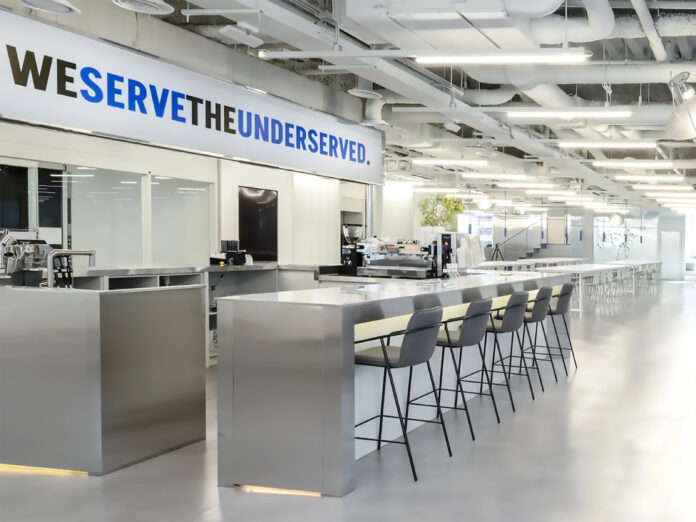
Greed. In Korea, it's a word with a strong negative connotation. However, imweb has reframed this word and made it the core driving force of the organization. Greed for work, greed for growth, greed for colleagues. It will be fascinating to observe how these desires lead to the growth of a million-dollar brand. CEO Lee Su-mo states, "Imweb strives to be a team that is not satisfied with 'adequate results' but works towards 'excellence'" (see LinkedIn post). He believes that individual growth should directly lead to customer success. It's exciting to see how far imweb's ambitions can take us.
You must be logged in to post a comment.