



– Direct management of the entire lifecycle of reusable containers… Thorough hygiene through a 7-step cleaning and disinfection process.
– Search for ‘reusable containers’ on delivery apps and use them… Also economic benefits
– Service expanded to all areas of Seoul this year… Currently available in Seoul, the metropolitan area, and some parts of Jeju
– Evolving into a climate tech solutions company and aiming to enter the carbon emissions market.
"Some people worry about reusable containers. However, most restaurants use them. Reusable containers in restaurants aren't professionally cleaned and disinfected; employees wash them by hand. Cutlery holders are touched by many people. Yet, they don't worry about hygiene."
This is according to Sun Kim, CEO of itgreen. Kim emphasized that consumer concerns about the hygiene of reusable containers are "close to a stereotype." In fact, he points out that disposable containers can be even more dangerous. Because disposable containers are manufactured in factories and shipped without any special cleaning, they are likely to be contaminated with dust or hazardous substances generated in the manufacturing environment.
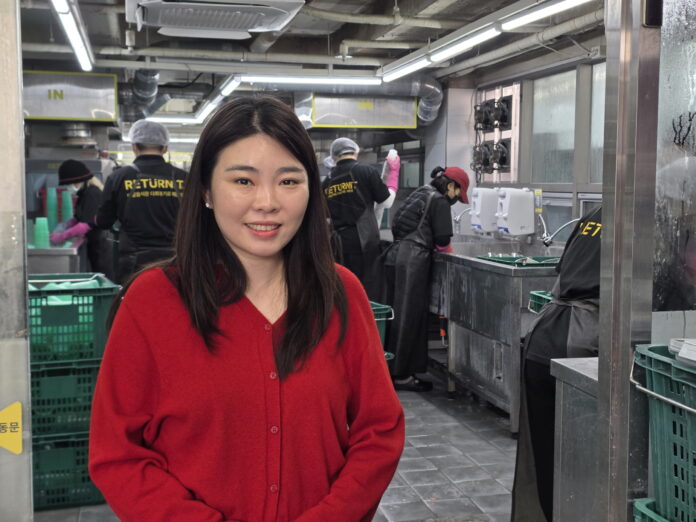
The reusable container recycling service "returnit" is currently available in 20 districts in Seoul, eight areas in Gyeonggi Province, and parts of Incheon, Suwon, and Jeju. itgreen plans to expand to all of Seoul this year. Itgreen has integrated its reusable container service with all six domestic delivery platforms. CEO Kim emphasized, "While many companies provide bulk reusable containers in one location, collect them, and wash them, itgreen is the only one that integrates with a delivery app."
Returnit's growth is rapid. Since its launch, the number of new users has increased by 409% compared to 2022, and the proportion of repeat customers has steadily increased from 21% in 2021 to 39% in 2024. Returnit has secured 45 major return points nationwide, with over 2,000 stores. Recently, it has expanded its reach to include Everland, baseball stadiums, soccer stadiums, movie theaters, and festival venues, solidifying its position as a leading climate tech company.
South Korea ranks first among OECD countries in plastic consumption. The surge in delivery demand since COVID-19 has led to a significant increase in disposable packaging waste. Last year, as the free delivery war intensified, the food delivery market surpassed 30 trillion won, leading to a sharp increase in plastic container use. The problem is the low recycling rate of delivery containers. Many are made of materials that are difficult to recycle, have seals with plastic residue, have stickers attached, or are small, such as side dish or sauce containers, and are thus filtered out during sorting.
The government is also introducing various policies to reduce plastic use. Starting in 2022, the government established a "4-Step Roadmap to Reduce the Use of Disposable Products" and has been expanding the scope of regulations annually. However, due to the burden on small businesses, the guidance period for some items has been effectively extended indefinitely. The Resource Recycling Act requires delivery apps and kiosks to provide consumers with the option to choose reusable containers, but a lack of proactive regulatory oversight has led many places to fail to comply.
itgreen has raised a total of six investments, including a Series A extension, and was selected for the Ministry of SMEs and Startups' TIPS program in 2023. It is currently preparing for its Series B round.
We met with CEO Sun Kim at the itgreen headquarters in Gangnam-gu, Seoul, and talked about the overall operational process, including the use, development, and cleaning of reusable containers.
Just search for ' reusable container ' and order.
Reducing plastic use is simpler than you might think. Simply select reusable containers on your delivery app. Searching for "reusable containers" on six domestic delivery platforms—Baedal Minjok, Coupang Eats, Yogiyo, Ddaenggyeoyo, Baedal Teukgeup, and Meokkaebi—will bring up a list of restaurants offering the service. You can order directly from your existing delivery app without installing a separate app. Baedal Minjok has a dedicated "Reusable Container Store" category on its main page, with banners providing ordering instructions. After eating, there's no need to dispose of leftover food. Simply close the lid, place it in a delivery bag, and leave it at your doorstep. Itgreen will collect it within 24 hours. This is significantly more convenient than using disposable containers, which require you to manually discard leftover food, wash the greasy plastic, and dispose of it on the recycling date.
CEO Kim frankly stated, "If you tell people to use a service for the sake of the environment, no one will." The core need of consumers who order food delivery is "convenience." For those who find it inconvenient to order food, the burden of separating food and washing containers after eating is even greater. In fact, he said, "There are far more ordinary consumers who choose delivery for the convenience of cleanup than those who are concerned about the environment."
From a consumer perspective, returnit offers three benefits. First, the convenience of not having to wash dishes or dispose of leftovers after a meal. Second, the hygienic and healthy stainless steel containers, free from endocrine disruptors. Third, the clean dining experience without the waste of disposable products. The economic benefits are also significant. Currently, the cost of reusable containers is covered by local government budgets, making them virtually free. Furthermore, if you sign up for the Ministry of Environment's "Carbon Neutral Points," you'll receive 500 won in cash for each reusable container order. Combined with local government incentives like Gyeonggi Province's "Climate Action Opportunity Income" and Dongjak-gu's "Carbon Neutral Mileage," you can earn up to 2,000 won per order.
It's also beneficial for restaurants. Itgreen collects used reusable containers and, when restaurants reorder, provides washed containers. For restaurant owners, it's the same experience as purchasing disposable containers. The cost of using reusable containers is similar to purchasing disposable delivery containers. In fact, considering the cost of additional packaging, such as salad dressing containers, straws, and plastic bags, reusable containers are more economical. Reusable containers also present a new opportunity for restaurants. As their stores are exposed in the "reusable containers" category within delivery apps, they naturally gain additional publicity and build an image as an eco-friendly restaurant.
At baseball stadiums , Everland , movie theaters , and festival sites
itgreen is expanding its reusable container service to various areas, including baseball stadiums, theme parks, festivals, movie theaters, and businesses.
The company's expansion into sports stadiums began at Jamsil Baseball Stadium in 2022. It has since expanded to Suwon KT Wiz Park in 2023 and SSG Landers Field in 2024. Beyond baseball stadiums, the company is also collaborating with soccer teams like Samsung Bluewings and Gimpo FC, producing and providing customized containers in their respective team colors. Starting in 2025, reusable containers will be provided for team lunches at basketball and volleyball stadiums.
Everland, home to 72 cafes and food and beverage outlets, will replace disposable cups in all its establishments with reusable ones starting in June 2025. CEO Kim stated, "This is the first such initiative in a theme park worldwide." Everland operates under a public-private partnership model, with Everland, as a private company, covering the costs and Yongin City providing public support. The loss rate is also maintained at a low level, making it a successful transition.
The company has also entered the movie theater market. It is working with Lotte Cinema and Megabox to convert popcorn containers and beverage cups to reusable ones. CEO Kim explained, "Popcorn containers may seem recyclable because they're made of paper, but they're actually coated and oily on the inside, so they end up being thrown away entirely."
It's also rapidly conquering the festival market. It's responsible for operating reusable containers at various festivals, including the Seoul Forest Jazz Festival, Pentaport Rock Festival, Anseong Baudeogi Festival, Jamsugyo Ddukdduk Festival, and Mapo Salted Shrimp Festival. Among them, the 2023 Mapo Salted Shrimp Festival is a landmark event for itgreen. It's the first festival in Korea to use reusable containers, eliminating even a single paper cup or wooden chopstick.
"After the festival, waste was reduced by more than 90% compared to the previous year. This achievement is all the more significant, as Mapo-gu was a region with a high level of sensitivity to waste issues due to local conflict surrounding the construction of an incinerator."
Since then, the adoption of 100% reusable containers has rapidly spread across public festivals nationwide. Seoul City implemented an ordinance banning the use of disposable items at city-sponsored events with more than 1,000 participants starting in September 2024, and Ulsan has implemented even stricter regulations for events with 500 participants. Incheon has also joined the mandate.
Corporate subscription delivery is also a key business area. By replacing existing plastic lunch boxes with itgreen's reusable containers, the company is achieving ESG management performance. Services for private companies are also expanding, including replacing disposable cups in in-house cafes and switching to boxed lunches for startups.
Full cycle management from development to cleaning
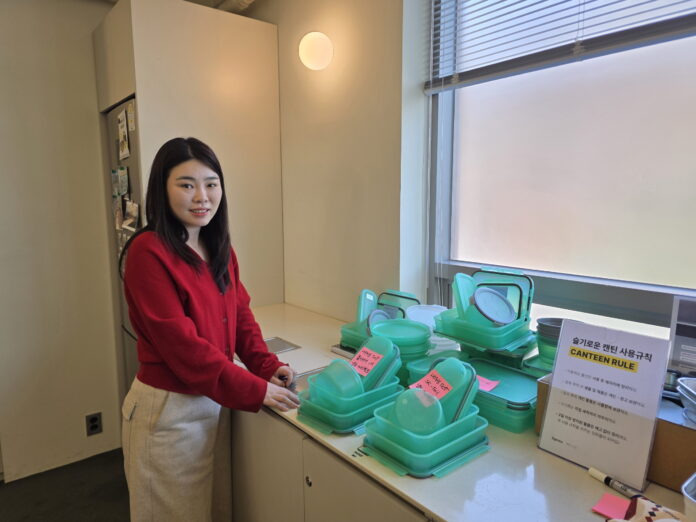
itgreen's competitive edge lies in its ability to directly manage the entire lifecycle of reusable containers. From container manufacturing, restaurant supply, delivery, consumer return, collection, cleaning, and resupply, it operates its own system for the entire process.
It must be thin and lightweight for mass transport, yet stackable and easy to remove. To achieve this, itgreen is continuously developing reusable containers. The reusable containers itgreen uses are made from three materials: stainless steel, polypropylene (PP), and silicone. Stainless steel, a popular choice for hot delivery food, is used for hot food delivery, while PP is used for baseball stadiums and large facilities. Silicone is used for lids and seals to prevent leaks. Even within the same PP material, slight variations in composition can lead to quality differences depending on the manufacturer. Therefore, each new container undergoes extensive durability testing. Frozen containers are dropped from a height of 60cm onto asphalt to check for damage. They are then soaked in highly pigmented foods like curry, mala-tang, and kimchi stew for three days before being washed to check for color transfer, odor, or deformation.
Recovered reusable containers undergo a seven-step cleaning and disinfection process at a smart center operated by itgreen. It operates two in-house cleaning centers capable of processing an average of 60,000 containers per day, and collaborates with self-reliance centers to supplement its cleaning capacity. The process begins with a first rinse to remove any residue, followed by a preliminary wash, high-temperature, high-pressure steam cleaning at over 120 degrees Celsius, a second main wash, a second rinse, UV infrared drying, and sterilization and disinfection at approximately 80 degrees Celsius. In the final stage, containers undergo a full inspection to confirm their condition before being returned to restaurants. itgreen has added hygiene and safety by signing up for product liability insurance and SESCO Members, and its cleaning system received eco-labeling certification from the Korea Environmental Industry & Technology Institute in January 2024.
Towards an era where disposable items are becoming unfamiliar
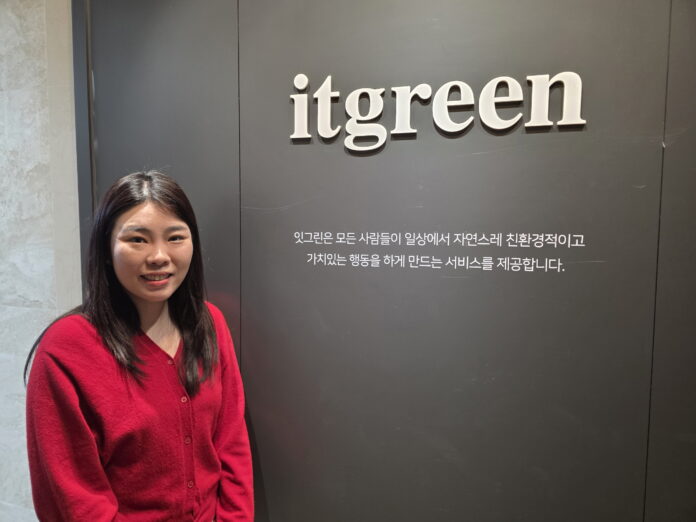
itgreen's ultimate vision is to transform beyond a simple reusable container distribution company into a leading climate technology company. Its long-term goal is to quantify the carbon emissions reductions generated by the reuse of reusable containers and link this to carbon emissions trading.
itgreen's returnit attracted consumers with convenience, not environmental awareness, and as a result, environmental performance naturally followed. Consumers who chose reusable containers for their convenience in disposal suddenly find the plastic waste that pours out after delivery unfamiliar. That's the change itgreen envisions.
CEO Sun Kim aims to make disposable products, now taken for granted, unfamiliar and usher in an era where reusable products become the norm. Since its founding in 2020, itgreen has expanded its services to major nationwide delivery platforms, baseball stadiums, soccer stadiums, movie theaters, theme parks, and festival venues in just five years. All eyes are on what the next chapter of its journey as a climate tech company will be.
You must be logged in to post a comment.