



– After platform regulation, adverse effects such as reduced consumer convenience, increased costs for small and medium-sized businesses, and decreased investment appeared.
A policy shift from a regulation-centered approach to a governance that strengthens industrial competitiveness is needed.
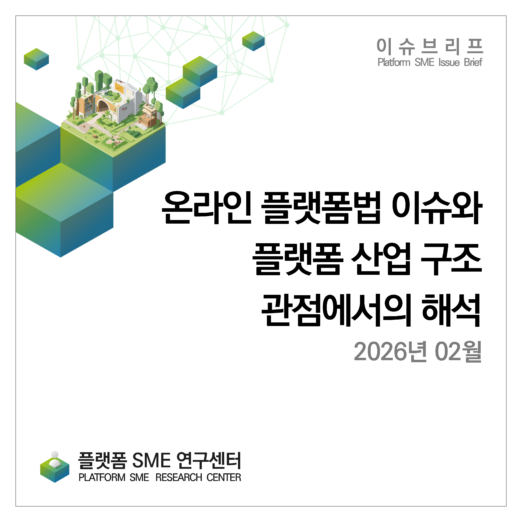
The Platform SME Research Center of Kookmin University (hereinafter referred to as the Research Center) published a report titled “Online Platform Law Issues and Interpretation from the Perspective of Platform Industry Structure” (hereinafter referred to as the Report) on the 27th.
This report analyzes online platform regulatory policies, a topic of growing discussion, from an industrial structure perspective and proposes future policy directions. In particular, amidst growing debate over the necessity of regulation following the settlement delays at Tmon and WeMakePrice and the personal information leaks at major platforms, this report examines the impact of regulatory introduction on the overall platform ecosystem, drawing on case studies from six countries, including the EU. The report emphasizes the need for a policy paradigm shift from a regulation-centric approach to one that fosters industry growth.
According to the report, the introduction of platform regulations overseas has had negative effects, including reduced consumer convenience and efficiency and increased costs for businesses. In the EU, which adopted the Digital Markets Act (DMA), the regulations have resulted in increased online content browsing time, reducing consumer convenience. Furthermore, the report found that marketing costs for small and medium-sized businesses are likely to increase due to lower advertising efficiency and reduced direct traffic from platforms. These regulations have also led to a decline in new business entry and investment.
Based on an analysis of overseas adoption cases, the report emphasized the need to fully consider the possibility of unexpected side effects arising during the implementation of the Online Platform Act. In particular, with the advent of the AI transition era, the growth of the platform industry has emerged as a key factor directly linked to national competitiveness. The report analyzed that the sustainable development of the platform industry depends on building a balanced ecosystem where platform companies, consumers, and small and medium-sized businesses can grow together. The report also emphasized that government policy direction should be directed toward supporting and promoting autonomous coexistence and cooperation among members of the platform ecosystem, rather than restricting industrial activity through uniform regulations.
Kim Do-hyun, director of the research center, emphasized, “For the sustainable growth of the platform industry, self-regulation that reflects market characteristics will be more effective than uniform regulation,” and added, “If we build a virtuous ecosystem of mutual growth based on self-regulation, we can expect healthy growth for the domestic platform industry.”
For more detailed information, please refer to the report on the Platform SME Research Center website.
Meanwhile, the Platform SME Research Center at Kookmin University is a specialized research institute established to support the growth of digital merchants and foster a healthy platform ecosystem. The center continuously conducts various activities targeting digital merchants, including data analysis, policy recommendations, research, and educational programs.
You must be logged in to post a comment.