



Moving can be overwhelming, and after decorating, things pile up because you're not used to the new space. When a baby is born, all sorts of baby supplies pile up. Every time, you try to organize, but after a few days, things go back to how they were.
Jeongchang was a market pain point discovered by the CEO of Organizing Habits. Those who struggle with organizing have never had a proper organizing system. He viewed organizing as "an area for redesigning the structure of life."
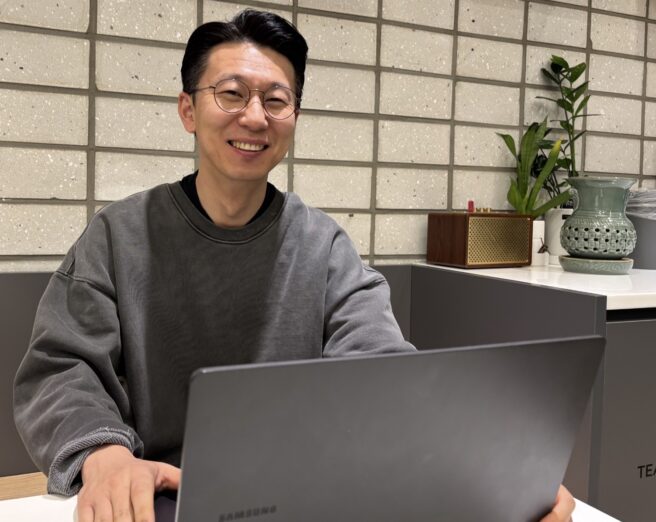
Most existing organizing companies require on-site estimates. This presents a significant challenge: the psychological burden of having to open your home in advance, the anxiety that prices may vary on-site, the inconvenience of having to set aside time for estimates, and the inability to clearly compare services. CEO Jeong asked, "Why is this market so analog?" That's why he created the "one-click estimate" service, which relies on photo uploads. The goal wasn't simply to improve convenience; he wanted to make organizing decisions easier. "We interpret space as data," Jeong explained. "We calculate estimates based on space type, volume, difficulty, and traffic flow."
"We break down space into data. We don't price it based on feelings."
The biggest challenge in the early days of my startup was the lack of standards in the market. Prices varied widely, and the scope of service and quality standards varied widely. This led me to see an opportunity. I decided to establish a standard. The lesson I'd learned in my previous career was clear: customers buy a reliable structure, not results.
"From the beginning, we approached the company with a structure-centered model, not a labor-centered one. Rather than a company that simply organizes, we designed the model to be one that analyzes, designs, and improves."
If I had to define the habit of organizing in one sentence, it would be this: a company that starts with organizing, analyzes space, and designs lifestyle structures. CEO Jeong explained, "Many people approach organizing simply as 'organizing things.' We don't approach it that way. We view space as a data unit and redesign its structure."
The reason we introduced a transparent pricing policy that includes VAT and food costs is simple. Organizing is a psychologically burdensome activity, and if even pricing is unclear, trust is shaken. The three most significant differences from existing organizing companies are: a data-driven pre-assessment approach instead of a visit-based estimate; a structural design approach instead of a task-based approach; and a dedicated manager structure for each space instead of a non-professional workforce.
“I don’t know where to start.”
This is the most common comment from customers. It's not a matter of organizational skills, but of structural design. The key isn't to reduce items, but to re-create flow paths and arrange them based on frequency of use. The reason for separating the kitchen, closet, and children's room is clear: each space has completely different usage patterns, flow paths, and risks. The kitchen is centered around work flow, the closet around classification systems, and the children's room around growth stages. Approaching them in the same way shouldn't be done in the same way.
The fastest-growing demand recently is for post-move restructuring, reorganizing children's rooms, and optimizing the kitchen. Demand for space redesign is particularly sharply increasing after childbirth or before children enter elementary school. These aren't simple requests for organization; they're requests for space redesign as lifestyles change.
From the beginning, we established a standard: we wouldn't adopt a model based on unskilled labor. Organizing isn't just manual labor; it's a spatial design task. Therefore, we began with a 100% experienced workforce. The average 5.3 years of experience doesn't simply mean they've been working for a long time; it signifies their extensive experience in the field.
The three most important factors considered when hiring are spatial design thinking, client communication skills, and on-site problem-solving. Organization isn't something you can simply follow a manual. Situations requiring immediate decision-making on-site are constantly occurring. Matching isn't simply about scheduling. It's a comprehensive assessment based on experience in the space type, work history in that space, customer evaluation data, and local traffic efficiency.
"We're building a space design platform based on a network of experts, not a labor collective platform. Rather than a structure that becomes unstable as the workforce grows, we designed it so that data accumulates as the workforce grows."
Organizing doesn't end with completion. We provide explanations of storage standards, reasons for placing items, maintenance checkpoints, and even usage guidelines for each family member. It's crucial to ensure they understand why items are placed where they are. Without understanding, there's no maintenance.
The reason organizations fall into disarray again is not a lack of willpower, but structural overload. Overly elaborate designs can be difficult to maintain. Therefore, we prioritize maintainability over perfection. Initially, we designed our storage systems quite elaborately, but some customers found maintenance difficult, so we shifted our focus. We shifted from perfect organization to a more maintainable structure. Now, we prioritize designs that reduce maintenance difficulty.
A memorable case is one where a child's behavior changed after tidying up their room. The child began to understand the location of objects and began to reorganize them. The words of the child's parents were particularly striking.
“You didn’t just organize it, you designed the child’s habits.”
Annual sales in 2025 reached approximately KRW 800 million, a 2.5-fold increase from the previous year. The company aims for fourfold growth in 2026. CEO Jeong places greater importance on sales structure than sales volume. Initially, the company focused on establishing market standards, investing in automation, standardization, and manual refinement. Now, as the structure stabilizes, operational efficiency is improving.
Seed investment came from Sopung Ventures, CNT Tech, and Danal Investment Partners-Commax Ventures. The investment was focused on model advancement rather than marketing-focused funding.
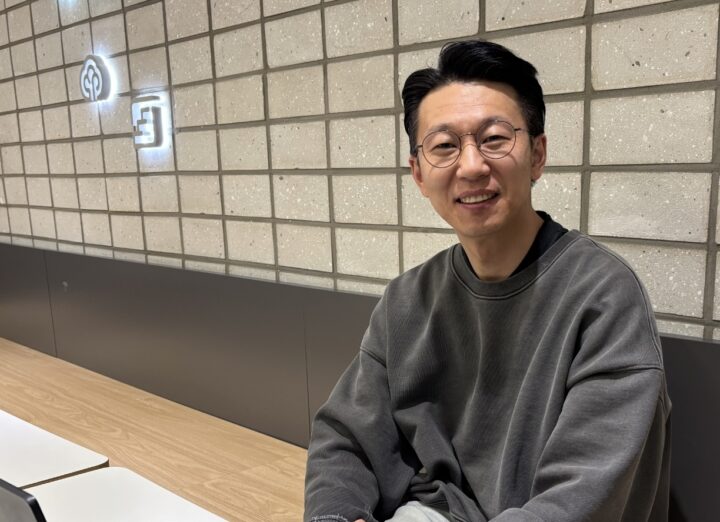
The most difficult decision was choosing between rapid expansion and standard refinement. While there was a temptation to accelerate when the market response was positive, we chose to slow down and prioritize standards and quality. Ultimately, this decision played a crucial role in establishing the stable structure we have today.
In three to five years, Jeongil Habit aims to become Korea's most trusted space design platform. We're not just a company that excels at organizing, but a company that truly understands space. Our goal isn't just to create a pretty home, but to create a home that's sustainable, stress-free, and structured to reduce family conflict.
"I believe that organizing isn't just a service, it's the infrastructure of our lives. When a space is stable, life's energy can be channeled elsewhere."
The reorganization market still faces three challenges: non-standardized pricing, a non-specialized workforce structure, and a results-oriented approach. Reorganization is not a matter of intuition; it requires design and standards. CEO Jeong stated, "I want to transform the structure, which is perceived solely as a labor-intensive service, into an industry based on specialized occupations."
Our current focus is on improving our spatial diagnostic model, designing a retention structure, and stabilizing our expert network. We chose a company focused on robust expansion over one that's growing rapidly.
"Jeongli Habit is growing from a company selling 'organization services' to a company that designs lifestyles based on spatial data."
It remains to be seen how the entrepreneur's dedication to viewing space as data, designing structures, and creating sustainable systems will transform the traditionally analog organization market.
You must be logged in to post a comment.