



Logistics AI platform 'poomgo' achieved KRW 66.7 billion in sales and posted profits for three consecutive years.
This year, we will focus on expanding overseas markets and advancing AI technology.
Dynamic allocation technology dynamically distributes orders to optimal logistics centers… A new formula for fast delivery.
-Jeju next-day delivery, separate delivery within Kanto, Japan
dohands, operator of the logistics AI platform "poomgo," achieved annual sales of 66.7 billion won in 2025, a 51% year-on-year increase and its third consecutive year of profitability. While operating 15 fulfillment centers nationwide, dohands leveraged its proprietary AI technology to reduce costs by up to 50% compared to similar companies.
Poomgo's key clients include leading Korean brands in various sectors, including beauty, household goods, and pet supplies, such as Dalba, Manyo Factory, and Dr. G. By developing advanced logistics services tailored to their needs, including international shipping, B2B delivery, and promotional response, Poomgo has established a competitive edge in the market.
dohands has identified overseas market expansion and advancement of AI technology as key priorities for this year. Following its Japanese expansion, the company is actively targeting the US market, and recently launched a "US Influencer Seeding One-Stop Service" in partnership with beauty platform Hwahae Global. This integrated service, which supports the entire process from recruiting local influencers to product delivery and customs clearance, is designed to lower the barriers to entry for K-beauty brands in the US market.
On the technology side, the introduction of physical AI and agent AI was identified as a key goal for this year. The goal is for AI to evolve beyond simple analysis and recommendations into agents that perform actual tasks in logistics settings.
Dohands's strategic partnership with the Naver Fulfillment Alliance (NFA) is behind its growing presence in the express delivery market. NFA is a logistics partner network formed to operate Naver's express delivery service, "N Delivery," and currently consists of only six companies. Poomgo was recognized for its operational capabilities by being named the No. 1 logistics company in N Delivery by Naver in the third quarter of 2025.
Poomgo's fast delivery service is industry-leading. It was the first to introduce "24-hour order cutoff," guaranteeing same-day delivery for orders placed by midnight on weekdays, "same-day delivery," guaranteeing same-day delivery for orders placed by 11:00 AM, and "7-day delivery," offering delivery on Saturdays and Sundays. It also integrates with Cafe24's "Daily Delivery," Gmarket's "Seller Star Delivery," and I'm Web's own online fast delivery service, helping brands gain competitive delivery capabilities.
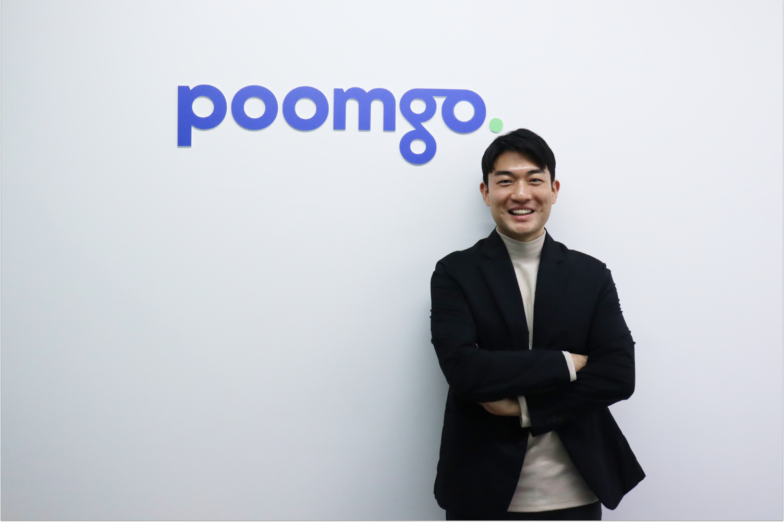
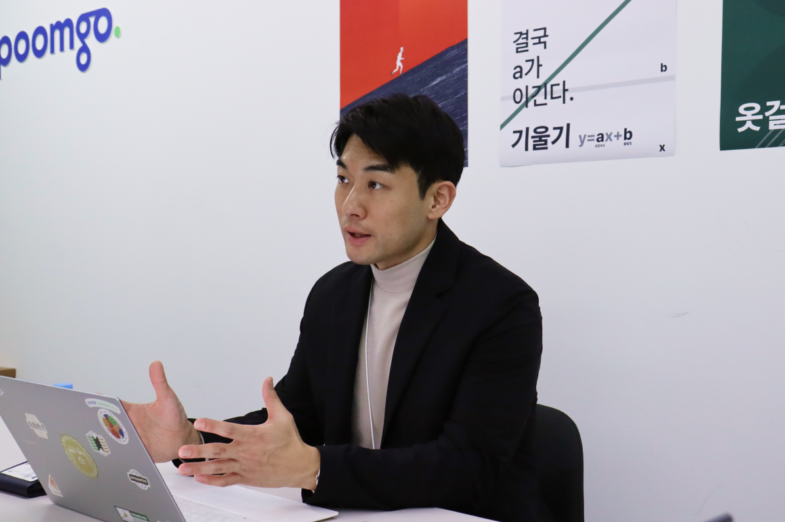
We met with CEO Chanjae Park at the dohands office in Gangnam, Seoul, to discuss AI technology, dynamic allocation, Jeju next-day delivery, fast delivery, and cross-border logistics.
Beyond WMS to AI WMS
dohands' core competitive edge lies in its proprietary fulfillment management system, "Poomgo Now." Poomgo Now is a logistics automation solution that integrates a Warehouse Management System (WMS), Order Management System (OMS), and Delivery Management System (LMS). Designed to manage the entire logistics process—from receiving and storage to shipping, delivery, and customer service—on a single platform.
CEO Park emphasized that Poomgo Now is not just a simple WMS, but an "AI WMS." He emphasized, "E-commerce platforms can automatically implement fast delivery simply by integrating our AI without having to invest heavily in logistics. This is the core value of Poomgo AI WMS."
Poomgo Now is integrated with over 160 domestic and international e-commerce platforms, including Naver, Cafe24, I'm Web, and Gmarket, as an official logistics solution. It integrates and operates data from over 1,000 sellers, including domestic, Japanese, and US shipping and courier companies. Products from sellers using Poomgo are automatically assigned fast delivery tags. Key features include an industry-first, proprietary smart packing system, automatic gift assignment based on over 150 rules, and real-time logistics visibility through a dashboard. Notably, the smart packing system photographs the entire inspection and packaging process and mandates barcode scanning, lowering the misdelivery rate to 0.001%. CEO Park stated, "Poomgo Now is equipped with automation features that reduce sellers' supply chain management (SCM) workload by over 30%, significantly reducing overhead costs."
Another key differentiator for Poomgo is its structure, which encompasses both technology and field operations. The logistics market is typically divided into IT companies that provide only WMS and logistics companies that operate only centers. Poomgo encompasses both.
"Designing technologies like dynamic allocation requires firsthand experience with variables like inventory levels, staff availability, and dispatch conditions while operating an actual center. It's difficult for companies that only have a WMS to develop such technologies."
Poomgo operates 15 centers nationwide, both directly and through partnerships, and has created a virtuous cycle where the accumulated operational data is utilized to advance technology.
Securing cost competitiveness through AI internalization
The key to dohands' three consecutive years of profitability is its AI-integrated strategy. CEO Park explained the fulfillment business's cost structure by dividing it into fixed and variable costs.
"In terms of fixed costs, we've built scalability to forecast demand and expand our centers within two months. We opened two centers the year before last and one last year, completing the entire process from design to completion in just two months. We reach breakeven point within two to three months on average."
The explanation is that rapid center construction and early break-even are the structural foundation for lowering fixed costs. AI technology is being fully utilized to reduce variable costs.
"AI has been implemented in all areas, from receiving to picking, shipping, and settlement, resulting in cost ratios that are significantly lower, up to 50%, compared to similar companies."
During the shipping process, AI recommends optimal box sizes, and during the picking stage, orders are analyzed to suggest appropriate picking methods. For B2B shipping, console operations are automated using a proprietary platform called "poomgo Kangaroo," and a proprietary returns app has improved returns processing efficiency by over 20%.
AI is deeply embedded in field operations. Based on the latest time-series models, dohands analyzes customer order patterns down to the second to predict changes in freight volume. It also proactively optimizes staffing and vehicle dispatch by detecting peak order periods. Predictive data is delivered to the center in the form of AI alerts. Natural language-based AI-powered work support allows users to monitor logistics status simply through conversation. A system is also in place to detect and report risk factors, such as delivery delays or allocation failures, in real time. Leveraging these technological capabilities, dohands has achieved a four-year freeze on its delivery rates, beginning in 2023.
Optimal logistics center matching and dynamic allocation technology
The technology that most symbolically demonstrates dohands' technological prowess is "Dynamic Allocation." Few domestic WMSs have implemented dynamic allocation. dohands developed this technology over two years and plans to fully implement it starting in 2025.
A typical WMS has a fixed structure. When an order comes in, it's matched one-to-one with a specific warehouse where the seller's inventory is located, and then shipped. Dynamic allocation breaks this fixed structure, using AI to analyze real-time data and dynamically distribute orders to the optimal center. Previously, even if an order came in from Jeju Island, it would be shipped from the Seoul logistics center. With dynamic allocation, however, AI automatically distributes orders from Jeju Island to the Jeju center, and orders from Seoul to a nearby center in Seoul. However, it's not simply a matter of assigning orders to the nearest center.
"When an event causes a surge in cargo volume, matching only to nearby centers can actually delay delivery. In such cases, it's more efficient to distribute cargo across multiple centers, even if they're far apart. AI predicts these situations in advance and suggests optimal allocation methods."
This structure combines various factors, including region, center processing capacity, and inventory holdings, to allow AI to make optimal decisions. CEO Park clearly explained why this technology could become Poomgo's unique competitive edge.
"For companies that don't directly operate logistics and only have a WMS, designing this type of technology isn't easy. It requires managing multiple conditions while operating an actual center."
Establishment of ' Jeju Tomorrow Delivery '
The first major achievement of dynamic allocation technology is the "Jeju Tomorrow Delivery" service. dohands plans to build a fulfillment center on Jeju Island in 2025 and launch a service that allows Jeju consumers to receive their products the same day or the next day.
According to Poomgo's internal data, since the Jeju center opened, the same-day delivery rate in Jeju has increased from 0% to 8%, and the next-day delivery rate has jumped approximately 88-fold, from 0.5% to 44%. For orders placed within the 3:00 PM order cutoff time, the next-day delivery rate has reached 100%. Compared to the average 2-3 days it took for deliveries from inland centers to Jeju, this represents a reduction of up to three days in delivery time.
The key lies in the combination of AI demand forecasting and dynamic allocation. A proprietary AI model, which combines and analyzes real-time order data (every 10 minutes) with external variables like weather and economic indicators, precisely predicts fluctuations in freight volume. Brands then use this data to proactively allocate inventory to their Jeju centers. This structure ensures reliable one-day delivery even in unexpected situations like promotions or inclement weather.
Guaranteed arrival in Japan in 5 days : A new formula for cross-border logistics.
dohands's technological capabilities are expanding overseas. In 2024, dohands integrated its domestic express delivery and international shipping services. In the existing cross-border logistics market, fulfillment and international shipping were separated, wasting lead time on unnecessary steps like invoice exchange. CEO Park explained, "Other carriers don't handle fulfillment themselves, so they have to go through the 'taggal' process of converting Korean invoices to Japanese invoices. With our system, when a Japanese order comes in, the Japanese invoice is printed from the beginning and automatically sorted, eliminating that step."
Analysis of the geographic characteristics of the Japanese market also served as a differentiating factor. Japan's long and stretched territory makes it difficult to guarantee consistent delivery times with a single hub. Concentrated shipments in Kanto often lead to delays of two or more days in the Kansai region. Poomgo developed a system that uses AI to analyze orders, automatically categorizing them into Kanto and Kansai regions, and determines air and sea transport accordingly. Poomgo also implemented automatic region sorting based on delivery cutoff times and postal codes. Expanding the Kanto/Kansai separate delivery system to all centers resulted in a reduction of up to 1.5 days in Kansai delivery lead times, achieving an average of three days. Annual shipments to Japan increased by 459% year-on-year.
Poomgo, along with eBay Japan (Qoo10 Japan), jointly planned and launched the fast delivery brand "Kandashu." Similar in concept to Naver N Delivery, Kandashu is a fast delivery tag that guarantees fast delivery to Japanese consumers. Furthermore, through an exclusive partnership with FedEx, Poomgo supports delivery to 220 countries worldwide. Poomgo is also expanding its global network through partnerships with Makuake, Japan's largest crowdfunding platform, and European fulfillment startup HIVE.
“By overcoming the limitations of logistics, we enrich people’s lives.”
This is dohands' mission. The logistics industry is essentially a game of scale. Competitiveness has traditionally depended on more centers, more vehicles, and more personnel. However, dohands has applied "smarter technology" to this. Operating 15 centers, it has secured delivery competitiveness comparable to that of large corporations, achieved three consecutive years of profitability, and achieved an average three-day delivery time to Japan. This is the power of technology, not capital.
However, CEO Park emphasizes that fast delivery itself is not the goal.
“Ultimately, consumers need to be promised fast delivery and make it a habit before sales can happen.”
The ultimate goal of technology and logistics is to ultimately increase the sales of our customers.
"As the logistics environment becomes more complex, Poomgo's unrivaled operational capabilities and AI-based competitiveness become increasingly evident."
These words from CEO Chanjae Park encapsulate the survival formula for logistics startups in this era.
You must be logged in to post a comment.