



Even in 2017, the concept of capsule hotels was unfamiliar in Korea. Many responded with comments like, "Why would I stay in a cramped capsule when I can have a jjimjilbang?" and "Capsule hotels are only suited to Japanese culture." However, while solo travelers were on the rise, the budget accommodation market was dominated by motels and guesthouses. They lacked privacy and were expensive. This was a market shortfall identified by Jeong Seung-ho, CEO of The Capsule.
The first branch opened in March 2019. The market response was mixed. Within three months of opening, the hotel achieved an 80% occupancy rate, and, excluding the COVID-19 pandemic, weekends have always been fully booked as of 2026.
"Consumers intuitively recognized the reasonable prices and assured privacy offered by capsule hotels. I realized that the true value of a business lies in the market."
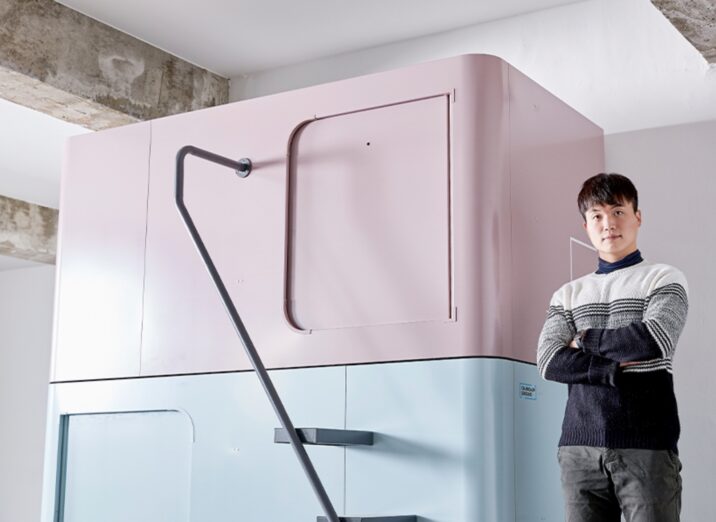
CEO Jeong, who majored in materials engineering and technology management at Seoul National University and was in charge of technology marketing at SK Innovation, turned his attention to entrepreneurship one day. He sought a tangible, tangible business. At the time, living alone in Shinseoldong, he witnessed foreign tourists hauling shopping bags all the way to the alleys. Seeing the potential for lodging for solo travelers, he opened a guesthouse through a friend's recommendation.
Other companies deploy construction workers, such as carpenters and metalworkers, to construct the capsules themselves. With labor and material costs skyrocketing, this translates into excessive initial facility investment. In contrast, The Capsule utilizes a pre-fabricated modular assembly system, allowing for easy installation into existing building elevators. Each capsule can be assembled in just one hour. As of 2026, The Capsule is the only company in Korea manufacturing its own sleep capsules.
While capsule hotels remain a regulatory gray area, The Capsule designs and manufactures sleeping capsules using 100% flame-retardant materials and steel, complying with current fire and building codes. The Capsule had the commercialization of capsule beds in mind since its business conception in 2017. At the time, some companies had already imported Chinese plastic capsules, and the company saw a need in the B2B market for relaxation spaces. Ironically, it was COVID-19 that accelerated the commercialization process. The pandemic hit the tourism industry hard, reducing operating rates to one-third, forcing the closure of two existing guesthouses.
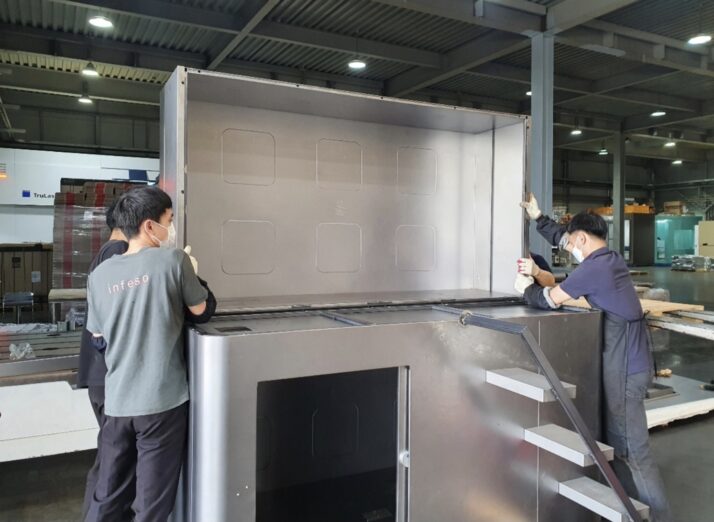
“The sense of crisis that we couldn’t survive solely on the lodging industry prompted us to expedite the production of sleep capsules.”
We developed a prototype of the sleep capsule in 2021, and our first sales occurred in 2022, just one year after product development. To date, we've delivered over 400 capsules to over 60 organizations. While manufacturing and the hospitality industry may seem different on the surface, The Capsule's core values are aligned: providing optimal spaces and experiences for single users.
As of 2025, total annual sales are expected to reach approximately 600 million won. Currently, the sleep capsule manufacturing division accounts for more than twice as much revenue as the capsule hotel operation division. This achievement comes just three years after generating its first revenue in 2022. Investments include seed funding in 2021 and project funding in 2023.
Currently, sleep capsule sales are entirely generated from B2B sources, driving over 60% of total sales. A recent positive sign is a surge in small, multi-unit orders of two to four units, a trend that has shifted from the past, which was dominated by large orders from a handful of large corporations and government offices, to smaller orders from police stations nationwide and on-duty offices at local power plants. This solution, which has transformed the poor conditions of portable beds, is receiving positive feedback from the field.
Going forward, we plan to combine a corporate rental program with regular maintenance services to generate a stable cash flow. In the B2C market, the size and weight of commercial products currently make home installation challenging. However, inquiries for home use to reduce noise between floors and alleviate insomnia are flooding in. We also plan to develop a lightweight B2C model with a more realistic size and price.
According to statistics from global platform Booking.com and the Korea Tourism Organization, the proportion of solo travelers has nearly doubled from 12% before the pandemic to 23% today. One in four people now travel alone. The 2030 generation, who favor budget travel, account for 40% of this group. With approximately 5 million domestic travelers and 2 million foreign travelers annually, this segment represents over 10% of the total travel market, making it a key target group.
The Capsule's disruptive power in this market lies in its ability to generate solid profitability even on a small scale. While traditional hotels require at least 200 rooms, and motels 70-80 or more, to generate profits, capsule hotels boast space efficiency, accommodating one person per 1.5 pyeong (approximately 4.5 sq ft). Even a mere 70 pyeong (approximately 230 sq ft) of space can easily generate a profit.
CEO Jeong said, “Initially, we considered entering the franchise and sleep cafe market, but we are not currently considering expanding into that model,” adding, “Our thorough market research has shown that domestic consumers are still conservative in their perception of paying for simple relaxation, and there are already strong alternatives such as jjimjilbangs and comic book cafes.”
Even for lodging franchises, it's realistically difficult for business owners to personally identify suitable properties that qualify for lodging licenses. Therefore, future expansion strategies for lodging operations have shifted from franchises to real estate development, with investment associations formed in properties optimized for the lodging industry and ownership and operation strictly separated.
The basic, fully assembled sleeping capsule has sold over 400 units and is currently in use on-site. A modular single-person cabin model, developed based on this model, has also been completed and installed at Incheon International Airport Corporation.
Construction on a new type of accommodation facility consisting solely of cabins was completed in Gwangalli, Busan, in the last week of February 2026, and its official opening is scheduled for April. He explained, "This cabin model has the versatility to revolutionize not only accommodation but also single-person residential areas." He also developed a prototype meditation capsule utilizing VR devices inside, which was exhibited at the Barcelona Global Expo in Spain in March 2026. This showcases a spatial innovation that combines hardware and content.
Expanding overseas requires a strategy focused on added value. Strong local competitors already exist in countries like Japan and Indonesia. With the exception of the US, Australia, and some European countries, where labor costs are extremely high, simply exporting sleep capsule hardware alone would be less cost-competitive than local construction, considering logistics and customs costs.
"Therefore, The Capsule will knock on the door of the global market by combining the differentiated content and benefits that can be provided within the single-person space of a capsule."
A prime example is the meditation capsule exhibited at the Spanish Expo. Similar meditation-specific space products developed overseas typically cost over $10,000. The Capsule's modular meditation capsule, even with premium options, offers a price competitiveness of at least 30% over competitors.
CEO Jeong emphasized, “We will target the global single-person space market with solid content added value and manufacturing cost competitiveness,” and “We plan to grow into a single-person space total solution company by going beyond B2B rest areas and combining home single-person modules and meditation content.”
The entrepreneur's tenacity, which has exploited a niche in the single-person lodging market and transformed the COVID-19 crisis into an opportunity to pivot to manufacturing and evolve into a total solutions company for single-person spaces, will be a focus for how he will transform the low-cost lodging market and the B2B leisure space market.
You must be logged in to post a comment.