



In 2013, nonprofit worker Jeong Su-hyeon faced the same problem repeatedly. Every time she planned a seminar or held a meeting across the country, finding a space for two or three hours was a living hell. The concept of hourly rentals simply didn't exist. For a mere two hours, she had to pay a day's operating fee or sign a contract filled with liability clauses.
"There were only posters up asking for the entire space to be rented. It didn't make sense for someone who wanted to use it by the hour."
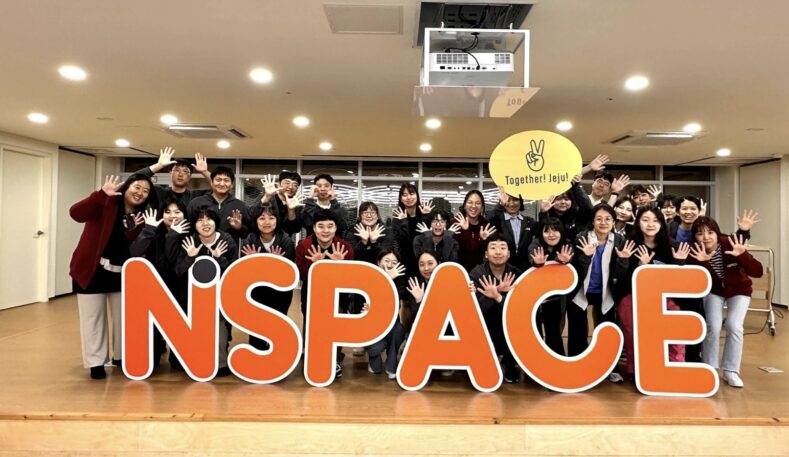
Thirteen years have passed since then. Now, anywhere in downtown Seoul, a two-hour conference room can be reserved with just a few clicks of a finger. 120,000 spaces in 27 categories, including party rooms, practice rooms, and photo studios, are traded by the hour. In 2025 alone, 33 billion won worth of space was sold in segments. This is the story of SpaceCloud CEO Jeong Su-hyeon, who pioneered the market.
The inconveniences I personally experienced became the starting point for my business. I had the opportunity to run a 80-pyeong space as a project for a year. I rented the coworking space and attached conference rooms by the hour, attracting public institutions and large corporations. The business quickly turned a profit.
"I've been receiving inquiries from cafe and bookstore owners asking for tips on how to revitalize their spaces. While helping them with these consultations, I realized I needed to create a promotional channel and share a manual."
In the beginning, there weren't any hosts we could trust with our space. We had to go out and find a space. Thanks to Airbnb's success, awareness of the space-sharing business grew, leading to the company's reputation as the "Airbnb of the non-housing sector." Rumors of its support for small space owners even led to investment from Naver.
"Because there wasn't a shared space database at the time, we held Host Day once a month. We discussed how to commercialize space, and we delivered lectures and success stories on space rental startups. Before we knew it, we had become the largest space rental platform in Korea."
Transaction volume grew from 1 billion won in its first year in 2016 to 33 billion won in 2025, a 30-fold increase over 10 years. Cumulative transaction volume exceeded 150 billion won. Excluding payment gateway fees, service fees are 6-7%. Adding advertising revenue, the company's share of total transaction volume is 10-15%.
But the process was not smooth.

"I thought about it for two or three years. Ultimately, I decided to focus on the essentials of growing on my own and building a successful business."
He recalled, "We operated frugally, focusing only on essential business and marketing. We achieved profitability in 2019 and established a sustainable team structure by avoiding excessive hiring." He added, "We steadily built up our annual operating profit target of 10%." Last year, the company negotiated with Naver to purchase some of its shares as treasury stock, establishing an independent management system.
The numbers—80,000 cumulative hosts and 120,000 registered products—were not initially significant. Initially, we focused on the number of registered users, trying to prove our presence through scale. Now, more than ten years later, things are different.
"The activity index is the true indicator. The success of our service is determined by the growth and survival of the hosts who trust us with their spaces."
During the off-season, 20-30% of the listings are active, and during the peak season, 50-60% are active. Ninety percent are self-employed, with an average operating period of three to five years. The team's mission is to increase the operating period by 5-10% each year, both during the off-season and peak season. Host revenue, visitor count, reservation conversion rate, and cancellation rate relative to the number of listings are the most important internal metrics.
Our foray into the global market also stemmed from this strength. We decided to focus on smaller spaces overlooked by Peerspace in the US and Tagvenue in the UK. We targeted the UK first because it's an English-speaking country with a mature space rental market.
CEO Jeong said, “We are appealing to the local K-pop dance community, startup gatherings, and Asian users by highlighting the fact that it is a Korean service,” and explained, “Rather than focusing on technological superiority, we are approaching small business owners who run small spaces with a service-oriented approach and the concept of an intimate consultant.”
Covering 27 different types of spaces, including party rooms, practice rooms, and photo studios, is a strategic move. As with other real estate services, space rentals are available everywhere, and a single space can accommodate multiple types of services. Party rooms can be sold as photo studios during the off-season, and meeting spaces can be used on days when cafe business is slow.
To secure suppliers, we're also transitioning to AI-based services. We're also about to launch a channel that connects local spaces with AI search and manages simultaneous reservations from multiple platforms.
We've maintained a strong partnership with the Seoul Metropolitan Government from the beginning. We successfully planned and operated the initial "Zero Gravity Zone" project, expanding it to nine local governments. We developed Enstable in Daechi-dong and oversaw its operation from start to finish for five years. We also partnered with the Seoul Housing & Communities Corporation to create attractive housing that combines commercial and residential properties through a public REIT.
Currently, we are preparing research on AI-based real-time management of shared property and optimal use strategies. We also received the Ministry of the Interior and Safety's Urban Innovation Award.

"The essence is user-centered spatial services. Public institutions are responsible for managing and operating national and public assets in a way that meets the needs of residents."
There's no way to determine the extent of vacant space. No building owner discloses the vacancy of their space. However, we receive 20 to 30 inquiries from building owners each month, seeking ways to increase the value of their vacant buildings.
“Our future challenge will be to go beyond just being a host who operates a space, and to help building owners distribute their space in new ways.”
Space rental is merely a tool. Users subscribe to spaces and use them through membership. There are 80,000 host teams creating and operating unique spaces. If we connect these space planners with spaces they enjoy, enable them to create value, and effectively share the resulting profits, real estate becomes a creative resource.
A company that creates such moments, Enspace, is evolving into a social developer. The inconvenience of a nonprofit worker struggling to find a two-hour space has created a market worth 33 billion won in annual transactions in just 10 years. It remains to be seen how this entrepreneur's dedication to transforming empty space into a valuable resource will transform the real estate market.
You must be logged in to post a comment.