



After two failed startups, he embarks on his third venture, securing Primer investment.
AI clones that learned the knowledge, philosophy, and voices of experts surpassed 3,800 members in just one month after launch.
Evolving into a self-branding platform… Adopting the Clone Master billing model, preparing to enter Northeast Asia.
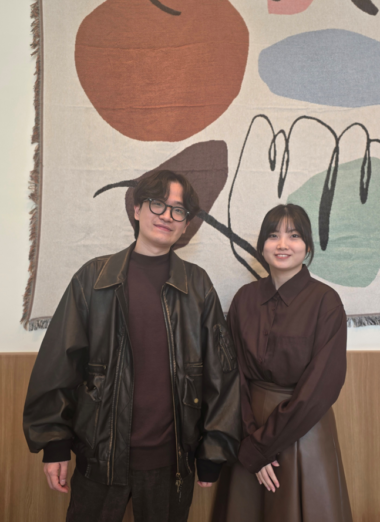
“I hope this good wisdom spreads well.”
Song Ha-yoon's reason for creating Clora was simple. As a startup CEO, he longed to seek advice even at 2 a.m., but there were no available channels. Instead, he thought, "If we could train AI on the content of already-published mentors, wouldn't we be able to receive similar advice?" That intuition became the starting point for Clora.
Clora is a service that creates AI clones that learn the knowledge, philosophy, and even the voice of experts, allowing them to communicate with followers 24/7. Within a month of launching, it surpassed 3,800 members and recorded a peak of 2,500 daily active users (DAU). Currently, approximately 30 expert clones are in operation, supporting 109 languages. The team consists of just CEO Song Hayoon and two co-founders.
We met with CEO Song Ha-yoon at the Chlora office in Sinchon, Seoul, to hear about the origins of AI Clone Messenger and its growth strategy.
Started a business at 21, overcame two failures and now on a third attempt.
Born in 1998, Song Ha-yoon is 29 years old. This is the third startup she has started. Her first was a fashion pre-order platform called "Moye ," which she started at the age of 21. It grew to 15 employees and 3.5 billion won in sales, but ultimately closed. She even took out a personal loan to save the company, leaving her with approximately 150 million won in debt.
"I figured it would take four or five years to get a job and pay it off. So I started an outsourcing development company."
The second company specialized in outsourced development for startups. Their concept of transforming ideas into minimal products for a fixed cost of 5 million won garnered attention, and their clientele expanded to include major institutions like Samsung Electronics, Samsung Advanced Institute of Technology, Chungbuk National University, and Incheon National University. Within two years, the business prospered, achieving 1 billion won in sales and a 40% operating profit margin . However, they quickly realized the limitations of outsourced development.
"I thought it would be absolutely impossible to grow to 10 billion or 100 billion won. It's a model that relies on people. Omakase is delicious, but cup ramen is also delicious. I thought money would motivate me, but after a year, it wasn't."
Having witnessed the growth of other startups, CEO Song decided to start a business again. He applied for a Primer placement, and CEO Kwon Do-gyun, seeing the potential, decided to invest on the spot.
AI clones managed directly by real experts, not virtual characters
The core of Clora lies in the fact that real people manage their own clones. While requests to create clones of Warren Buffett and Bill Gates poured in, CEO Song declined. He believed that clones without his direct involvement would ultimately be nothing more than search engines trained on public data.
"AI can implement similar functions. However, I don't think it's a sustainable innovation, as it would mean following the same path as large LLM companies. Only platforms where real people manage their clones can accumulate exclusive and private data."
The clone creation process relies on two main sources of data. One is "seed data," which is trained by crawling existing content from experts on LinkedIn, blogs, YouTube, and other sources. The other is direct input via the AI interview function. Just like a journalist interview, conversations about specific topics are immediately incorporated into the clone's knowledge.
Clora structures learned content by distinguishing objective facts, personal opinions, and real-world experiences. Rather than a single piece of content becoming a single unit of knowledge, information extracted from multiple sources is integrated by topic. When answering questions, sources like YouTube links and book purchase links are provided, ensuring a direct path to the original content.
Quality management on two axes: knowledge and philosophy
The quality of a clone can be broadly divided into two categories: factual knowledge and the philosophy and mindset of the expert. The accuracy of this knowledge can be verified programmatically, as the clone's responses are compared against the learned content, providing a baseline.
On the other hand, the realm of philosophy is judged solely by the clone master. To achieve this, Clora developed an interface that allows the administrator to monitor clone responses in real time from the admin console, drag and drop inappropriate responses for correction, and collect and manage only the questions that the clones failed to answer. Any changes are immediately reflected in the clones, allowing the clone master to directly fine-tune them.
"I'm focusing on the startup sector first because I'm good at judging quality. I'm focusing on areas where I can verify whether the advice is truly quality."
The voice learning feature is also noteworthy. When Clone Master records 30 seconds of voice, users can hear the expert's voice respond.
Transitioning to a Self-Branding Platform
Clora's revenue model recently shifted direction. Initially, it attempted to monetize users through a token-based system. However, analysis of operational data revealed unexpected patterns. Users who arrived through fans of a specific creator rarely used other clones, and despite the presence of recruiting expert clones, they were observed asking recruitment-related questions to the influencer clones they followed.
"Users didn't perceive Clora as an expert search platform. They wanted to hear the thoughts of specific masters directly from those individuals. So we changed our direction."
The new model charges Clone Masters. For influencers, lecture coaches, consultants, and other professionals who prioritize audience engagement, Clone becomes both a marketing channel and a sales tool. By enabling two-way communication rather than traditional one-way content, Clone also accumulates data on what followers are curious about. Pricing is determined by the number of words Clone learns and the number of users chatting with it. Smaller businesses can run Clone for free.
In fact, some Clone Masters are already using Clone as a consulting funnel. They conduct basic consultations via chat, then connect with paid consulting services at 200,000 won per hour. While it's impossible to meet 100 people one-on-one a day, Clone Masters can connect with up to 10,000 people, explains CEO Song.
Workflow automation takes you one step closer to becoming your "real self."
Clora is expanding its functionality beyond a simple chatbot to become a true clone master. It can send emails summarizing conversations with Clora to users who mention a specific topic, and integrate with existing tools via webhooks.
The user group feature is also noteworthy. Private knowledge can be shared only with specific membership members or paid course students, allowing for both monetization of content and fan community management. A self-service tool that allows anyone to easily create clones is also soon to be released.
"If continuous synchronization with clones becomes truly seamless, allowing me to create my own AI clone, I think it will have some kind of impact. Right now, I'm focusing on that technical challenge."
Beyond the startup realm to Northeast Asia
For the time being, we'll focus on the startup ecosystem. Our primary goal is to secure clones of experts in areas such as investment, marketing, sales, and venture capital, which are essential for startup CEOs and aspiring entrepreneurs. We plan to expand into everyday areas like psychological counseling, life coaching, and creative professionals.
The overseas market begins in Northeast Asia. While there's a competitor in the US called Delphi, which received investment from Sequoia Capital, there's still no serious player in Asia. This is the first attempt in Korea to create an avatar of a real person, and it's a rare precedent globally.
Following the seed investment, the next round is planned for the first half of this year. The company also expressed confidence that it could immediately attract local investment if product-market fit is proven.
"While I can't meet 100 people one-on-one a day, I can reach 10,000 people through Clone. I want to develop this service into something helpful for time-poor professionals and those who want to focus on their audience but haven't been able to reach them."
If books are the classic example of one-way knowledge transfer, AI clones could be the starting point for two-way, interactive knowledge transfer. Just as an autobiography chronicles a person's life, clones exist as immortal alter egos on the web. This service, created by a 29-year-old fashion major with a degree in clothing and textiles, overcoming two failures and 150 million won in debt, is drawing attention to whether it can usher in a world where expert wisdom can reach a wider audience.
You must be logged in to post a comment.