


An engineering student who swept robot competitions during his middle and high school years has jumped into the solar power plant maintenance market. This is the story of Oh Bok-seong, CEO of Kernelog.
When he was released from military service after founding a robot company in 2016, he received an offer to join Kernelog. He was in the midst of planning to enter the solar power sector by utilizing core technology. CEO Oh could not understand the fact that solar power plants were operating under integrated control without sensors.
"Robots are packed with sensors. No matter how good a motor is, without sensors, it cannot perform its role because it doesn't know where to stop. Innovations like autonomous driving and smart factories are ultimately driven by sensor and control technologies."
I developed a determination to apply my past experience to a completely different domain and drive a digital transformation. I have run this far driven by that single belief.
The hardest part of starting the business was building trust. Although solar power plants are operated with a 20-year lifespan in mind, there are quite a few construction companies or equipment suppliers that go out of business before completing even a full cycle of their lifespan. From the customer's perspective, they have no choice but to consider the reputation and scale of a company that can take full responsibility for their power plant until the very end.
Since we had no references, we didn't have a single customer for six months after the initial product launch. We tried to sell our products with the slogan that we would increase power generation, but no one believed a small startup promising to boost output.
The turning point came from an unexpected situation. Just as the company was facing difficulties, a solar module cleaning company, which CEO Oh met by chance at the site, took notice of his solution. They recognized that it was not merely a tool to increase power generation, but one capable of objectively verifying the effectiveness of operational management. A supply contract was signed on the very day of the meeting.
“At that moment, I realized that our true value lies not in increasing power generation itself, but in proving our operational management performance with data. Since then, we completely shifted our strategy, and that was the decisive turning point that built the Kernelog of today.”
This year, we revamped the service under the name SolarLog. It is an accurate and seamless management service utilizing a module control system.
Let's assume a problem occurs at my power plant. Even with standard inverter-level monitoring, I can tell that something is amiss. However, identifying the cause is difficult. Ultimately, I must visit the site or commission an expensive precision diagnostic. Yet, due to the cost and time involved, the issue is often left unaddressed. Consequently, profits steadily deteriorate.
There are also structural issues. Since solar modules are bundled in sets of 10 or more, shading or failure in one or two modules drags down the power generation of the remaining modules as well. Even a 1% increase in annual power generation decline causes losses to accumulate like compound interest, reducing profitability by more than 4% compared to initial expectations.
CEO Oh explained, “The approach of Kernellog is simple. By collecting data from each module, monitoring is possible on an individual unit basis, and since the data resolution is high, tracing the cause becomes easy,” adding, “In addition, by adding voltage control functions for individual modules, it prevents shading or failures in some modules from affecting the remaining modules.”
The analysis principle is as follows: Voltage, current, and temperature information is collected from the modules, aligned with the actual physical layout, and patterns are formed based on changes according to time, season, and environment. Based on this, a digital twin is constructed, and abnormal situations deviating from normal ranges are detected by comparing it with actual data. Through these patterns, shading, contamination, failures, and power generation deviations are classified, and solutions tailored to the situation and cost are proposed.

“It follows the same principle as how launching a single drone is easy, but controlling 1,000 of them simultaneously is difficult. To collect 3,000 modules from a single site at 10-second intervals, communication and collection mechanisms, capacity optimization, and cost-effective cloud operation technologies must all work together.”
Because this process is difficult, not many companies have reached the stage of AI integration. While Enphase and SolarEdge, leaders in the global MLPE market, focus on hardware performance and the residential market, Kernelog has pioneered a differentiated area of data collection and AI-based operational management in industrial power plants.
Currently, data is being collected from 70,000 modules at 400 power plants at 10-second intervals. Kernelog is the only company in Korea that continuously collects data of this scale on a module-by-module basis. Approximately 500 issues, both large and small, occur and are addressed annually, and every problem situation is recorded as data from the moment it occurs until verification after resolution.
We have been collaborating with Korea Water Resources Corporation, a key public sector client, for three years, progressing from testbed support to verifying effectiveness and expanding nationwide. As a result of introducing the solution to power plants that have been in operation for over five years, power generation improved by a minimum of 7% to a maximum of 23% across seven locations.
“Previously, because the exact cause was unknown, they had to pursue a separate project for precise diagnosis at a significant cost. By identifying the precise cause through us and responding with minor maintenance tasks such as replacing connectors and cables or bypassing modules, they actually achieved faster and more effective results.”
To be honest, there have been experiences where the results did not meet expectations. Early in the business, we introduced a solution at a site in Gangwon-do with severe shading; however, despite the investment, no significant improvements were seen, so we eventually switched to a free service. It was later discovered that the cause was the site's inverter characteristics and the wiring between the modules, which were configured to be vulnerable to shading. It was only after additionally modifying the wiring a year later that we were able to regain our target power generation capacity.
“This experience left a significant mark. It served as an opportunity for me to go beyond simply manufacturing and selling MLPE equipment and to comprehensively research knowledge across the entire solar energy sector, ranging from module types and inverter mechanisms to electrical wiring methods and theoretical characteristics. Ultimately, it was a very valuable lesson.”
A pilot installation was completed in the industrial park of Binh Duong Province, Vietnam, in 2025. Although MLPE equipment is still unfamiliar in Korea, it is traded at a scale of 10 trillion won annually in the global market. The United States mandates the installation of rapid shutdown devices for building-integrated photovoltaics, and similar fire safety regulations are spreading in countries such as Thailand, Australia, and Brazil.
Southeast Asia has a different market character as solar power is expanding primarily around industrial complexes. In an environment where quality concerns regarding Chinese equipment coexist with the cost burden of U.S.-made equipment, conditions were favorable for Korean equipment to secure a strong position between quality and price.
Kernelog has partnered with Kilsa Global, a global business builder based in Singapore. Kernelog focuses on technology and policy response, while Kilsa Global is responsible for localization and sales expansion. Under this structure, more than five MOUs have been signed in five countries to date.
The team currently consists of a total of 25 people: 5 in hardware, 9 in software and AI, 2 in sales and marketing, 7 field managers, and 2 in business support. It remains a technology-focused company, with R&D personnel making up more than half of the total workforce.
Kernelog has attracted a cumulative investment of 4 billion won to date from investors including Smilegate Investment and D3 Jubilee Partners. The investors commonly noted two key factors. First, there are virtually no domestic companies that directly collect data at the solar module level. Second, the company possesses a full-stack structure encompassing everything from hardware design to software, AI analysis, and field operations management.
The business model is a hybrid form combining hardware and services. The initial point of contact is the sale of MLPE devices installed in modules, and based on this, data monitoring and operational management services are continuously provided.
It is a virtuous cycle where as the number of sites with installed hardware increases, data accumulates; this accumulated data improves AI accuracy, and that increased accuracy leads back to customer trust and new references.
In 3 to 5 years, Kernelog hopes to be a company that creates a world where power plant operators do not have to worry about maintenance. Solar power plants are national infrastructure that must operate for 20 years, and potentially up to 30 years in the future. However, current operational management methods still rely on manual work and experience.
The energy ecosystem I envision is one where every power plant possesses personalized AI agents tailored to its environment and conditions, autonomously detecting and responding to problems before they escalate.
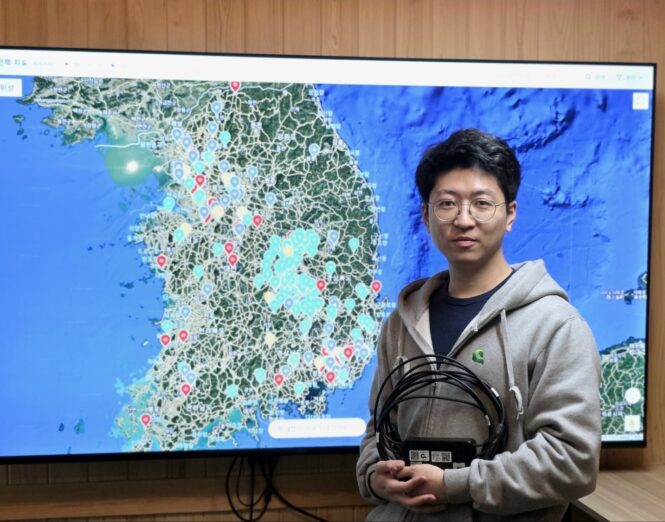
He emphasized, “The practice I want to change in the solar market is managing power plants with different environments, equipment, and ages under the same standards,” adding, “The reason Kernellog has been accumulating module-level data for years is precisely to break this.”
You must be logged in to post a comment.