



Abandoned houses scattered throughout the village are not 'eyesores,' but valuable 'assets.'
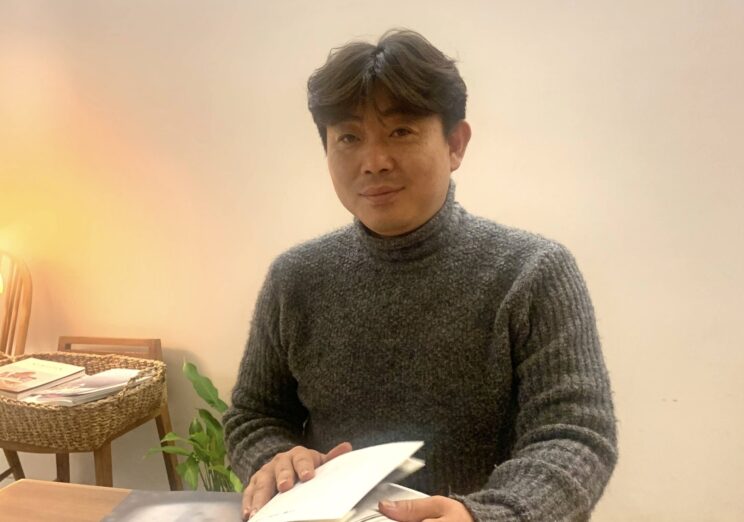
This is the potential discovered by Nam Seong-jun, CEO of Dajayo, who returned to his hometown of Jeju after leaving behind the hardships of running an izakaya. It was not simply because the rent was cheap. The moment an abandoned space was transformed into a village resource, there was business potential there.
“I believe empty houses are scarce resources where time is condensed. I focused on the desire to enjoy the daily life of a region and an era one has not experienced.”

Zero revenue for 17 months, regulatory barriers
When CEO Nam broke through the high hurdles of the Rural Development Act in 2019 and passed the regulatory sandbox, he felt more despondency than a sense of accomplishment. He recalled, “I poured all my energy into getting past the regulatory threshold for a whopping 17 months without any revenue,” adding, “Even after passing, additional conditions followed one after another. It took a full 34 months to generate revenue.”
All the risks and costs of the validation fell entirely on the company, and the only view of companies taking on this new challenge was skepticism—"Will that really work?"
There are signs of hope. Policies such as the institutionalization of the vacant house regeneration guesthouse business and changes to the regulations regarding agricultural funds' investment in vacant house renovation are being established one by one. The direction is correct. However, I only hope that the gap between the reality on the ground and the timeline of the policies will narrow. Since COVID-19, construction costs, material costs, and labor costs have skyrocketed. Guests' expectations have also risen. The old model of renting vacant houses for free, regenerating them with one's own funds, and recouping the investment within 10 years through accommodation revenue no longer works.
CEO Nam overturned the business model itself. First, the approach involves directly purchasing vacant houses using investment partnerships. Once the assets are internalized, there is no pressure regarding payback periods. Furthermore, the system operates with the vacant house owner covering the costs and 'Dajayo' managing the operations on consignment. Regeneration costs are converted into revenue rather than expenses. The company has also expanded its business scope. Breaking away from the single framework of "rural vacant house accommodation," it has adopted its spatial planning expertise, accumulated over 10 years, as its revenue model. Targeting not only vacant houses but also idle spaces in various regions, the business expands from accommodation to F&B and residential areas. For operational efficiency, it actively utilizes IoT. The energy-saving payback system has even been patented. It is structured to return the amount of energy saved by travelers, aiming for both cost reduction and marketing effects simultaneously. CEO Nam stated, "Large corporations are filling Dajayo's spaces with their own products. This is not simply sponsorship. It signifies that they recognize this place as an experience-oriented showroom."
He emphasized, “Dajayo’s occupancy rate rose 16% last year compared to when the service started,” adding that “this figure was achieved amidst a sluggish Jeju travel market.”
The moment major corporations announced they would place their products in our spaces, Dajayo’s status changed from a simple accommodation provider to a spatial platform trusted by these large enterprises.
The next step is clear: a spatial platform where a manufacturing company's IP expands across the entire lifestyle. It involves a commerce model that combines bedding, amenities, and furniture experienced at accommodations with Dajayo's IP for sale, and a structure that uses an IoT monitoring system to digitize guest behavior patterns and provide feedback to manufacturers.
“What is certain for the villagers is visible change. When we neatly revitalize vacant houses that were a nuisance, it counts as an achievement for the local government's vacant house maintenance. When eyesores disappear, pretty accommodations are created, and people start walking around, the atmosphere of the neighborhood changes.”
IoT Integrated Management
Jeju has excellent tourism infrastructure and is an unrivaled tourist destination, so it is rich in resources. However, CEO Nam actually believes that the mainland offers a better environment.
"Jeju has too many good accommodations. We have to compete in a market overflowing with options. On the other hand, regions on the mainland at risk of extinction have few accommodations and poor infrastructure. That is why we can actually stand out."
The standardized revitalization manual is summarized into four key elements: site selection know-how accumulated from reviewing over 400 vacant house sites, content planning utilizing brands and celebrities, IoT technology, and an operational manual. The horizontal hotel layout, consisting of 11 houses scattered throughout the village, is managed through an integrated IoT system. A single system operates everything from contactless door lock check-in and check-out, to remote monitoring of CCTV, fire, boiler malfunctions, and electrical leaks, as well as weather, fine dust, and noise levels. The company is also pursuing remote control via digital twin models, advanced energy saving, and the establishment of personalized smart homes. The goal is to create a structure similar to Apple CarPlay, where lighting, temperature, and music are customized to the guest's preferences regardless of which Dazayo accommodation they visit.
“No matter how advanced IT becomes, someone ultimately has to go to the field. That is why we hire local residents or support maintenance startups by local youth. IT is not replacing people; it is making their work easier.”
A system tailored to local time is needed.
The suggestion by CEO Nam, who is also a member of the Korea Startup Forum steering committee, carries a profound resonance.
We must continuously ask whether policies created in Seoul or Sejong are suitable for local realities. We need to reflect on a structure where local government officials commuting from new cities formulate local policies, and officials who have never traveled to Jeju design the region's tourism policies.
In 2025, 84% of domestic startup investments exceeding 10 billion won were concentrated in companies in the Seoul metropolitan area. Venture companies outside the capital region accounted for 40% of the total. However, investment injected into non-capital regions remained at the level of 20% of the total.
Time flows slowly in the provinces, and corporate growth is also gradual. However, the criteria for the 3-year initial company and 7-year exit fund are the same in Seoul and Jeju. To do this properly, the system must be redesigned to align with the pace and timing of the provinces.
It must generate revenue to be sustainable, and social value exists only when it is sustained. The very act of regenerating vacant houses serves as an achievement for the local government, generates a connected population within the village, and revitalizes the local economy. It is a structure where social contribution is not treated as a separate activity, but rather the project itself constitutes social contribution.
The business model is built on three pillars: space development and operation, SaaS control services, and a brokerage platform. Dajayo goes beyond simply renovating and decorating empty houses. It elevates the value of the space through the participation of brands and celebrities. If a standard interior design company renovates an empty house, it becomes accommodation, but if Dajayo renovates it, it becomes a 'story'.
Control services are the key to scale. Although Dazayo directly operates 11 accommodations, by providing the IoT control system as SaaS, hundreds or thousands of accommodations can be connected to the network.
“You ask what I’m focusing on right now for five years from now? All three. What CEO would focus on just one thing?”
An entrepreneur who discovered potential in an abandoned house in Jeju. Attention is focused on whether his tenacity can transform vacant houses and idle spaces across the country into 'assets'.
You must be logged in to post a comment.