



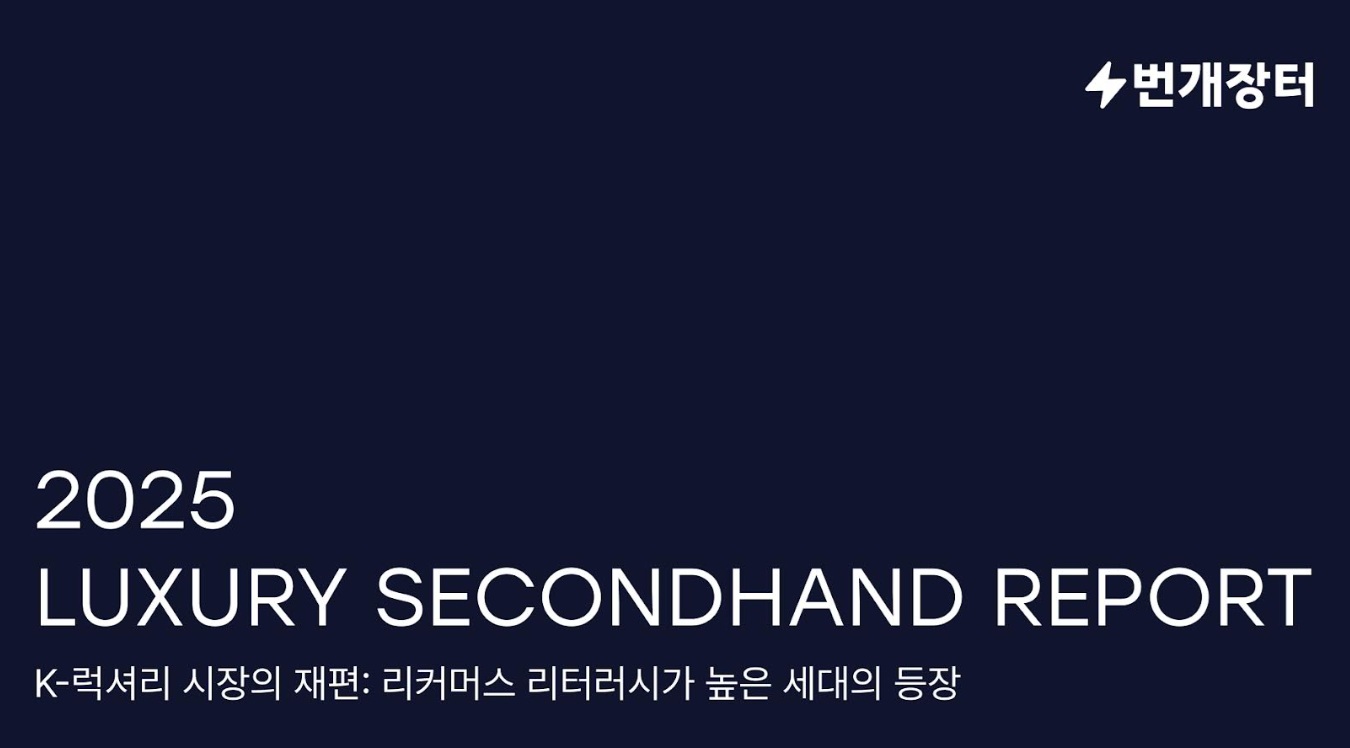
Bungaejang터 (Co-CEOs Kang Seung-hyun and Choi Jae-hwa) released the '2025 K-Luxury Secondhand Report' on the 16th, based on transaction data for 2025. According to the analysis, the domestic secondhand luxury market has evolved into a transaction value-centric ecosystem as consumers perceive luxury goods not merely as consumables but as 'liquid assets' that can be converted into cash at any time. Rapid structural growth of the market was also confirmed, with transaction volume growing by 52% year-on-year and the number of newly registered items reaching 39 million annually.
In particular, the time taken from product listing to sale was remarkably fast for some high-end products. The 'Bulgari B.Zero1 White Gold Necklace' was sold just 53.39 seconds after listing, while the 'Saint Laurent Monogram Quilted Shoulder Bag' and 'Ferragamo Kelly Bag' were traded in 69.52 seconds and 73.51 seconds, respectively. This phenomenon was evaluated as an example demonstrating the immediate liquidity of physical assets.
Bungaejang터's verification solution, 'Corelytics™', played a role in ensuring the reliability of high-value transactions. The highest transaction price was a 'Rolex GMT-Master II' for 51.5 million won, followed by the Hermès Mini Kelly and Birkin 25 Etoupe. Coupled with the rising value of gold and rare gemstones, the jewelry category recorded a 381% increase in transaction volume compared to the previous year, establishing itself as a core asset class.
Preference for luxury goods varied based on recommerce experience and understanding rather than age group. Those in their 20s preferred unique choices centered on rare and limited editions, while those in their 30s valued brand trust and favored brands such as Chanel, Louis Vuitton, and Prada. Those in their 40s perceived luxury goods as assets and focused on watches and jewelry with high value preservation, such as Rolex, Chaumet, and Omega. Based on its high liquidity and brand trust, Louis Vuitton was evaluated as a "safe asset" across all generations.
According to the analysis of brand preferences, Chanel ranked first, Louis Vuitton second, and Prada third, while Gucci and Celine followed in the top ranks, forming the representative lineup of the luxury second-hand market. Furthermore, the proportion of global exports of domestic luxury goods has increased, with 51.7% of overseas transaction value occurring in the North American market, confirming that Korea is contributing to the global value cycle.
An official from Bungaejang터 stated, “Luxury recommerce has established itself as a strategic asset management method that maximizes product value rather than simple consumption,” adding, “We will continue to build a borderless recommerce ecosystem through a trust-based transaction infrastructure.”
- See more related articles
You must be logged in to post a comment.