



Mr. Kim, the IT team leader of a mid-sized manufacturing company in Gimpo, had a headache every month. It was because of the DLP solution he had introduced to prevent technology leaks. He brought in a 50 million won package, but the only function he actually used on site was blocking file copying. The other functions were complicated, so he didn’t touch them. Then, last year, he introduced Altermo’s customized security module. He only used the functions he needed, and the cost was reduced by a tenth, and the employees didn’t feel inconvenienced. He said, “I didn’t know security could be this easy.”
At the center of this change is Seok Jun-hyun, CEO of Altermo (29). The philosophy he advocates is simple. “Security is a matter of sensitivity before security.” Data leaks start from the environment rather than intention, and the answer is security that is appropriate to the context and situation, not a one-size-fits-all rule.
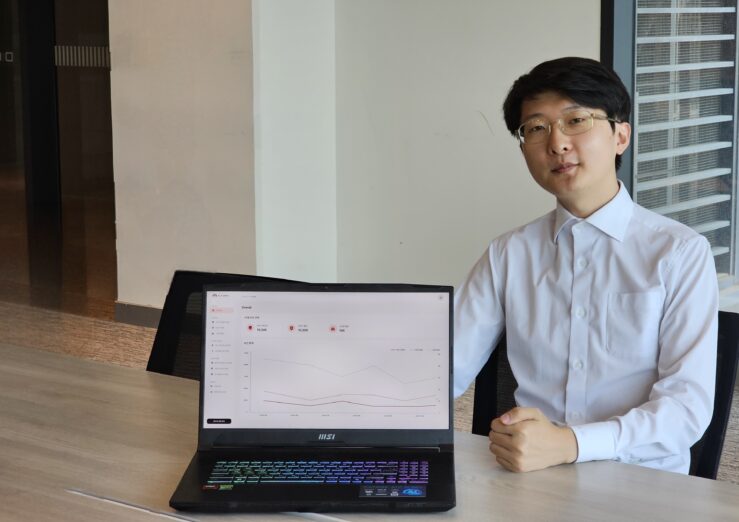
Founded in 2023, Altermo has dug into the niche market of customizing technology leak prevention systems based on this philosophy. The results are successful. Word of mouth is spreading among small and medium-sized manufacturers, and sales are increasing by 200 percent every year. It was also named one of the ‘Little Penguin’ innovative companies selected by the Korea Credit Guarantee Fund this year.
Security solutions you choose from the menu
When asked about the problems of the existing security industry, CEO Seok Jun-hyun answered, “It is a trap of formality.”
“There are companies that are strong in document security, companies that specialize in execution blocking, and companies that focus on intrusion detection, each offering a package solution. It may be suitable for large companies, but it is excessive or unnecessary for small and medium-sized companies.”
In reality, even simple document leak prevention involves a variety of technologies, including file movement tracking, external device control, cloud integration, and network monitoring. Most package solutions bundle these together and provide them all at once, so companies have to shoulder unnecessary functions.
“I’ve seen small and medium-sized businesses adopt huge solutions just for the log function, but they can’t use the dashboard properly. So I separated each function into independent modules so that you can choose only what you need, like choosing food from a menu.”
Altermo's 'Altermo Solution' provides DLP, DRM, application access control, removable storage media control, user activity management, integrated security information management, and AI-based security automation all in the form of a menu.
“As of 2025, most of the core functions have been released and commercialized. Now, the differentiating factor is how efficiently it is developed and how flexibly it is provided to customers.”
Small and medium-sized businesses feel the need for security, but they suffer from the triple whammy of lack of expertise, lack of manpower, and lack of time. To solve this problem, CEO Seok Jun-hyun systematized the provision of easy technical documentation and the pre-consulting process.
“We don’t design one-line security policies. We try to understand a company as a city.”
The context that AI reads, from defense to civilians
The core of Altermo is an AI-based anomaly detection system called 'Altermo Supervisor'. It looks at the entire flow of user behavior and determines threats. It distinguishes between normal work and information leak attempts and classifies them into five risk levels.
“If a chain of actions such as repeated connection of external devices outside of working hours, mass copying and deletion of technical documents, or external transmission of technical documents via email occurs, we will determine it as high-risk and immediately issue a warning or block it.”
It is an intelligent security that goes beyond simple rule-based blocking and understands the context of the action. In particular, we created an intuitive dashboard that even non-experts can easily use for small and medium-sized businesses without professional security personnel.
Altermo targets both civilian and defense markets simultaneously. It has won three grand prizes and four encouragement awards in a row at the Army AI Idea Contest, which has been open to the civilian public since 2024. In April of this year, it announced an algorithm to improve the accuracy of on-device AI at the 'ICT New Technology Defense Utilization Proposal Presentation' hosted by the Ministry of National Defense.
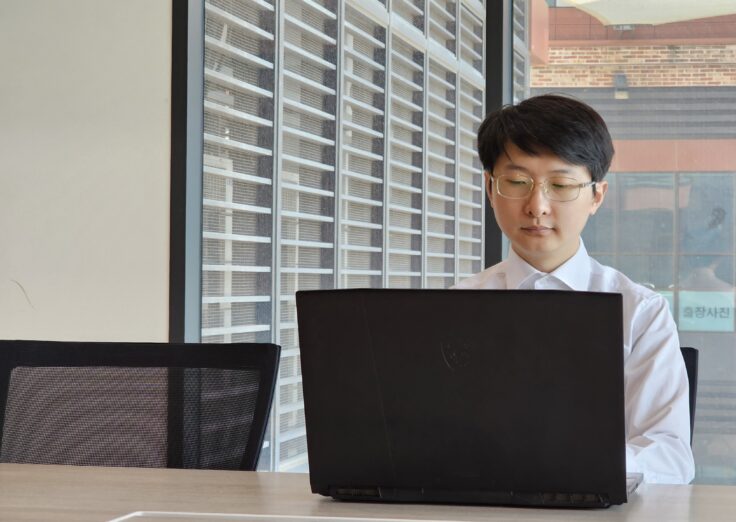
“Most military products are confidential data, from training data to development documents. Since they cannot be taken out or shared externally, all development processes must be carried out in a closed manner by an internal team with secured security.”
There are many limitations, but there are also great advantages. It can secure a stable source of income while also increasing trust in technological capabilities.
“Providing services in the defense sector, where security is critical, is a kind of certification for a security company.”
In terms of product design, we use a strategy of sharing a common foundation but responding separately to differences in application environments. The structure is to create core functions that are commonly required by both the defense and civilian sectors, and add functions that reflect the characteristics of each market on top of them.
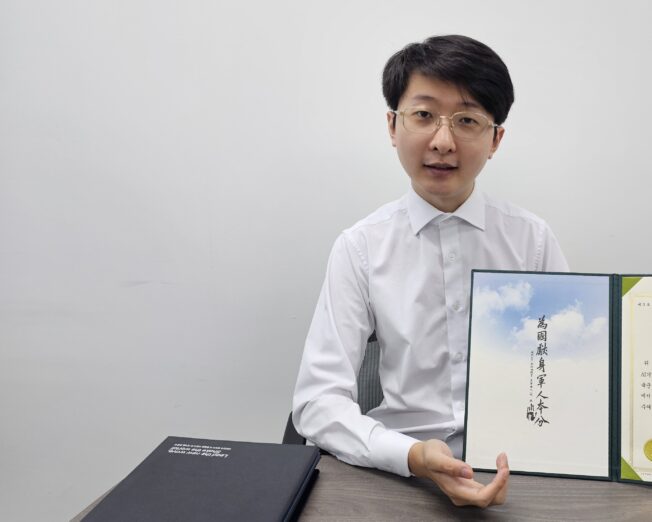
As a technology entrepreneur, the value that CEO Seok Jun-hyun values is technological perfection.
“The security solution market is a field where the technology gap is narrowing. That’s why more complete technology implementation can be a differentiating factor. Even for already known technologies, it is still not easy to structurally stabilize them so that they can work without exception in various environments.”
From Prevention to Prediction, Going Global from Japan
CEO Seok Jun-hyun sees the security market as “an early stage with low maturity compared to the overall industrial IT.” In particular, the advent of quantum technology is increasing the need to completely redesign existing security algorithms and encryption systems.
“Existing security is focused on prevention and mostly remains a rule-based blocking and warning system.”
Altermo has set flexible customization as its marketing area, and AI-based real-time response and threat prediction technology as its core technology areas. Depending on the type of security module introduced, AI model functions are also dynamically configured to integrate abnormal behavior detection, internal threat simulation, and context-based response strategies.
“Altermo aims to lead the trend of transforming security from a passive element of IT infrastructure to an active strategic asset with security technologies that go beyond prevention and focus on recognition and prediction.”
The first target for overseas expansion is Japan. This is because the market has a high density of technology companies but a low adoption rate of security solutions.
“Japan’s awareness of technology protection, alertness to internal information leaks, and practical response methods are very similar to those of Korean small and medium-sized enterprises.”
As we are in the process of promoting digital transformation from the traditional manufacturing industry of the past, the lack of technology protection infrastructure is a common challenge. The Japanese government is also establishing a digital agency and promoting the distribution of security solutions to small and medium-sized enterprises based on chambers of commerce, so the market entry environment is favorable.
“The biggest challenge in technology-based startups lies in the process of converting the technology into a commercializable form.”
In R&D, the goal is to implement functions, but in business, you need to design how those functions can provide value to whom and in what way. The strategy that Altermo chose was technology-centered pre-consulting.
“The process of diagnosing and specifically explaining what threats our clients are unaware of and what technologies they actually need has become a path to gaining trust.”
Altermo will officially launch its 'AI-based customized security platform' in the second half of this year. It is a SaaS solution that can simulate security risks for each industry group and automatically create or modify security rules according to risk type.
“I want to create an era where the field asks technology for direction, rather than technology providing direction.”
These words by CEO Seok Jun-hyun encapsulate his caution against technology supremacy and his field-centered thinking. His belief that the forefront of security technology lies not in firewalls but in the sensitivity to read field trends is creating a new wind in the Korean cybersecurity ecosystem.
As the number of customers like Team Leader Kim of Gimpo increases, the perception of security is changing from something 'difficult' to something 'necessary.' It seems that the day will not be far when the 'context-centered security' that CEO Seok Jun-hyun talks about will become the industry standard.
—
* This interview is part of a series planned in collaboration with startup media Venture Square, targeting excellent startups recommended by the Association in celebration of its 30th anniversary. It will be divided into three areas: 'AI·Data·Digital Solutions', 'Bio·Food·Local Brands', and 'Content·Culture·Web 3.0'.
You must be logged in to post a comment.