



-Distributes animal drugs to 42% of pharmacies nationwide that have been granted animal drug handling licenses
– Obtained ‘Veterinary Drug Manufacturing License’ in February of this year… Plans to manufacture and launch 5 types of veterinary drugs this year
– Aiming to grow into a global pet pharmaceutical company
Where should you go when your pet suddenly gets sick or needs regular medication? Most people start by going to the vet. This is because they don’t know that they can buy animal medicine at a pharmacy.
So where is the animal pharmacy?
When you say 'veterinary pharmacy', you may think there is a separate pharmacy just for animals, but an animal pharmacy is a shop-in-shop type pharmacy with an animal medicine corner set up inside a general pharmacy that we normally use. If a pharmacy reports to the local government that it sells animal medicine and receives permission, it can sell animal medicine.
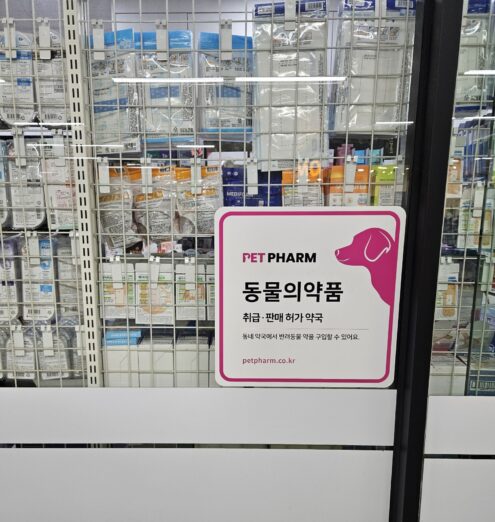
![[Photo] Animal medicine display case at a pharmacy where Pet Farm distributes animal medicine (provided by Pet Farm)](https://www.venturesquare.net/wp-content/uploads/2025/06/20250623-610x522.jpg)
Currently, out of 25,000 general pharmacies nationwide, only about 13,000 are licensed as animal pharmacies. That's about 1 in 2, but there are actually fewer places actively selling animal medicine. There are currently 6,300 pharmacies that handle animal medicine supplied by Pet Farm, which is 25.2% of all pharmacies, or 1 in 4, and 42% of licensed pharmacies. Pharmacies that distribute animal medicine by Pet Farm have a sticker that says "Pharmacy that handles animal medicine" attached, so they are easy to find.
Pet Farm was founded in 2019, when the concept of an animal pharmacy was still unfamiliar. We met with Pet Farm’s CEO, Seonghan Yoon, to hear about the concept of an animal pharmacy, future market outlook, and Pet Farm’s operating strategy.

Pet Farm's Challenge to Pioneer the Animal Pharmacy Market… Securing the Largest Animal Medicine Distribution Network in Korea
While working as CFO at a raw pharmaceutical venture company, CEO Yoon discovered an interesting fact while observing industry trends.
“If you have a pet, there are essential medicines that you have to take every month. Medicines like heartworm medicine, external deworming medicine, and internal deworming medicine, so you have to go to the vet every month to buy them. When you go to the vet, you have to get treatment and buy medicine, so it costs a lot.”
Some pharmacies carried animal medicine. However, few pet owners knew that they could buy animal medicine at pharmacies. The concept of an animal pharmacy itself was unfamiliar, and even if they knew about it, they were not sure if they had the medicine they wanted, so they ended up going to a veterinary hospital.
There are about 5,000 animal hospitals nationwide, and among them, about 4,000 are specialized hospitals for companion animals. However, these hospitals have to handle over 10 million companion animals. This is a typical market structure where supply is insufficient compared to demand. In this situation, if only basic animal medicines such as over-the-counter medicines and preventive medicines could be handled at general pharmacies, it would greatly improve accessibility for companion animal owners and significantly alleviate the financial burden.
“It was a market with a significant amount of information asymmetry. Pharmacists wanted to handle animal medicine, but consumers didn’t know about it, and consumers needed animal medicine, but didn’t know where to buy it.”
When Pet Farm entered the animal pharmacy business, most animal medicine distributors were small-scale businesses based on acquaintances or communities. Pet Farm established a strategy to systematize and scale up this existing distribution structure and began full-scale sales. They visited all pharmacies nationwide, but faced considerable difficulties due to low awareness of animal medicine among pharmacists.
Accordingly, Pet Farm began to expand its sales network while actively supporting pharmacists in areas that they found difficult. It produced systematic educational materials including the types of animal medicines that pharmacies should handle, sales strategies, and medication guidance methods, and gradually built a distribution network while also providing guidance on animal pharmacy reporting procedures.
Stepping into the pet pharmaceutical industry
Pet Farm started out with distribution and is now manufacturing animal medicines directly. This is because distribution alone has limitations in providing a stable supply of animal medicines.
In order to manufacture veterinary medicines directly, a manufacturing permit is required. Pet Farm applied for a veterinary medicine manufacturing permit last year and, after a strict examination by the competent authority, the National Institute of Animal Quarantine, obtained a ‘veterinary medicine manufacturing permit’ in February of this year. This means that it has secured the qualification to apply for product approval for veterinary medicines, beyond simply having the right to manufacture medicines. CEO Yoon Seong-han explained this as ‘a concept similar to a patent.’
Product approval refers to the process of reporting and receiving approval for the ingredients, efficacy, and usage of a specific veterinary drug to the Animal and Plant Quarantine Agency. If you have this product approval, you have exclusive rights to the drug. For example, if Pet Farm receives product approval for a specific deworming drug, the product becomes Pet Farm’s property, regardless of whether it is produced in-house or contracted to another company (CMO). The manufacturer is only responsible for production, and all rights to the product belong to Pet Farm, which holds the product approval.
Pet Farm aims to launch five essential medicines for animals this year. The plan is to domestically produce essential medicines that currently depend on imports, such as heartworm medication, internal dewormers, and external dewormers.
Dreaming of becoming a K-pet pharmaceutical company
Pet Farm plans to build a 'K-pet medicine' brand through overseas expansion in the long term. The biggest advantage of overseas markets is that regulations are relatively relaxed. In Korea, online sales are restricted due to the Pharmaceutical Affairs Act, but overseas, animal medicines can be sold on Amazon or pet shops. The first target for expansion is Japan. Since the Pharmaceutical Affairs Act system is similar to ours, market entry is expected to be relatively easy.
Pet Farm's ultimate goal is to grow into a companion animal pharmaceutical company like Zoetis, the world's largest animal pharmaceutical global company. Zoetis sells about 300 different products in over 100 countries around the world and is the world's No. 1 in sales of livestock and companion animal medicines. Zoetis, which was spun off from Pfizer in 2013, has exceeded 10 trillion won in sales as of 2022 and has a market capitalization of 100 trillion won.
The target date for listing is 2028, but this will depend on changes in consumer awareness and the pace of market growth, Yoon predicted.
“The key to market growth is how quickly consumers change to using pharmacies. If consumers visit pharmacies more, the market will grow much faster. As consumer use increases, pharmacists will naturally stock the medicines that consumers want. Ultimately, consumer demand is the driving force behind market change. Currently, there are not enough types of medicines that consumers want, so diversification of medicines is a prerequisite for market growth.”
“Most domestic animal medicine manufacturers are focused on livestock,” said CEO Yoon. “The companion animal market is either monopolized by global pharmaceutical companies or veterinarians often use human medicine in small portions.” If Pet Farm changes this structure and expands new sales channels such as pharmacies, CEO Yoon believes that it will create opportunities for domestic manufacturers to enter the companion animal market.
If the manufacturing and distribution of animal medicines becomes active, it will ultimately benefit consumers. Using pharmacies is more accessible than using hospitals alone, and the financial burden can be greatly reduced.

Growth expected along with the growth of the pet market
On my way out after the interview, I noticed a sticker from Pet Farm that said, "Handled by Animal Pharmacy." It was something I had never noticed before, but now I noticed it right away.
Pet Farm's success story is the result of resolving information asymmetry. Pharmacists wanted to start a veterinary pharmacy business but did not know how to do it, and consumers needed veterinary medicine but could not find a place to buy it. Pet Farm is bridging this gap and pioneering a new market called the veterinary pharmacy, which had been unfamiliar until then.
Pet Farm is not just a simple distributor, but is also expanding into manufacturing, changing the entire industrial ecosystem. It is providing new sales channels for domestic manufacturers and better choices and accessibility for pet owners.
Along with the rapid growth of the pet market, the animal pharmaceutical distribution and manufacturing market led by Pet Farm is also expected to grow in tandem.
You must be logged in to post a comment.