



From the New Deal policy of the 1930s to today's Green New Deal policy
New Deal policy. It is an economic policy that President Roosevelt promoted during the Great Depression in the United States to invest in social infrastructure to create jobs and overcome the economic crisis. The Green New Deal literally refers to a plan to create jobs and markets through support for green industries. Advanced countries related to environmental policies such as the United States and Europe have already adopted the 'Green New Deal' policy as a policy topic for several years and are working to achieve the goal of reducing carbon emissions to '0'.
So what’s the effect? Major companies like Tesla and Microsoft are investing in startups and technologies related to renewable energy like wind energy and solar energy, creating a virtuous cycle that creates meaningful new technologies. This movement has created several star startups, including MOTEG, a German electric car motor manufacturer, Bind-X, which provides technology that turns dust into rocks to help cultivate crops, and Deep Branch Biotechnology, which provides technology that turns industrial waste in the UK into animal feed.
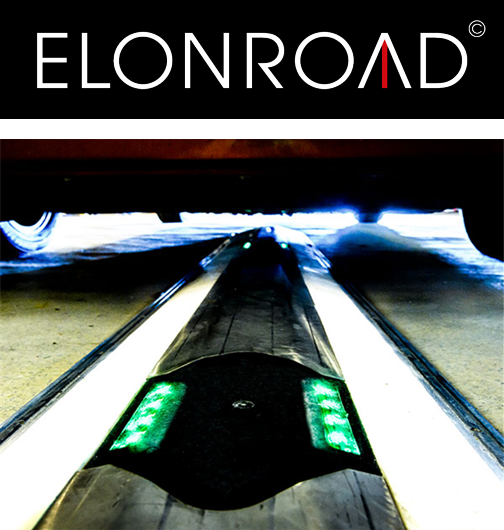 <Elon Road's Evolution Road>
And since the start of the COVID-19 pandemic, interest in environmental issues including climate change has grown, accelerating growth. And that's not all. As the public's awareness of environmental issues grows, each country is announcing environmental policies to support the growth of green startups. Commonly reflected in the policies of most countries, including the European Union and the United States, are the areas of reducing carbon emissions and utilizing renewable energy through waste recycling. For example, the Swedish government is actively implementing eco-friendly policies such as imposing the world's highest carbon tax rate and providing subsidies for electric vehicles, with the goal of achieving '0' greenhouse gas emissions by 2045.
Against this backdrop, Swedish mobility company Elonroad has been responding to the growing demand for electric vehicles through its Evolution Road, an electric vehicle road that can automatically charge without cables while driving. After COVID-19, Elonroad was selected for the European Institute of Innovation & Technology Urban Mobility Accelerator Programme SPECIAL: COVID-19 acceleration program and is also preparing for overseas expansion.
Korean Green New Deal Policy and D3
In fact, the creation of future jobs through eco-friendly and future technologies has been continuously discussed in our country. However, due to the recent COVID-19 issue and damage caused by climate abnormalities, a national consensus has been reached on the need for eco-friendly policies and social distancing, and they have been implemented more actively. And the contents can be confirmed in the 'Korean Green New Deal Policy' announced last July. Previous policies showed a separate aspect of digital and eco-friendly policies, but the outbreak of COVID-19 and the daily use of digital technology have combined the two elements.
Looking at the types of startups that have been in the spotlight recently, the trends can be largely divided into three categories. They are Decarbonization, Decentralization, and Digitalization, also known as D3 (a core concept that will lead the energy transition based on the 4th Industrial Revolution technology announced by the Korea Electrotechnology Research Institute), which is closely related to the announced national tasks such as digitalization and the Green New Deal. D3 is a core field of cutting-edge technology that will lead the 4th Industrial Revolution era and a focus of the Green New Deal policy, and is leading the startup trend in Korea.
Low carbon means eco-friendly… Investing in the future of mobility
One of the main sources of carbon, or carbon dioxide, is automobile exhaust fumes. As of June 2019, there is one vehicle per 2.2 people, and eco-friendly cars account for only 2.3% of all vehicles, which is a very small amount. Investment in electric vehicles, hydrogen vehicles, and smart mobility that do not emit carbon is noticeable.
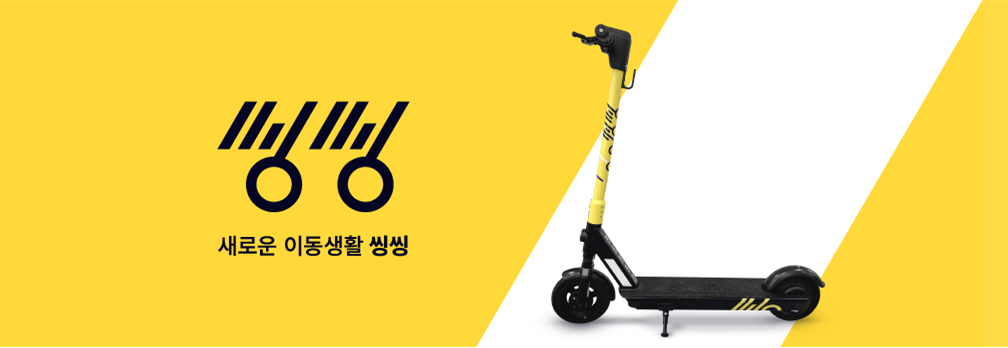
A representative example is PUM, which provides the shared kickboard 'ThingThing'. PUM's corporate research institute announced that based on ThingThing usage data, the amount of ThingThing used over the past nine months is equivalent to circling the Earth 36 times, contributing to a reduction of 306 tons of carbon dioxide. It did not simply reduce carbon emissions. Shared mobility is establishing itself as a major means of transportation in the eco-friendly era, and according to a survey by the Korea Transport Institute, the domestic personal mobility market is growing rapidly by an annual average of more than 20%. Accordingly, PUM (ThingThing), a leading player, attracted KRW 6 billion in joint investment from Alpen Route Asset Management, Core Investment, Sun & Tree Asset Management, and Capstone Partners in June 2019, and received additional investment from SK and others in November of the same year, exceeding KRW 10 billion in cumulative investment.
As of September 2020, Thinsing was confirmed on the 9th to be the most used shared kickboard service in Korea. Despite entering the market about 8 months later than its competitors, it has an advantage in cumulative investment amount and market share due to efficient operation through 24-hour replaceable batteries. It is said that this was due to customers' awareness of the importance of shared mobility and low carbon emissions, as well as the power of a user-friendly operating platform.
In the future, PUM will decide to collaborate with Newbility, a last-mile robot autonomous driving software platform developer, and research autonomous driving technology for kickboards. When autonomous driving technology is completed, the current concerns about kickboards, such as safety with pedestrians and the problem of being left on the street, will be improved, and more active business will be carried out to spur the strengthening of the low-carbon trend.
Expanding the definition of living infrastructure, from building materials to fresh food packaging

Green transformation of urban and spatial living infrastructure. One of the three major policies of the Green New Deal. Public rental housing, public daycare centers, and other public buildings will be constructed using insulation materials and eco-friendly materials to save energy. This is an explanation of insulation materials that we are familiar with.
Aimt, an insulation material startup that started as an in-house venture of Samsung Electronics, showcased innovative insulation technologies for Samsung Electronics’ refrigerator products and construction work in its early stages of establishment in 2014. In its early stages, it provided insulation technologies for cities and spaces, but recently, due to the non-contact lifestyle of COVID-19, delivery services for daily necessities and groceries have become important living infrastructure, and Aimt’s fresh food packages have also been in the spotlight.
The eco-cool box developed by Aimt replaces the Styrofoam box used for packaging existing fresh products. Styrofoam is bulky, has low insulation effect, and is a disposable product, so it is also considered a cause of various environmental pollution. On the other hand, the eco-cool box is made by recycling discarded PET bottles, and by utilizing Aimt's eco-friendly vacuum insulation technology, it has the advantage of effectively maintaining a low temperature without the need for a separate refrigerant device, while also greatly reducing the packaging volume.
 It began supplying to major distribution companies in 2019, and its marketability was recognized, attracting an investment of 1.7 billion won from the Ministry of Land, Infrastructure and Transport. In addition, this year, through Wadiz funding and others, it created a lunch bag that ordinary users can also use, and achieved 500% of its target amount in just one day, gaining popularity among ordinary consumers.
The emergence of social energy platforms… Building an innovation ecosystem for the green industry
A digital ecosystem for the green industry is being built through digitalization, one of the D3. Currently, the proportion of renewable energy in our country is only one-sixth of the OECD average, and ranks fifth in the world, following crude oil exporting countries such as Saudi Arabia, Kuwait, and the United Arab Emirates. The reason why the domestic renewable energy industry is slow to develop is largely due to the limited domestic renewable energy-related information, unnecessary business commission transaction structures, and excessively set power generation unit prices, which do not provide reliability and profitability to consumers. It can be seen that the cyclical ecosystem of information search, purchase, and construction is not properly established.  In this situation, there is a startup that has taken on the task of building an ecosystem utilizing digital technology. It is EnergyX, which provides an AI-based 'online to offline (O2O)' digital platform service that connects various users such as power generation business owners, real estate owners, EPC companies, and financial investors in new and renewable energy businesses. EnergyX provides an Amazon-style platform ecosystem designed to facilitate marketing from business application to purchase based on the goal of becoming an AI-based e-commerce platform in the global new and renewable energy industry. Due to improved user convenience, there are currently more than 160 new and renewable energy power generation projects worth 170 billion won registered on the social energy platform.
Based on these strengths, EnergyX attracted KRW 5.1 billion in Series A investment from Hyundai Technology Investment, Simbon Investment Partners, Gloria Advanced Materials Investment, Ophir Equity Partners, and Venture Square in March 2020, achieving KRW 13.2 billion in equity capital in just one year since its establishment, demonstrating the possibility of digitalizing the renewable energy business into a platform.
Practicality and everyday life are the key
Let's look at what these cases have in common. They are described in fancy terms like D3 and use difficult terms like renewable energy and low carbon, but they are all companies that provide technologies that are useful in real life. Thinsing is reducing exhaust fumes in everyday life by providing shared kickboards and electric vehicle technology instead of carbon-emitting cars, and is working to solve safety-related issues related to driving that consumers find inconvenient. Aimt expanded the use of insulation materials from existing construction and electronic products, and created fresh food insulation based on the fact that consumers carry lunch boxes and order a lot of delivery food in the COVID-19 era. Consumers can now enjoy food at the right temperature easily with a smaller volume, more environmentally friendly food using recycled materials, and better insulation effects. And through EnergyX, a renewable energy platform with convenient UX, renewable energy is no longer a target for use by companies or governments, but can now be used by the general public.
Startup trends are always changing. But one constant trend is that beneficial technologies that provide clear convenience and benefits to users are necessary and have a very high chance of success.
You must be logged in to post a comment.