



Chronic problems in the planter market are being solved one by one. In an industry dominated by uniform plant arrangements, one-time event spaces, and lack of brand identity, a company has emerged with a new approach called 'emotional design.'
Macho's Puberty is a place where big brands such as LG, Maybach, and Krafton are reaching out one after another. We met with the company's CEO, Kim Gwang-soo, and heard about their unique strategies, limitations, and prospects.
'Philosophy of Contradiction' that Exploits the Gaps in the Market
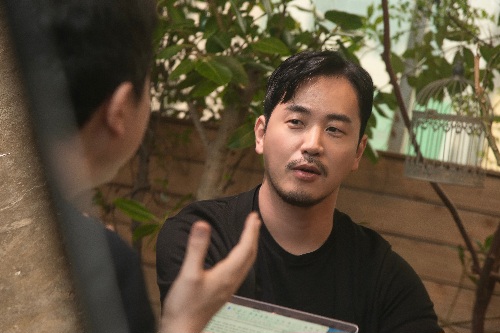
The office of Macho's Adolescence, located in a building in Seocho-gu. A team of 20 people led by CEO Kim Gwang-soo (40) gather together, each with their own expertise. From architects, landscapers, media artists, to brand planners. The results they produce shake up the conventional wisdom of the existing planter industry.
The name of the company, Macho’s Adolescence, founded by CEO Kim Gwang-soo, is unusual. This name, which combines conflicting concepts, contains the founder’s firm philosophy.
“The problem with the existing planterium market was the perception that ‘all you have to do is put plants in there.’ They only mass-produced standard green spaces while ignoring the unique identity of the brand.” CEO Kim Gwang-soo’s criticism is sharp. In fact, the domestic planterium market is growing by an average of 15% per year, but most companies are still limited to simple plant rental or placement services.
Macho’s approach is different. Under the slogan of ‘adding nature to space,’ they focus on translating brand narratives and emotions into the language of nature. Like the company name, which embraces contradictory elements such as strength and weakness, instinct and emotion.

Differentiation strategy proven by data
This approach is not just marketing rhetoric, as proven by the results. The average customer stay time in projects that Macho’s Adolescence participated in during the first half of this year increased by 40% compared to regular stores. LG explained that the rate of return visits to the LG Best Shop renewal stores increased by 25% compared to the previous stores.
“The goal is not simply to create a pretty space. Real value is created when we design how people will feel in that space and how they will communicate with the brand,” explains CEO Kim Gwang-soo.
In fact, the work process of Macho’s Adolescence is quite different from that of existing companies. In the early stages of the project, 30% of the entire period is spent on analyzing the brand philosophy and the emotional journey of the target customer. After that, an immersive worldview is built through ‘narrative design’ utilizing natural elements.
Differences from global cases
Brand-centered space design is also gaining attention overseas. Digital art companies like TeamLab in New York and design studios like Glithero in London are working in similar fields. However, he is confident that “emotional design using nature as a medium is our own unique field.”
The Maybach project is a representative example. Instead of expressing the luxury of luxury cars with gold or marble, it was expressed with ‘premium nature of the Earth’ such as polar regions, volcanic regions, and jungles. Before even seeing the car, visitors can already experience the ‘global luxury’ pursued by the brand.
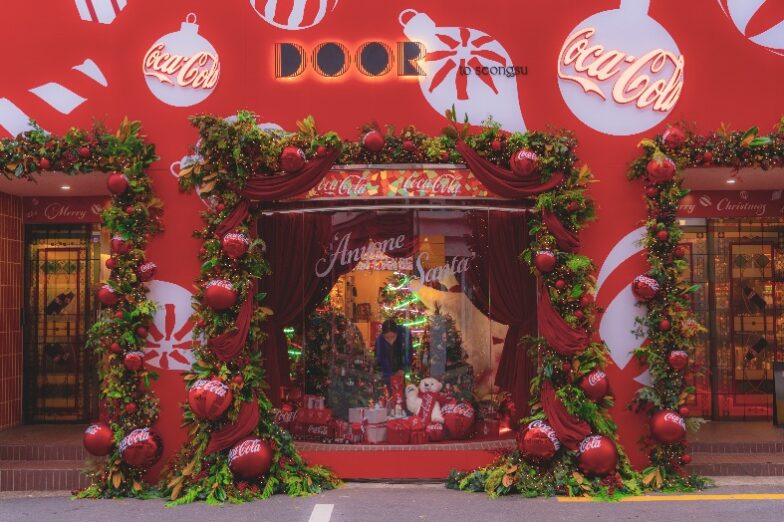
Projects like Toretta World and LG Objet Universe build imaginary worldviews, creating a unique universe for the brand at the boundary between reality and fantasy.
Limitations and challenges of business models
However, there are limitations to the business model of Macho’s Adolescence. The planning period for each project is long, and there are limitations to scalability due to the high degree of customization. CEO Kim Gwang-soo also acknowledges this.
“It is true that sales predictability is low because we are currently operating on a project basis. However, in the long term, we plan to develop into a data-based bio plant group.”
Macho's Adolescence has started developing modular space solutions. The strategy is to create a standardized package based on the spatial data and emotional response patterns accumulated so far. It aims to stabilize the profit structure and secure expandability at the same time.
Another challenge is human resource management. Currently, there are 20 employees in charge of different areas such as architecture, interior design, landscaping, and media, but it is not easy to unite them with a single philosophy. “Up until now, we have managed all the details ourselves, but as the organization grows, it is time to systematize,” said CEO Kim Gwang-soo.
Sustainability, Authenticity or Marketing?
As ESG management becomes a hot topic, the message of ‘sustainability’ of Macho’s Adolescence is also gaining attention. At the Toretta pop-up, those who brought empty bottles were given a plant, and at the Korea-Africa Summit, all the plants were planned to be taken by the participants.
“From the beginning, we have adopted the principle of ‘designing for non-waste.’ I think that if waste remains behind extravagance, it is not a true production,” explains CEO Kim Gwang-soo.
However, some people question whether this approach is truly an eco-friendly practice or a marketing point. In fact, some point out that “it is contradictory to use artificial materials while claiming to be natural” regarding the work method of Macho’s Adolescence, which actively utilizes artificial materials such as plastics.
In response, CEO Kim Gwang-su countered, “The goal is not to move real nature, but to create an ‘environment that allows one to feel nature,’” and “the authenticity of emotions is more important than the authenticity of the material.”
Market scalability and competitive landscape
The domestic experiential space design market is estimated to be worth 300 billion won annually. And it is growing by more than 20% every year. As ‘space differentiation’ becomes a hot topic in the post-corona era, the growth rate is expected to become even steeper.
Macho's Adolescence has secured its own unique positioning in this market as 'nature-based emotional design'. However, competitors are also formidable. Large interior design companies are offering similar services, and overseas design studios are also entering the domestic market.
“As the market grows, it is natural that competitors will increase as well. The important thing is to continue to develop our own unique differentiation.” CEO Kim Gwang-soo seems to see this as an opportunity rather than a crisis.
The Reality of Going Global
The ambitions do not stop at the domestic level. He revealed plans to expand the ‘Macho Adolescence Worldview’ to major cities such as Tokyo, Bangkok, and New York. These include modular indoor and outdoor arboretums, planteria-based healing hospitals, and green franchise models.
However, the realistic barriers to overseas expansion are formidable. Building codes, safety standards, and cultural differences must be taken into consideration in each country, and securing local partners is key.
“We are in discussions with several companies in Singapore and Thailand. However, it is not easy to find partners who can properly understand and implement our philosophy.” This is the honest confession of CEO Kim Gwang-soo.
Industry experts are giving mixed reviews of Macho’s puberty differentiation strategy. One space design industry insider said, “The concept of emotional design itself is novel, but the key is to stabilize it as a business model.”
On the other hand, branding experts are relatively favorable. “At a time when brands are paying attention to experiential marketing through space, Macho’s approach is timely,” they analyze.
CEO Kim Gwang-soo predicted, “In five years, nature will no longer be a ‘vitamin that can be either present or absent,’ but a ‘necessary treatment.’” This is an analysis that people are feeling a strong thirst for nature as they go through the pandemic.
The demand for nature-based design in everyday living spaces such as hotels, hospitals, and schools is increasing. Representative examples include the 'Healing Garden' project introduced by Samsung Seoul Hospital this year and the application of 'Biophilic Design' by Lotte Hotel.
Time will tell whether the topic of 'emotional design' presented by Macho's Adolescence will end up as a simple trend or become a turning point in the spatial design paradigm. The question they raised – "Can the emotions of this space be sympathized with? Can this space be remembered for a long time?" – is worth considering by the entire industry.
Just like their slogan, “Trends end, nature endures,” it remains to be seen whether the changes brought about by macho adolescence will continue.
You must be logged in to post a comment.