



On June 12, the second day of Europe's largest startup fair, Viva Technology 2025, the Paris Expo exhibition hall was filled with realistic and sharp business discourse. Rather than the grand discourse that AI can do everything, the scene was dominated by specific questions such as, "So what real value can your technology add to our business?"

<The 'Vivatech 2025' logo symbolizing a colorful feast of future technologies such as AI, deep tech, and sustainability>
Events symbolizing this shift to the 'Economy of Proof' unfolded throughout the second day. The world's largest luxury group, LVMH, completely changed the way it presented its innovation awards and presented new standards for collaboration, and deep-tech startups that solve social problems were spotlighted at the global awards.
In the midst of this fierce competition, good news was delivered to the K-startup delegation. In the '2025 Global Startup Ecosystem Report (GSER)' announced on-site, Seoul recorded its highest ever ranking of 8th in the world. This was more than just a simple rise in ranking; it was a powerful sign of the reliability of the Korean startup ecosystem to potential European partners.
On the second day of VivaTech, we went to the site and directly confirmed how the K-startups ranked 8th in the world were answering the difficult questions of the European market in the new game rules that require speaking with ‘results’ rather than ‘ideas’.
LVMH, “The idea is over, show the results of the collaboration”
The event that most clearly showed the flow of the second day of VivaTech was the 'LVMH Innovation Award'. This year's awards ceremony clearly showed how the relationship between technology startups and large corporations is being redefined through drastic changes.
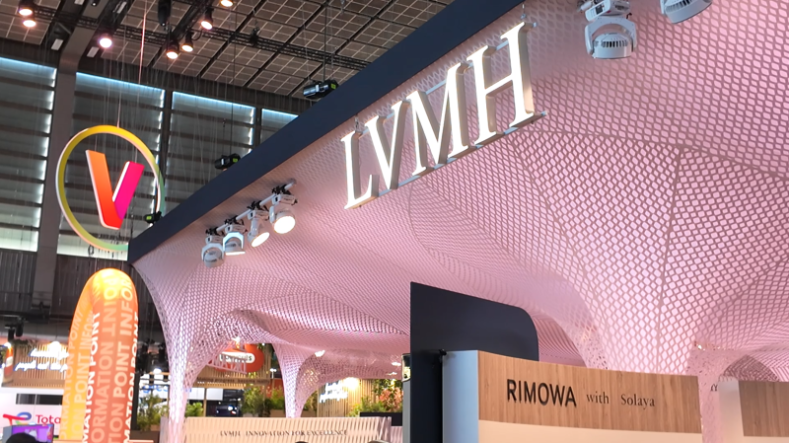
<LVMH, which chose 'pragmatism', changes the standards of technology partners. (Photo = Vivatech 2025 LVMH booth>
In a departure from the past when it had only awarded promising startups, this year LVMH for the first time awarded technology partners who were already successfully collaborating with its brands (maisons). Even the grand prize, Innovation of the Year, was abolished. This is a strong signal that LVMH is no longer investing in potential or ideas, but in “proven solutions” that can be immediately integrated into its business and create measurable value.
Antoine Arnault, LVMH’s vice chairman, emphasized that “technology is not there to replace human interaction, but to enhance the experience.” This sends an important message to all B2B startups. The key to opening the door to big companies is no longer a flashy pitch deck, but a successfully proven pilot project and the ability to deeply integrate with existing systems.
K-Startup Ranked 8th in the World Finds Answers to Europe's Problems
The 'K-Startup Integrated Hall' located in the center of Hall 1 of the Paris Expo was busy with investors and buyers from all over Europe on the second day. The 26 companies participating here were building trust by demonstrating technology and suggesting solutions to specific problems facing the European market. They focused the attention of local officials by presenting clear solutions to the challenges facing Europe, not vague visions.
Ninewatt has unveiled its AI-based building energy optimization technology, which has attracted a lot of attention as it offers European building owners a clear, data-driven energy saving and carbon reduction solution to tackle the EU’s tough ‘Green Deal’ regulations and high energy costs.
MORPHING I is using AI robotics technology to tackle the problem of aging water and sewer pipes, a long-standing problem in Europe, including Paris. Their underground pipe diagnostic solution is gaining attention as an alternative that can reduce enormous maintenance costs by enabling accurate diagnosis without destroying the city.
There were also cases that exploited gaps in the content market. Toonimotion presented the value of providing low-risk, attractive content to Generation Z to European OTT platforms suffering from content shortages through AI technology that visualizes proven IPs such as K-webtoons at low cost and high efficiency.
Innovations in the medical and healthcare sectors were also notable. Foretell My Health knocked on the door of Europe’s advanced precision medicine market with platelet biomarker technology that can detect ovarian cancer and other diseases early with just a blood test. In addition, Mandro left a deep impression by simultaneously proving the social value and marketability of technology within Europe’s inclusive health system through a 3D-printed electronic prosthesis that costs only one-tenth of the price of existing expensive electronic prosthetics.
Instead of saying, “Our technology is excellent,” these companies were proving, “We can solve your problems like this.” This shows that the ‘European expansion strategy’ systematically supported by the Ministry of SMEs and Startups and the Korea Institute of Startups and Entrepreneurship Development through participation in VivaTech, focusing on localization and business matching, is working.
Discussing the Future of Technology – Coexistence of Diversity and Realism
The key sessions and awards on day two of VivaTech provided deep insights into where the technology ecosystem is headed.
At the VivaTech Global Awards held in the evening, the winner of the 7th Female Founder Challenge was announced. The honor went to Ellen Briand, co-founder of Verley, a French biotech company that produces non-animal dairy proteins using precision fermentation technology. The fact that the companies that were shortlisted are tackling humanity’s challenges, such as femtech, carbon capture, and AI mental health solutions, suggests that ‘impact’ has now become a key indicator for evaluating corporate value.
Meanwhile, amidst the rosy outlook for AI, there were also realistic warnings. GitHub CEO Thomas Domke pointed out in the session “AI Agents and the Future of Programming” that “startups built solely with AI coding tools will have difficulty scaling and attracting investment.” He emphasized the importance of skilled human developers who build complex and defensible systems. This emphasizes that in the AI era, internalizing core technological capabilities is essential for survival.
In addition, in the 'AI-based new drug development' session, pharmaceutical industry leaders such as AstraZeneca shared how AI dramatically increases the success rate of clinical trials (50-70% for traditional methods vs. 90% for AI methods) and shortens the development period, and presented specific impacts that AI will have on human health.
Beyond the Parisian heat, to sustainable business
The second day of VivaTech 2025 can be summarized in two words: ‘proof’ and ‘substance.’ As the LVMH Awards show, global companies are now demanding concrete collaboration outcomes and ROI from startups. K-startups have successfully responded to this trend by presenting clear solutions to the problems of the European market based on their objective credibility as ‘8th in the world.’
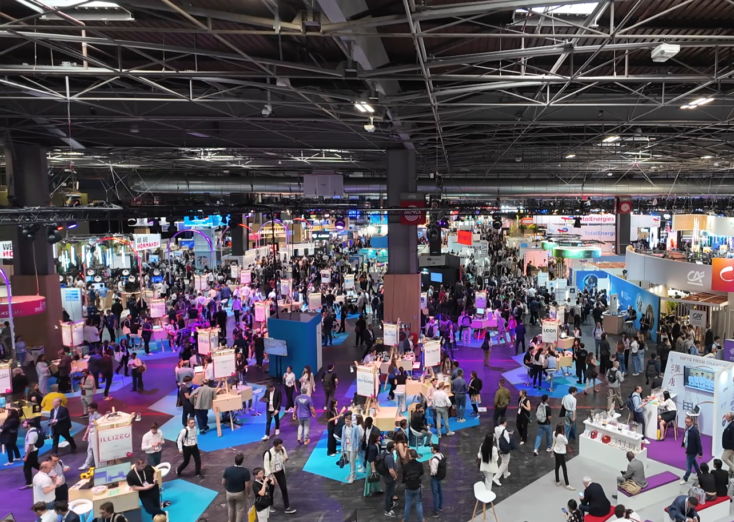
<A view of the 'Vivatech 2025' exhibition hall, packed with innovators, investors, and visitors from around the world>
But the Parisian fever is only the beginning. A senior entrepreneur who met at the site advised that “the most difficult parts in Europe are administration, paperwork, and contracts,” and that expert help is essential. The arduous process of converting the numerous business cards and positive feedback obtained from Vivatech into actual contracts has just begun.
Seoul's rise to '8th place in the world' is not something to celebrate, but rather a declaration that we must jump into the global stage with higher standards and expectations. Whether K-startups can continue the 'proof' they showed in Paris into 'success' throughout Europe is drawing even more attention in the future.
You must be logged in to post a comment.