



“Is this really 2025?”
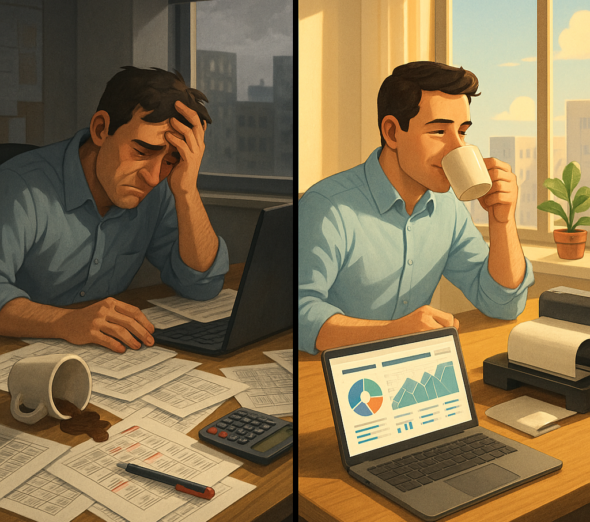
The words of Lee Deok-haeng, CEO of Landup, that I encountered at a startup office in Yeongdeungpo, Seoul, stuck in my mind. He added, with dozens of Excel files spread out on his desk, “Real estate development is still done by people manually calculating figures, and if there is an error, it goes back to the beginning.”
Next to him, I am surprised once again as I look at the service on the monitor. It is an era where a 15-page business analysis report is completed in a few minutes by entering just one address. The 'repetition' is handed over to the machine, and the 'judgment' is left to the human. The topic of the article came to mind from that short scene.
Over the past three months, I have met 12 entrepreneurs who are growing rapidly in the PropTech ecosystem. Landup, Piperblic, Disco, SamSamM2 (Space V), Archisketch, Pobicon, Devall Company, Cloud &, JEM Company (Woori), GeoGrid, ReadyPost, and Contactus. The specific areas are different, but the common ground they touch on is clear. It is the emergence of technologies that reduce repetition, organize relationships, and restructure.
One Address, the End of Manual Work: Techniques That Change Repetition
“It takes a week just to review the business feasibility, and in the meantime, the opportunity falls into someone else’s hands.” The solution presented by CEO Lee Deok-haeng was not complicated. It is a system that automatically outputs a report that quantitatively analyzes location, profitability, and construction feasibility when you enter an address. It is not a simple automation, but a workflow innovation that changes the flow of work itself.
The same context was followed by Song Joong-seok, CEO of Pobicon. He applied AI to the calculation of architectural drawing quantities, reducing manual work from 10 hours to 20 minutes. “Technology does not replace people. It just changes the structure of time.” As he said, innovation did not come from human hands, but rather brought forward the point of judgment.
Lee Jang-gyu, CEO of Devol Company, called it the “AI assistant.” By automating repetitive tasks such as contracts, billing, and receipts, he defined technology as “a quiet assistant sitting next to the workers, not the executives.” Technology was between people.
Democratizing Data, People Who Opened the 'Front Door'
“Why is investment information always only available to institutions?” This change began with the question asked by Lee Ho-seung, CEO of Piper Republic. Through performance-based fees and AI-based asset risk analysis platform ‘Realistics’, he opened the door to indirect real estate investment. The philosophy is that information should be a tool, not power.
“There is no reason why real estate information should be limited to a few people. Transparency makes the market healthy.” Disco, led by CEO Bae-soon, put real transaction prices and listing information on the map. People shared, connected, and added explanations to the information. Information goes beyond a tool and becomes the foundation of the community.
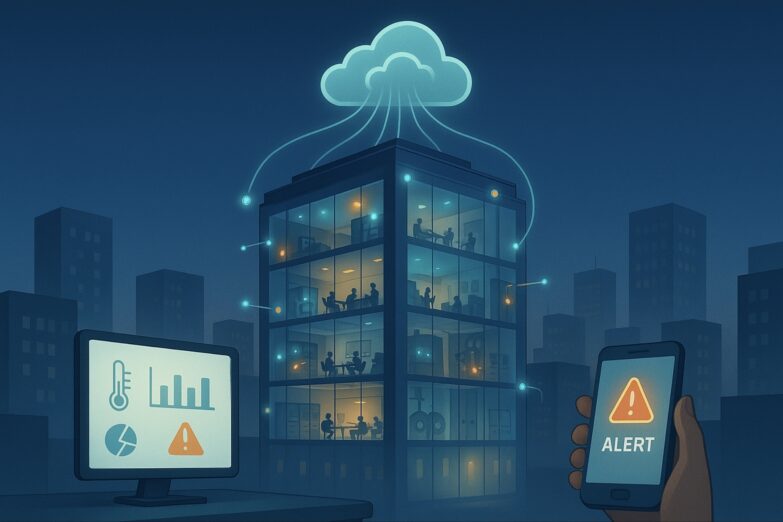
Kim Jeong-seok's Cloud & has created an IoT-based 'digital doctor' that detects the temperature, power, and facility status inside a building 24 hours a day. If a building is alive, it is the first doctor and manager to detect its health status. Data is giving sense to the city.
In order to hold a union general meeting, you still have to send mail and get a stamp. Yoon Eui-jin, CEO of Lee Jae-M Company, despaired at the reality that “if one union member does not stamp the stamp, the general meeting is invalid.” That is why he created an electronic general meeting platform. He has eliminated the hidden administration of urban development projects with technology.
Platforms for staying instead of settling down, for rebuilding relationships
Proptech is changing the ‘way of staying’. Park Hyung-jun, CEO of SamSamM2, created a short-term housing platform with a deposit of 330,000 won. “Single-person households, project workers, and young people need flexible accommodations rather than permanent residences.” A home is becoming an experience, not a possession.
Lee Joo-seong's Archisketch allows anyone to design 3D interiors and share designs like GitHub. "Design can also be open source." It is a change of perspective that creation is not something you do alone, but something you do together.
Shin Dong-hoon, COO of Contactus, named the operation of small and medium-sized buildings 'Nest'. By combining physical bases and digital platforms, he built a response system within five minutes. "Buildings need care. Technology makes that care possible."
Technology reduces repetition and rebuilds relationships
I always heard them say the same thing: “Technology doesn’t replace people, it extends them.” And I learned that this wasn’t just condescension. Their technology actually extends human capabilities, restores relationships, and improves structures.
Landup's address entry system provided small and medium-sized operators with analysis tools on a large scale. Piper Republic and Disco broke down the information wall and lowered the threshold for investment and transactions. Ready Post (General One Stop) and JEM Company (Woori) changed the closed decision-making structure to transparency. SamSamM2 and Archisketch presented new models of ownership and creation.
Proptech is asking the city a question: will it endure repetition or change? We met people who have found the answer to that question. Their urban rhythm is different from the past. It is fast but human, efficient but tightly connected.
The city is still repeating. The repetition that the machine takes on gives people new time, and the relationships that people create give the machine purpose. The technology that puts a new beat on the old rhythm. That rhythm is the reason why we rely on the city again.
You must be logged in to post a comment.