



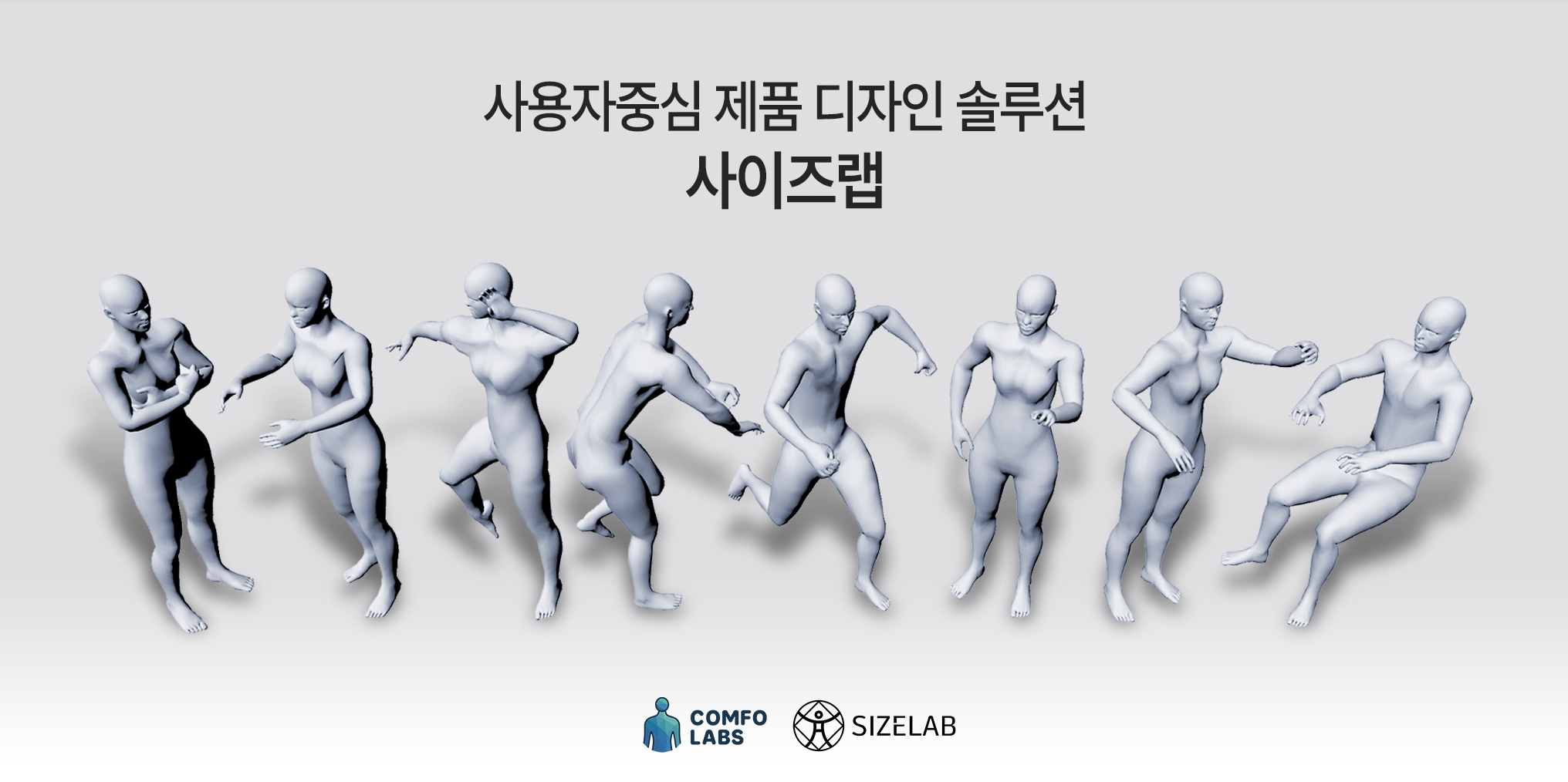
The consortium, which includes Compolabs , a user-centered human body data solution company, has been selected for the overall project titled 'Development of design solutions based on body movement data for advanced functional design', one of the design industry technology development projects of the Ministry of Trade, Industry and Energy.
The consortium plans to receive approximately KRW 7.9 billion in government support over the next four years to develop a digital usability evaluation and product design support system utilizing a dynamic persona model, and to verify and expand it across various industries. In particular, it will promote the creation of industrial utilization results and commercialization, focusing on areas where functional product design is important, such as furniture, wearables, healthcare, and sports.
In this project, Compolabs, Korea Institute of Design Promotion, Pohang University of Science and Technology, Korea University, Soonchunhyang University Hospital, Sweet K, and People Inside participated to form an industry-academia-research collaboration system.
CompoLabs has the largest level of precision-processed 3D human body data (over 100,000 cases) in Korea that complies with ISO standards, product design experience based on 3D human body data, AI-based analysis algorithms verified through verification projects with global companies, and a commercialized human engineering design support platform (SIZE LAB) and related patents.
Based on these independent technologies and empirical foundations, this project plans to promote the transition to a B2B SaaS platform that enables connection between product design demand companies and supply companies, and to establish data-based product design guidelines centered on actual users, thereby accelerating digital design and manufacturing innovation and global expansion.
Compolabs CEO Won-Seop Lee said, “This project will be an important turning point that will elevate the technological competitiveness of the domestic design industry to the next level,” and added, “We will lead a new paradigm of functional design based on human body data.”
You must be logged in to post a comment.