



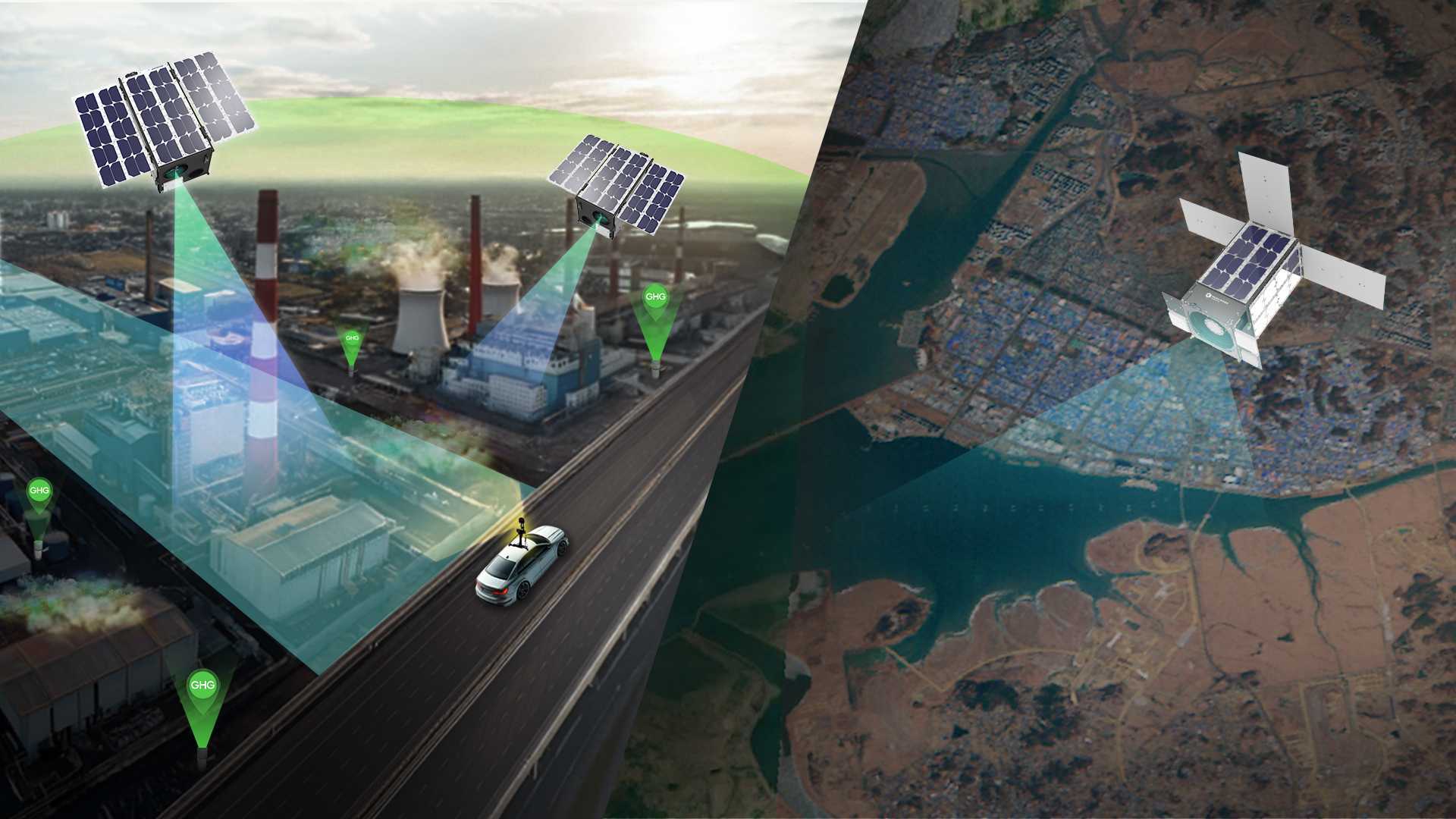
Naraespace Technology (hereinafter referred to as Naraespace) announced on the 11th that it has been selected as the final production and operation partner for the Gyeonggi Climate Satellite (hereinafter referred to as GyeonggiSat), a satellite dedicated to responding to the climate crisis promoted by Gyeonggi Province.
Naraspace, in cooperation with the Seoul National University Climate Research Lab, will launch three micro-satellites in stages, with the goal of acquiring and utilizing high-quality satellite data necessary for monitoring greenhouse gas emissions, responding to natural disasters, and monitoring local issues in Gyeonggi Province.
Gyeonggi Satellite consists of ▲1 optical satellite (GYEONGGISat-1) and ▲2 greenhouse gas observation satellites (GYEONGGISat-2A·2B). The first optical satellite is scheduled to be launched at the end of this year, and the second greenhouse gas observation satellite is scheduled to be launched at the end of 2026. All satellites will operate in low-orbit for three years after launch, precisely detecting methane emissions and collecting climate and environmental data for the entire Gyeonggi Province.
The collected data will be used to establish and implement Gyeonggi-do's climate policies, including air quality management, carbon reduction, and disaster response, thereby realizing the practical value of satellite technology.
Naraspace has built up notable technology and achievements in the field of ultra-small satellites. In November 2023, it succeeded in developing, launching, and communicating with the first domestic commercial ultra-small observation satellite, 'Observer 1A', and secured international technological capabilities by taking charge of comprehensive mission and system support for the CubeSat 'K-RadCube', which will be loaded on NASA's manned lunar exploration mission 'Artemis 2' this year.
In addition, Naraespace has secured abundant operational experience centered on real-world use of satellite images for environmental and disaster disasters by carrying out the Korea Aerospace Research Institute's 'Development of Disaster and Hazard Analysis Technology Based on Micro-Satellite Imagery' project and the Ministry of Environment's environmental monitoring-related projects. In particular, it has solidified its position as a climate technology startup by being the only domestic space company to be selected as one of the top 100 climate tech startups of the 'Indo-Pacific Economic Framework (IPEF)' in 2024, in which 14 countries including Korea, the US, and Japan participated.
It is evaluated that such technological prowess and achievements in the field of environmental monitoring using micro satellites contributed to being selected as a Gyeonggi-do partner this time.
Park Jae-pil, CEO of Narasspace, said, “This climate satellite project has recognized the value of our technological prowess and operational experience in the environmental monitoring field in the public sector,” and added, “As a leading company in the environmental monitoring field, Narasspace will continue to expand practical climate response solutions.”
- See more related articles
You must be logged in to post a comment.