



– 'Space Content Platform' Where Art and Brands Meet… An Innovative Experiment That Turned Hotel Rooms into Distribution Channels
-Providing an immersive experience combining art, trends, and brands
A few hours in a hotel. In that time, customers experience the brand, meet the author, and remember the city. There is a startup that is turning this short 'moment of stay' into an immersive content experience. It is DIVE-IN, and at the forefront of this journey is its founder, CEO Chang-yoon Jeong.
“We don’t design rooms, we distribute experiences.”
Divein is not just an interior design company. The rooms created through collaboration with different artists are not just accommodations, but also exhibition halls and content distribution spaces. Inside, customers experience a single brand experience, from diffuser scents, furniture arrangements, color schemes, and storytelling.
“We are working to transform rooms into ‘content distribution channels.’”
‘Flower room with a florist artist’, ‘Sensory room wrapped in a cushion wall’, ‘Emotional space of a pixel art artist’, etc. are operated as independent brands within the hotel, and in fact, rooms created by Divein are creating cases where the room occupancy rate is high even though the rates are higher than those of existing rooms.
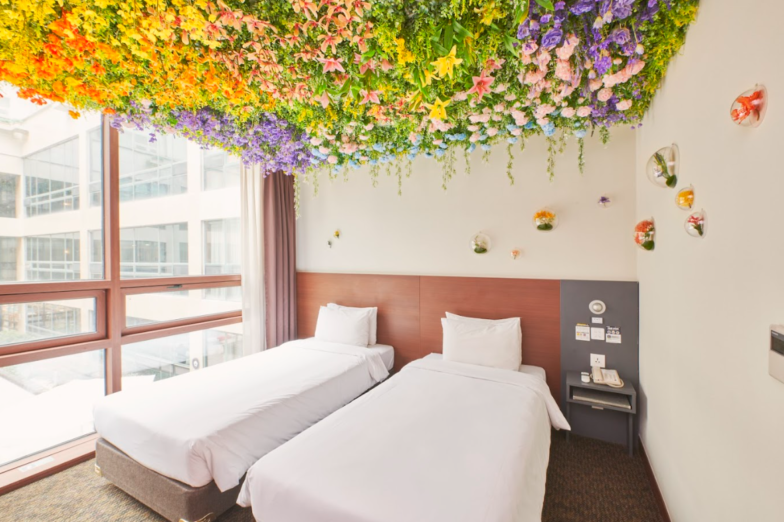
Skypark Hotel Kingstown Dongdaemun, provided by Divein Group
The beginning of the business was not art but 'space'
CEO Jeong is a science and engineering major with experience in performance directing, stage planning, brand consulting, and even real estate development. CEO Jeong’s strength is that he is “a person who possesses both a sense of space and structure as a vessel for content.”
It was the beginning of the artist-in-residence art stay that was first attempted in Yeonam-dong. It was a structure that became a studio for artists and a lodging and exhibition hall for visitors. It was the moment when I saw the possibility of 'distributing' content in space.
“Structure over Support”, Startup Strategy Designed from the Profit Model
CEO Jeong started the business without attracting initial investors, relying on personal loans and government funding. He said, “It is important to establish a structure before support,” and focused on creating a model that would generate profits in the early stages.
“At first, I didn’t know. I didn’t even know there was such a thing as a support program.” In the early stages of the business, it was difficult to get government support, but thanks to that, we were able to quickly build our own revenue model. This also became the basis for securing trust in negotiations with hotels.
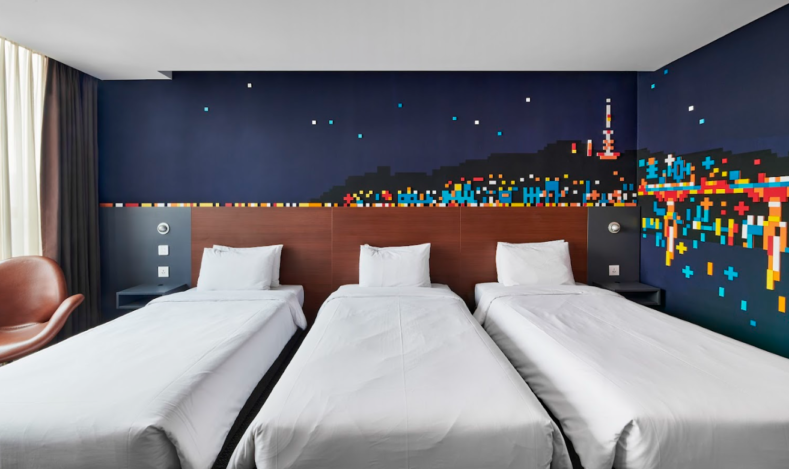
Skypark Hotel Kingstown Dongdaemun, provided by Divein Group
The pandemic was both a crisis and an opportunity
Due to the coronavirus, all reservations were canceled, and Yeonam-dong Art Room was in crisis. However, CEO Jeong started to propose a collaboration for hotel room redesign in the midst of the crisis. This is because the hotel also needed to attract domestic customers and differentiate its rooms. The first collaboration, which started at Skypark Dongdaemun, immediately produced results, and the partnership with the hotel industry began in earnest.
“Hotels are distribution networks”, the beginning of global expansion
Currently, Divein is exploring the possibility of expansion through pop-ups and meetings in more than 8 countries including Morocco, Paris, and Southeast Asia. In Paris, it proposed a break space in the form of a pop-up at ‘Station F’ and is also utilizing the overseas base of the SME Promotion Agency.
“Hotels are spaces that distribute local content. We secure that space and connect writers and brands.”
Divein configures hotel rooms based on content IP and sells new experiences to local consumers. This is not a simple overseas expansion, but a strategy to build a global content distribution network.
From curation to collaboration, evolving into a content platform
Divein is now focusing on joint development of IP with brands and artists, beyond hotel collaboration. Collaboration with brands and content IP is also being planned in the future.
“Space content that combines art, trends, and brands. That becomes the most powerful ‘experience’ for customers.”
Their curation ability, which responds sensitively to trends and reflects both local and global sensibilities, is closer to the realm of experience designers than simple remodeling.
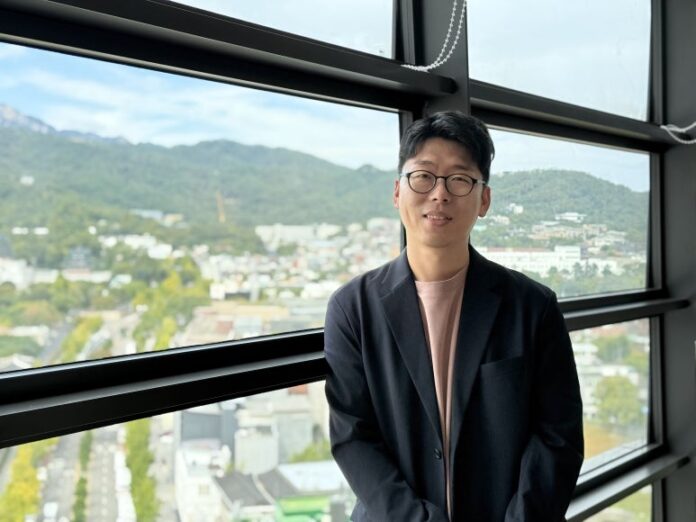
Interview with CEO Jeong Chang-yoon
To the art startup founder
CEO Jeong advises art entrepreneurs to “think about a B2C-based revenue model first.” He emphasizes that art is a cultural code that communicates faster than language in the global market, so it has an advantage in overseas expansion. He also recommends actively utilizing support from public institutions such as the Korean Cultural Center, embassies, and the Arts Management Support Center.
The ultimate goal is a 'global content distribution infrastructure'
In the future, Divein plans to build a content distribution network within the hotel, creating a global content distribution infrastructure that will allow artists and brands from around the world to exhibit and sell content through the hotel.
“We are a platform that plans experiences and distributes them. We want to prove that space can soon become a distribution network.”
Divein’s experiment that space can be not just an empty structure but a ‘content platform’ that contains experiences suggests a new direction for art-based startups. As CEO Jeong Chang-yoon said, “We don’t do interior design. We distribute experiences.” Their journey is not just a few hotel rooms, but a journey to design a new distribution order.
You must be logged in to post a comment.