



– A high-quality salt brand that preserves rock salt from 250 million years ago
– Directly manage all processes from mining to processing and distribution
– B2B customized salt consulting to design salt to fit your product

Salt is the 'invisible core' of food. Just as the flavor of a drink changes depending on the type of water used, the quality and taste of food completely changes depending on the type of salt chosen. There is a salt that is particularly preferred by Michelin star chefs and famous chefs at home and abroad. It is called 'Cleopatra Salt', also known as 'Royal Salt'.
Cleopatra Salt distinguishes over 160 types of salt by combining colors, transparency, particle sizes, etc., and provides salt products that are tailored to the product characteristics of each user and company through consulting. In order to hear the background of the birth and growth story of the salt brand startup, we met with Cleopatra Salt CEO Kim Da-hee and conducted an interview.
■ Cleopatra Salt, What's Different?
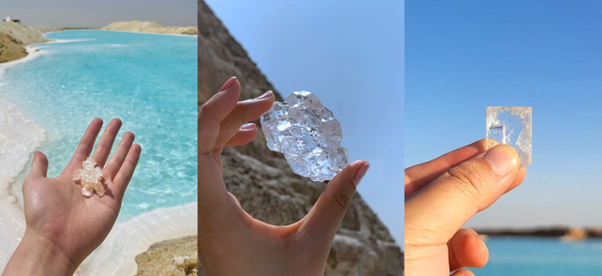
Cleopatra Salt is a world-class high-quality salt brand that originated from the legacy of the ancient sea formed 250 million years ago. This rock salt, which crystallized as the sea water receded due to tectonic movements, has been preserved uncontaminated underground in the desert for tens of millions of years.
CEO Kim Da-hee emphasized, “Salt is highly absorbent, so the cleanliness of the production site is most important.” These days, the ocean is easily exposed to polluted environments and can absorb pollutants, but crystal rock salt buried deep underground in the Sahara Desert is mined in a clean area untouched by pollutants. Cleopatra Salt is evaluated as a ‘diamond salt’ with absolutely no radioactivity, microplastics, or hazardous metals detected. Its purity is over 99%, and it is characterized by its transparent and clear crystal form that can be seen with the naked eye.
It also has a 'taste'. The ratio of sodium and chlorine is the golden ratio of 4:6, so it does not taste bitter. It is not salty and is mild, making it popular among Michelin chefs.
“I have loved salty tastes since I was young. I believed that good salt determines the essence of food, so I came to the Sahara Desert in search of the real salt. I thought that taking responsibility for everything from production to distribution and management was the attitude to provide a truly good product.” CEO Kim Da-hee explained the background of the creation of Cleopatra Salt.
Cleopatra Salt built a rock salt manufacturing plant line in the middle of the Sahara Desert to secure high-quality raw materials stably. One salt farm site is as large as Mapo-gu, and only clean areas with no roads, factories, or cement structures were selected to secure it. From selecting the production site to mining, sorting, distribution, CS, and AS, they directly manage all processes in Egypt, and have completed an independent production and logistics system that can provide ‘truly trustworthy salt’ for customer satisfaction.
■ A new idea of ‘consulting salt’
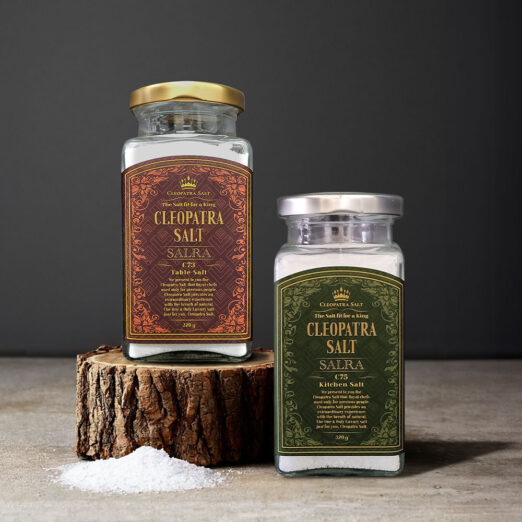
Cleopatra Salt is composed of a wide range of products from high-end products to B2B customization. Initially, it entered the luxury market by introducing the highest grade 9 rock salt at 1.5 million won per 60g at Galleria Department Store. The product is currently only supplied through custom order.
It is not a company that only sells salt. It designs and recommends salt according to the customer's purpose and situation. It is creating a new category called 'Salt Consulting Company'.
“At first, we focused on promoting high-quality salt, but now we are focusing more on customized solutions for customers,” said CEO Kim Da-hee. Salt is divided into more than 160 combinations based on various physical variables such as color, particle size, and transparency, and the required conditions also vary depending on the product group or cooking method. Depending on the various items, the unit price is also determined according to the customer’s purpose and quality.
This customized salt system is rapidly spreading, especially in the restaurant industry. Currently, more than 100 domestic restaurants are regularly subscribing to Cleopatra Salt’s consulting salt. Thanks to Cleopatra Salt, the perception that “just changing one salt can change the taste and quality of food” is spreading throughout the industry.
There are also various use cases. A mid-sized fish cake manufacturer switched from the Chinese and domestic refined salt they had been using to Cleopatra Salt, and experienced an increase in actual sales along with consumer responses that “the taste has deepened.” Cleopatra Salt, which was supplied to a ramen restaurant, was recognized for its quality and expanded to the noodle factory, and then naturally spread to ramen shops in the region.
Changes are also occurring in industries other than food. A cosmetics manufacturer had problems with the salt used in bath products clogging the bottle opening due to the brine and irregular particle size, but easily solved the problem with Cleopatra Salt’s customized particle design and solubility adjustment. The person in charge praised it, saying, “Until now, we had no choice but to use whatever the salt company gave us, but now we have found salt that solves our problems in a customized way.” In addition, it is expanding its application area to various industrial sites for various purposes such as stick-type salt that can be dissolved in water, artificial tear raw materials, and deicing agents.
■ Specializing in sales through family partners

Cleopatra Salt works with 'family partners' to provide customized consulting to businesses that need salt. When a customer requests a consultation through the website or contacts, a 'family partner' in the area will visit the site in person to provide product explanations, samples, and face-to-face consulting.
This system is structured to separate roles so that the headquarters can focus on securing salt quality and developing technology while increasing closeness with customers. CEO Kim Da-hee said, “The headquarters’ role is to properly design and provide good salt, and the contact point with customers is best performed by partners in the field.”
CEO Kim said, “Because the Cleopatra Salt brand started out as an expensive salt, some people feel burdened by the price, but in reality, most of them settle on a more reasonable price and quality through consulting,” and in an interview, he often hears from clients, “I thought it would be expensive, but I was surprised that the quality was high and the price was reasonable.”
■ It was harder domestically than abroad. Cleopatra Salt’s settlement and growth
Cleopatra Salt’s journey began with the rock salt of the Sahara Desert. CEO Kim Da-hee travels back and forth to Egypt for several months every year to personally oversee the entire process of salt with the historical name Cleopatra Salt, from mining to manufacturing and logistics.
The process of adjusting to cultural differences and raising local quality standards was never easy. However, over time, a systematic supply chain was formed, and now, based on trusted partnerships, the entire production process of Cleopatra Salt brand products can be managed from head office.
However, the real obstacle was encountered domestically. Cleopatra Salt had commissioned a company to manufacture product dispensing equipment, but even after signing a formal contract and paying the full amount, the company repeatedly delayed the delivery date and unilaterally cut off contact. She even suffered from an attitude of “Go ahead and sue if you want.”
CEO Kim recalled, “I signed a contract because I wanted to make good products for my customers, but they didn’t meet the deadline, sent a different product than what I ordered, and even wrote false comments, which was counterproductive.” He emphasized that “the biggest obstacle to creating a real brand was the reality of the domestic manufacturing system,” and that improvements are needed for the structural problems that hinder the growth of startups.
■ Cleopatra Salt's Roadmap
Cleopatra Salt brand has recently expanded its portfolio beyond its high-quality rock salt-centered product line with a ‘premium sea salt’ lineup. Rather than simply distributing cheap sea salt, it has adopted a high-quality but reasonable price strategy by producing 98% pure sea salt without any brine, rather than the existing 70% pure sea salt.
CEO Kim Da-hee said, “The size of a single salt farm is as large as Mapo-gu, but we only extract salt from clean areas with no roads, factories, or cement structures around it,” and expressed pride in their strict quality standards and production environment. Cleopatra Salt also provides customized consulting on solar salt, such as particle size, salinity, and color, according to the customer’s intended use, and is realizing the brand philosophy beyond simple product expansion.
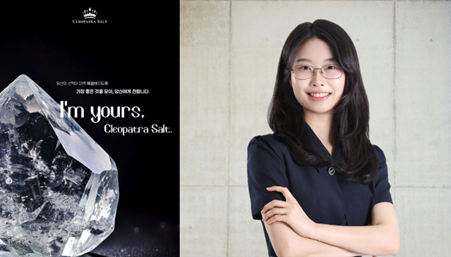
At the end of the interview, CEO Kim revealed the brand image that Cleopatra Salt ultimately aims for. “Cleopatra Salt is not just our brand. Since it was created by customers, family members, and producers, I think it should ultimately be ‘ours.’ Our slogan is ‘I’m Yours, Cleopatra Salt.’ We will do our best to be us for a long time.”
CEO Kim defined Cleopatra Salt as a community based on trust and empathy, rather than a simple salt brand, and said that they will continue to move forward without stopping until the day when consumers can find their own salt and truly say, “This is my salt.”
You must be logged in to post a comment.