


Is safety and health still a ‘party at someone else’s house’ for startups? Recently, Alsquare achieved a perfect score on SA1, thereby transforming safety from a simple compliance level to a daily value system that all employees can experience. This means that a culture has been established in which employees voluntarily follow safety rules, take care of their colleagues’ safety, and actively report risk factors. What does this trend mean to startups where survival is everything? We met with Director Jeong Sang-min, who is also the president of the Korea Disaster Prevention Association, and confirmed that safety and health is a growth strategy that goes beyond survival.
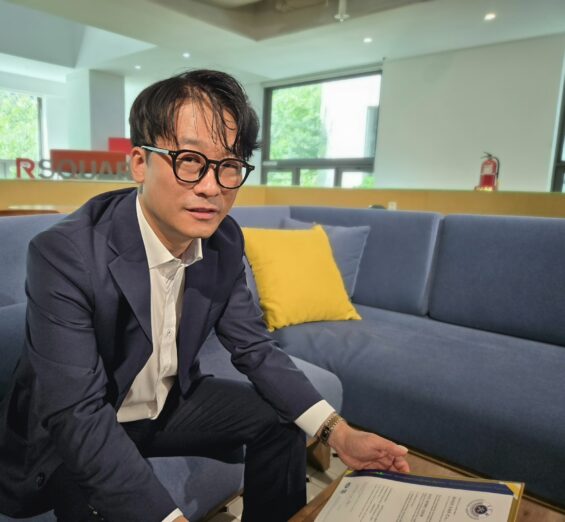
“Do you think startups can be free from ‘safety’?”
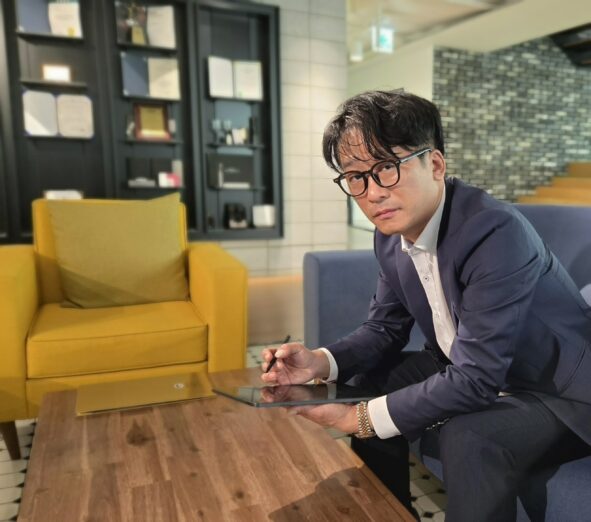
The first question from Jeong Sang-min, head of the safety and health management department, whom I met at the R Square office in Gangnam, Seoul, immediately shook my preconceptions. Having built up 20 years of safety-related experience in the construction and real estate sectors, he recently took office as the first chairman of the Korea Association for the Prevention of Serious Accidents, and is raising new topics in the safety and health field. However, his interest is not in large corporations, but in startups that are in the blind spot of safety.
“Many of the startup CEOs I’ve met think, ‘We’re still a small company pursuing growth, we’re an office worker, we’re not in manufacturing,’ and they think safety is someone else’s problem. But workplace bullying, emotional labor, and death from overwork are all safety and health issues.”
Alsquare, where Chairman Jeong Sang-min works, is a proptech company that provides comprehensive commercial real estate services. Recently, its subsidiary Alsquare Design achieved a perfect score of SA1 (1000 points) in the NICE D&B Construction Safety Management Evaluation for two consecutive years. This is a remarkable achievement considering that the percentage of construction companies that receive an SA1 grade is only 1.2%.
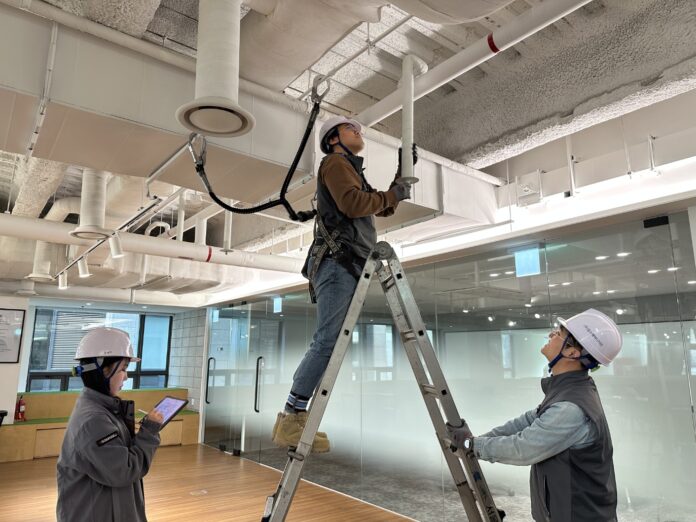
“Honestly, I had a skeptical view that ‘safety can make money.’ However, the results were the opposite. After obtaining safety certification, large-scale project orders increased by more than 30%, and employee turnover rate was reduced by half. Above all, they began to recognize us as a trustworthy partner.”
Choice for survival, safety is trust
The introduction of safety and health management at Alsquare was based on a survival strategy. This is because the level of safety management has emerged as a key indicator for partner selection in the B2B market since the enforcement of the Serious Disaster Punishment Act in 2022.
“Large construction companies and clients now select their partners based on their safety and health ratings. No matter how great their technical skills are, if their safety management is poor, they won’t even get a chance to sit at the contract table.”
Chairman Jeong Sang-min pointed out the structural limitations of startups. “Startups in the early stages are concerned with securing immediate sales, so they only consider safety and health as a cost. However, it is a gateway that must be passed in order to enter the B2B market. If you do not prepare in advance, you will miss the opportunity.”
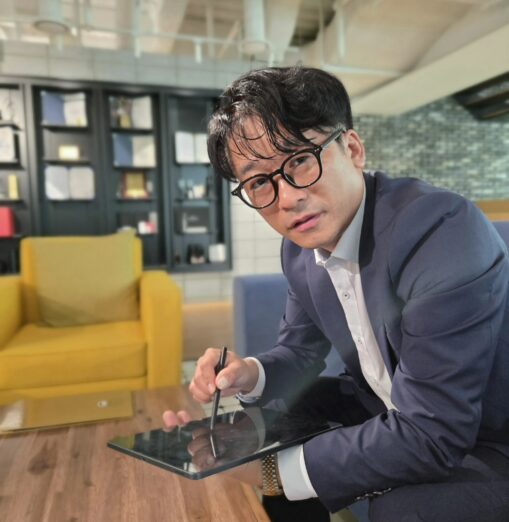
After acquiring the ISO45001 international occupational health and safety management system certification, Alsquare has achieved remarkable results in winning large-scale projects. It is currently carrying out major projects such as the construction of the Yongin Aminas Hospital and the construction of a new office facility in Yeoksam-dong, and is also expanding its business to overseas markets such as Vietnam.
“There is a clear difference between having safety certification and not having it. It is natural for the orderer to prefer a partner who can reduce risk.” What Association Chairman Jeong Sang-min emphasizes is the will of the leader. He says that the key factor that allowed Alsquare to achieve a perfect score on SA1 also started from the firm will of Alsquare CEO Lee Yong-gyun.
“Nothing will change unless the CEO changes. Our CEO approaches safety with the mindset that ‘if an accident happens, the company will fail.’ He sees it as an investment, not a cost.” Alsquare implements this philosophy through its ‘1·3·5 Service’ program. The principle is to assign worksite within 1 day, visit within 3 days, and complete repairs within 5 days, but safety-related issues are handled within 1 day without exception.
“There are things that even small startups can do. Reduce employees’ overtime, support mental health counseling, and improve the work environment. These things add up and become a culture.”
In the ESG era, safety is the key to attracting investment
It is also noteworthy that safety and health management is emerging as a core element of ESG investment beyond simple risk management. Alsquare quickly caught on to this trend and won the Minister of Trade, Industry and Energy Award at the ‘Corporate Innovation Awards’ hosted by the Ministry of Trade, Industry and Energy and the ‘2024 Seoul ESG Management Awards’ in succession.
“Investors look closely at ESG indicators. In particular, safety and health are key indicators for assessing a company’s sustainability. They believe that companies that create an environment where employees can work safely are more likely to grow in the long term.”
Alsquare is implementing a management model that combines safety and the environment, such as by establishing a 100% recycling system for construction waste in cooperation with Cheonil Energy subsidiary ‘Jiguhada.’
“As startups move to the Series A and B stages, they meet with institutional investors, but if they are not prepared for ESG, they are at a disadvantage. Safety and health are the most basic elements among them.”
A realistic safety and health roadmap starting from a one-person startup
President Jeong Sang-min offered specific, realistic advice that can be applied to one-person startups that have just started. This was the core of the interview that day.
“When you’re small, it’s more important to create a culture than to get certified. The mindset of valuing each and every employee is the starting point of a safety culture.” He presented specific implementation plans for each stage of startup growth.
“At the one-person startup stage, it’s ‘Take care of your own health first. Regular meals, proper rest, and stress management are the basics. Create a health checklist that you can do alone and check it on a weekly basis.’ Once you have 3-5 people, start by creating simple safety rules. For example, no work after 10 p.m., no contact on weekends, and check the team’s health status once a month. It doesn’t have to be anything grand.”
For companies with 10 or more employees, a more systematic approach is needed. “We will gradually introduce regular employee satisfaction surveys, appropriate workload management, mental health support programs, and improvements to the physical work environment. From this point on, it would also be a good idea to have HR managers also take on safety and health duties.”
In particular, he pointed out the parts that IT startups tend to miss. “Developers’ turtle neck, carpal tunnel syndrome, and VDT syndrome are also serious safety and health issues. We need to adjust the height of monitors, provide ergonomic chairs, and introduce regular stretching sessions.”
He continued, “Mental health should not be overlooked. Burnout, depression, and anxiety disorders are common in the IT industry, so it is important to create systems such as counseling programs or mental health days to prevent these.”
For startups hesitating due to cost issues, Jeong Sang-min, the president of the association, suggested a step-by-step approach. “Start with things that don’t cost money. Things like managing work hours, guaranteeing break times, and creating a culture of consideration for colleagues. Then, in the next step, introduce things like professional consulting services or health checkups.”
He also shared a real-life example. “One startup created a ‘wellness point’ system when it had only five employees. It was a system where points were given for things like leaving work on time, exercising, and reading, and the accumulated points were used to receive vacations or benefits. It cost almost nothing, but the results were amazing.”
He gave more specific advice to startups preparing to enter the B2B market. “When dealing with large corporate clients, they often ask for documents related to safety and health. Prepare safety and health management plans, risk assessments, and training completion status in advance. It is important to give the impression that you are managing things systematically, even on a small scale.”
As the president of the Korea Disaster Prevention Association, the business he is promoting is also closely related to startups. “Currently, about 40 companies have joined, and we are operating a mentoring program where large and medium-sized companies support startups and small businesses in establishing safety and health systems. I hope startups will also actively participate, share know-how, and grow together.”
He urged startup business leaders: “Safety and health are not ‘something to do later.’ If you try to do it after your company grows, it will be too late. You need to start small and gradually develop it into a large system later. It may feel like a cost burden at first, but it will eventually lead to a decrease in employee turnover, increase in productivity, and increase in external trust. This is especially important for startups preparing for B2B business. Safety is not an option, it is a condition of survival.”
At the end of the interview, Chairman Jeong Sang-min emphasized, “Growth by pushing people out no longer works. Companies can only grow sustainably when employees can work safely and healthily.”
Safety and health management has become an unavoidable task for startups. The case of Alsquare shows that safety is not a cost but an investment, and can even become a growth engine. It is a time when startup leaders who are desperate to survive need a new perspective.
You must be logged in to post a comment.