

– MOU signed with Venture Square on the 2nd… Jointly discovering startups to be selected for the Brooklyn Chamber of Commerce PoC program
– PoC Program… “Comprehensive support to help startups achieve their goals and achieve results”
– Follow-up support after PoC, including space and investment attraction connections
– “Understanding the size of the US market and regional differences is necessary”
Brooklyn is emerging as a new land of opportunity for Korean startups to enter the global market. This is because Brooklyn, the largest borough in New York City with a population of 2.8 million, is looking to Korea for innovative technologies to solve urban problems such as aging infrastructure, public safety, sanitation, and energy.
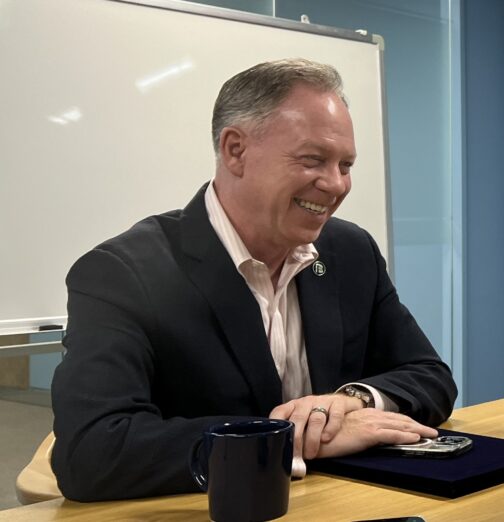
The Brooklyn Chamber of Commerce, the largest business support organization in New York State established in 1918, is starting to work in earnest with Korean startups. Randy Peers, CEO of the Brooklyn Chamber of Commerce, signed a business agreement with Venture Square in Pangyo, Gyeonggi Province on the 2nd and introduced a program for Korean startups to enter Brooklyn.
At the event, the Brooklyn Chamber of Commerce introduced 'Brooklyn Made' and discussed ways for domestic startups to enter the market, brand collaborations, and linkages with e-commerce platforms. The Brooklyn Chamber of Commerce's global PoC (Proof of Concept) program and strategies for entering the New York and North American markets were also introduced.
“New York is an old city, so its urban infrastructure is very outdated,” said CEO Pierce. “We will be able to make the city a better environment through Korea’s innovative technologies, including AI.” He continued, “Testing technology in Brooklyn is the same as testing it in the global market,” emphasizing that “it is a diverse area, making it a suitable place for testing in the global market.”
This is Randy Pierce's third visit to Korea. We met with CEO Pierce, who is very interested in Korean startups, in Pangyo, Gyeonggi-do, and talked about Brooklyn's startup ecosystem and the global expansion of Korean startups.
Q. First of all, you decided to collaborate with Venture Square. In what areas will you collaborate?
We expect that Venture Square will play a key role in establishing a continuous and systematic support system for Korean startups beyond simple cooperation. In particular, we will serve as a gateway for Korean startups in the fields of energy efficiency, public safety, urban sanitation, infrastructure, and healthcare to enter the entire U.S. market through Brooklyn. Through this, we expect a virtuous cycle of innovation in Brooklyn as well.
The first goal is the growth of Korean startups. We will support Korean startups to establish international strategies through the Brooklyn Chamber of Commerce.
Here’s how the PoC program works: When Venture Square recommends participating companies, the Brooklyn Chamber of Commerce will first select about 10 companies, and then, after considering technical and regulatory issues through interviews, select 5-10 companies that are capable of PoC and conduct 1:1 PoCs.
Q. Please introduce the Brooklyn Chamber of Commerce to Korean startups.
A. The Brooklyn Chamber of Commerce is the largest and most influential business support organization in New York State, founded in 1918. Brooklyn is one of the five boroughs of New York City, has a population of 2.8 million, and if it were an independent city, it would be the fourth largest city in the United States.
There are currently 62,000 businesses in Brooklyn, 84% of which are small businesses with less than 10 employees. The Brooklyn Chamber of Commerce is committed to supporting small businesses in the area.
Q. In the case of the Korean Chamber of Commerce, they are more interested in large companies than startups. Why is the Brooklyn Chamber of Commerce particularly interested in startups?
A. That's a good question. What I sometimes say is that we need to be different from the 'grandfather's chamber of commerce'. I think we need to create a business model that fits well with the economic structure of the current era. To do that, I think we need to break away from the traditional chamber of commerce and have a modern business model. I'm proud that we're helping local businesses by breaking away from the traditional chamber of commerce model.
Q. I heard that the international exchange department will be activated starting in 2022. What does the international exchange department do?
A. We are actively expanding international exchanges starting in 2022. We are welcoming delegations from various countries and introducing why Brooklyn is emerging as a hub for the creative economy, while also sending Brooklyn trade delegations overseas to conduct market research and promote opportunities for Brooklyn. We have visited 75 countries over the past four years.
In addition to supporting startups and conducting international PoCs, we are also working on projects related to job creation as an economic development organization and operating an institution that lends small amounts of money through 'Brooklyn Alliance Capital'.
The Brooklyn Chamber of Commerce also operates a small retail store called the Brooklyn Made Store, which sells and markets innovative and modern items made by independent designers in Brooklyn. It’s not often that a chamber of commerce directly supports business in this way.
New York is a very old city, so its urban infrastructure is very old. I think that AI can make the city a better environment and achieve various innovations in the process.
Q. Korean startups tend to prefer Silicon Valley, but what are Brooklyn’s unique strengths?
A. The fastest growing industry in Brooklyn and New York is the tech industry. Investments are also quite active, and a new ecosystem is being created.
Brooklyn is a city that many people want to work in and live in. Startups and tech companies are attracted to Brooklyn because it is a place where they can work and have fun at the same time. I think it is very attractive because it is a place where many like-minded, creative, and enlightened people gather.
Another great advantage of New York is its accessibility to a variety of industries. New York is known as a financial city, but it also has companies in a variety of industries, such as life sciences companies, design companies, fashion companies, and architectural development companies, so it has good accessibility to a variety of economic ecosystems.
For example, if a healthcare startup were to open in New York, it would have access to the largest healthcare system in the country, including large hospitals like NYU Langone Medical Center (which was ranked #2 on Money.com's list of the "Best Hospitals of 2024"). I don't think that's possible in Silicon Valley.
Q. Please tell us about the Brooklyn Chamber of Commerce’s PoC program.
A. The Brooklyn Chamber of Commerce has successfully completed 14 projects since it started the PoC program with Korea in 2022. Various Korean startup products, including virtual plasma air sterilizers, portable electric vehicle chargers, blockchain-based digital keys, automatic hamburger makers, and food waste disposers, have undergone actual field testing in Brooklyn and have laid the foundation for entering the U.S. market.
Through the PoC project, we realized that there are also opportunities to solve problems in New York City. The four areas we are currently focusing on are public safety, sanitation, energy (including renewable energy), and urban infrastructure.
We mainly conduct PoCs for early-stage startups. We research and find businesses in Brooklyn that can connect these technologies, find businesses that can apply the technology, and provide overall support to startups to achieve their goals and achieve results over a certain period of time.
The Brooklyn Chamber of Commerce oversees the overall program of the PoC. It supports the startups’ logistics, schedules, etc. for the two to three months that the PoC is in progress, and also monitors how the PoC is performing during the PoC period.
Q. Is there a program that I can receive support for after the PoC is over?
A. We will continue to support you even after PoC. First, we provide space. The Brooklyn Chamber of Commerce office is located in a fairly large campus called 'Industry City' (a historic intermodal, warehouse, and manufacturing complex on the upstate New York coast in the Sunset Park neighborhood of Brooklyn, New York City. It is a place where young entrepreneurs gather, with small craft shops, art music studios, and shopping malls, where abandoned buildings that used to be factories have been renovated.) These buildings used to be heavy equipment manufacturing buildings, but they have been completely remodeled to attract a creative economic ecosystem. It consists of 16 buildings, and over 900 diverse companies, including architecture, bio, manufacturing, tech, and marketing, are located on this campus.
Entering the Korean market and entering the U.S. market have different messages. The Brooklyn Chamber of Commerce also supports marketing strategies. It also helps connect with New York City and its affiliated organizations. And it also provides legal support. It provides legal advice needed when collaborating or forming partnerships with local companies, and legal support related to visa-related office relocation or hiring of employees. The Brooklyn Chamber of Commerce does not have a direct funding program, but it has a network of VCs and can help with financing.
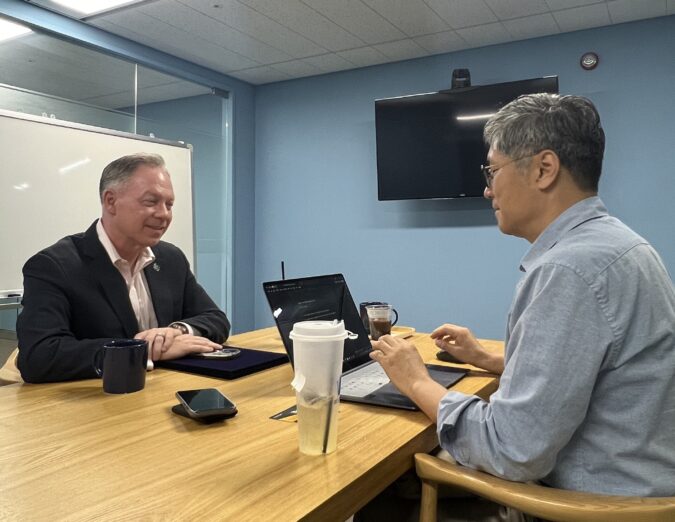
Q. It seems like you are very interested in Korean startups. What are your impressions of Korean startups?
A. This is my third visit to Korea, and I am very interested not only in startups but also in Korea’s innovative technology itself. I have had some particularly surprising experiences with smart city infrastructure.
It might sound funny on my first visit, but I took a tour of the bus stop. Inside the bus stop, the air conditioning was adjusted according to the weather, you could charge your phone, and you could see where the bus was in real time. These things seemed quite unique and special to me. In New York City, the buses in the US are so bare that they don't even have roofs.
Recently, hate crimes have become a serious problem in New York City. There have been many incidents of people pushing people from the subway platform onto the tracks. The mayor has expressed his desire to install safety gates on subway platforms, but Korea already has screen doors on its subways. I feel that Korea's technology is much more advanced than New York's, and I think Korea is a country that can provide technological solutions to New York City.
I was surprised to see robots when I stayed at the hotel. The robots automatically delivered food, amenities, laundry, etc. to the room, and moved between floors in conjunction with the elevator. There was a guide robot at the front desk that helped with check-in and check-out, and provided guidance on hotel facilities and directions. It was amazing.
The companies we met today are also AI and tech companies (the Brooklyn Chamber of Commerce signed an MOU with Venture Square and held a seminar with startups recommended by Venture Square that day). We are looking forward to PoC with these companies. We are very positive about this because we believe that AI can be used to solve various challenges in New York City.
Q. Are there any memorable Korean startups?
A. There is a Korean company that I met at an event held in Atlanta two months ago (the '2025 World Korean Business Convention' held at the Gas South Convention Center in Atlanta in April). It was a company that made protective gloves. The gloves had a technology that prevented cutting when worn and holding a knife, so your hands would not get hurt (they showed a video taken at the event and introduced it as an amazing technology). I think it is a technology that would help public safety when used by police departments, and it is a perfect example of public safety technology. I heard that they are already supplying the gloves to the Boston Police Department.
Q. What advice would you give to Korean startups entering the US market?
A. The first thing I want to say is that a certain amount of patience is absolutely necessary. The second thing I want to say is that the United States is a very large country. Unlike Korea, the United States is a very large city, a large country, and there are many different cities, and each city has a very different character, culture, and regulations. Doing business in Miami, Texas, California, and New York are all different.
It is important to understand that there are significant differences between regions. Even when doing business locally, you should keep in mind that each region has its own unique culture, people, and education.
Venture Square has decided to help Korean startups enter the U.S. market through an MOU with the Brooklyn Chamber of Commerce. In particular, it is expected to be an important opportunity for startups with innovative technologies in AI, energy, public safety, sanitation, and urban infrastructure to verify their global market presence.
You must be logged in to post a comment.