



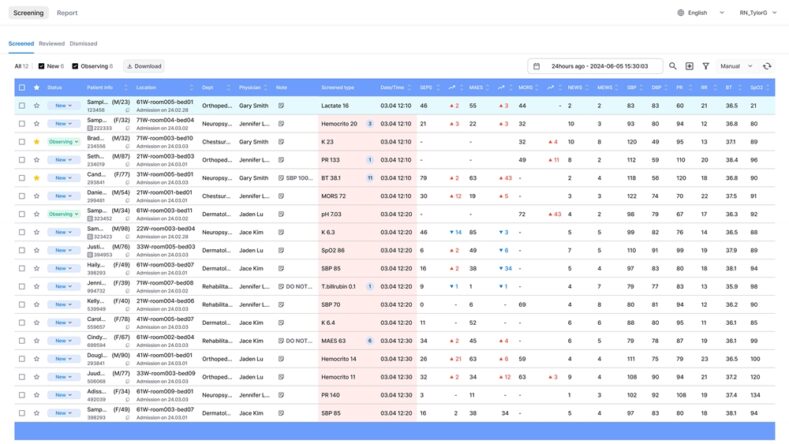
AITRICS (CEO Gwangjun Kim), a medical artificial intelligence (AI) company, announced on the 21st that it has obtained medical device approval for its AI solution for predicting patient condition deterioration, 'AITRICS-VC (Vital Care),' from the Hong Kong Medical Devices Division (MDD).
VitalCare is a medical AI solution that analyzes EMR (electronic medical record) data accumulated in hospitals in real time to predict the early deterioration of a patient's condition. In general wards, it predicts ▲the risk of acute severe events (death, cardiac arrest, transfer to the intensive care unit) within 6 hours, ▲the risk of sepsis within 4 hours, and ▲the risk of cardiac arrest within 24 hours, and in intensive care units, it predicts ▲the risk of death within 6 hours.
According to the Hong Kong Health Bureau, Hong Kong's total medical expenditure in 2022-2023 will be about HK$284 billion, accounting for 10% of its GDP. Recently, Hong Kong has been attracting attention as a key base for medical companies to advance into Asia, as demand for smart hospitals and digital healthcare transformation is increasing due to the shortage of hospital beds and the aging population.
In this market situation, VitalCare is expected to be able to support rapid clinical decision-making by medical staff, increase patient safety, and contribute to improving the efficiency of hospital operations. In addition, AITRIX plans to use this approval as a stepping stone to lead medical innovation in the Hong Kong market and accelerate business expansion throughout Asia.
AITricks CEO Kim Gwang-jun said, “Based on the clinical experience accumulated in Korea, Vitalcare is gradually expanding its market to the US, Vietnam, and Hong Kong in accordance with the different regulatory environments. This Hong Kong approval demonstrates Vitalcare’s global competitiveness and reliability, and proves that it is a solution that can actually be applied to various medical systems.” He added, “We will continue to create products that are practically helpful in overseas medical settings based on the universality of our technology and clinical effectiveness.”
- See more related articles
You must be logged in to post a comment.