



– An eco-friendly solution that extracts high value-added rare resources from waste
– Extraction of high-purity magnesium and barium sulfate, key strategic resources
– Reduce carbon emissions by 99% through self-developed low-carbon processes
– Goal of contributing to national resource security and supply chain stability by securing import-dependent resources
– Presenting standards for waste recycling and circular economy
Carbon neutrality and ESG (environment, society, and governance) management have become important worldwide in response to the climate crisis. However, in the process of transitioning to an eco-friendly environment, there are also difficult issues such as increased production costs (greenflation) and conflicts between environmental goals (green-green dilemma). In some cases, solar power generation destroys forests or electric vehicle battery production leads to a surge in mine development. The 'sustainability paradox' is deepening as two trains heading to the same destination of environmental protection collide.
In this situation, the 'Just Transition' technology that seeks coexistence between the environment and industry is gaining attention. 'Five Nine', an eco-friendly circular economy solution company, is presenting an innovative business model that simultaneously solves environmental problems and strengthens industrial competitiveness by extracting high value-added rare resources from magnesium waste.
Discovering a 'treasure' hidden in waste, the beginning of Five Nine Technology
The 'desulfurization wastewater sludge' generated from coal-fired power plants has been landfilled for a long time. This causes soil and water pollution, and with an annual domestic landfill volume of 20,000 tons and more than 2 million tons worldwide, it causes annual treatment costs of more than 300 billion won and serious landfill shortage problems.
Five Nine CEO Park Jang-heung witnessed this problem firsthand while working in the environmental facilities department of a domestic thermal power plant for 12 years. He said, “I constantly thought about this and it led to my founding the business,” while looking at the sludge being dumped in the field every day.
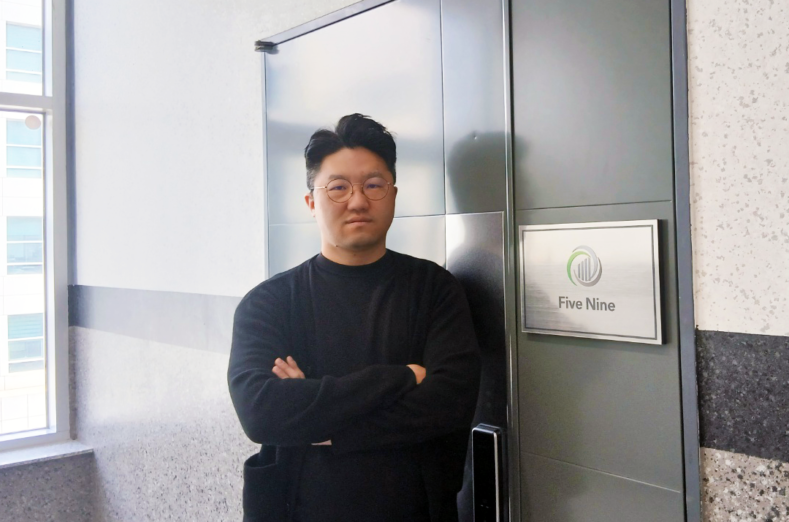
Park found the answer through analyzing the sludge components. Hidden in it were sulfur oxides (about 46%) and magnesium oxides (about 28%), which have the potential to be converted into resources with high industrial value. He explains, “Instead of mining minerals or complex chemical processes, we found rare resources in waste.”
99.7% Pure Magnesium Extraction… Both Eco-Friendly and Economical
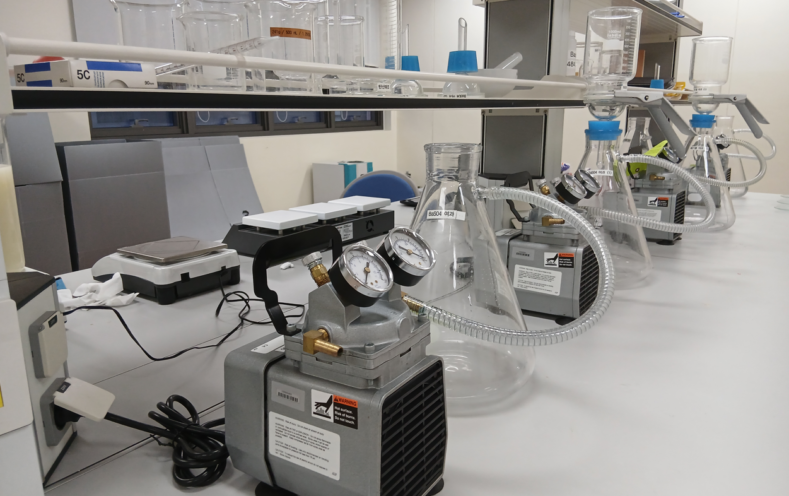
Five Nine has developed a technology to extract magnesium (Mg) with a purity of up to 99.7% and barium sulfate (BaSO₄) with a purity of 98.5% from desulfurization sludge, and is in the commercialization stage. It boasts a high recovery rate of up to 85% per 100 kg of sludge.
The core competitiveness of this technology is efficiency, eco-friendliness, and economy. The low-carbon process (2 patents held) based on self-developed physicochemical treatment has a simple structure and high energy efficiency while going through the steps of ▲impurity removal ▲demineralization ▲calcination ▲electrolytic refining ▲purification. Compared to existing magnesium production methods (Chinese thermal reduction method, American electrolysis method), carbon emissions are reduced by up to 99%, and the production cost is maintained about 33% lower than Chinese products. In particular, barium sulfate is obtained as a byproduct during magnesium production, so there is almost no additional energy consumption.
“We have developed our own low-carbon process based on physicochemistry. We have been able to reduce CO₂ emissions by approximately 99% compared to existing products, and the production cost is also approximately 33% lower than that of Chinese products.”
[Five Nine Business Description Video]
Park emphasized that “processes that do not consider the environment cannot be sustained,” and that Five Nine’s approach is an innovation that simultaneously achieves waste utilization, low-carbon processes, and cost reduction. In particular, Five Nine has a unique cost structure that secures sludge, the raw material, while receiving treatment costs.
Developing national strategic resources and building a solid foundation for growth
Magnesium (Mg) and barium sulfate (BaSO₄), which Five Nine extracts from coal waste, are attracting attention as national strategic resources directly related to supply chain stability.
Magnesium is an essential material used in a wide range of industries, including as a raw material for automobile bodies, aluminum alloys, desulfurization agents, and medical materials, in various forms such as magnesium oxide (MgO) and magnesium hydroxide (Mg(OH)₂). Magnesium alloys have excellent lightness, high strength, and conductivity, and are used as key materials in advanced manufacturing fields such as automobiles, aerospace, and secondary batteries. In addition, since they are 100% recyclable, they are also attracting attention in terms of carbon reduction and resource circulation, and market demand is continuously expanding as a key raw material for sustainable future industries.
Barium sulfate performs important functions across industries based on its chemical resistance, opacity, and high density properties. It is used in various applications such as medical contrast agents, heavy additives for oil and gas drilling, industrial coatings, paints, and plastic additives, and recently, it has been suggested that it can be applied to the development of 'ultra white paint' that maximizes energy efficiency based on its high reflectivity.
[Video introduction of Five Nine Barium Sulfate for Oil Drilling]
However, Korea relies on imports for most of these resources. In particular, magnesium is over 99.9% dependent on China, which poses a high risk for the supply chain. “When China imposed export controls on magnesium in 2021, related industries around the world faced a crisis,” said CEO Park. “It is absolutely necessary to secure resources through domestic production and decouple from import dependence.” Five Nine’s technology offers a realistic solution to this problem.
Strengthening environmental expertise through hiring environmental experts
In October 2025, Five Nine recruited Director Kim Jeong-tae, an environmental expert, to further strengthen its environmental expertise and accelerate business expansion. Director Kim is an adjunct professor at Chungbuk National University, and has accumulated extensive experience and expertise in the environmental industry for over 30 years, having worked in environmental business development at global companies such as Veolia in France, Macquarie in Australia, and Doosan Energy, and as the CEO of an environmental specialist company.
Director Kim evaluated FiveNine’s technology as “an innovation that kills five birds with one stone: recycling of waste resources, reduction of carbon emissions, environmental protection, economic creation, and localization of scarce resources,” and said, “It is regrettable that such a groundbreaking technology is only now being prepared for introduction.” He continued, “I hope that the rapid commercialization of this technology will contribute to securing strategic metal resources, reducing waste, and achieving the NDC goal of net zero.”
Coal power decline? Demand remains centered in Asia… Business sustainability ↑
Some say that coal-fired power generation is on the decline, but the reality is different. According to the Global Energy Monitor report, global coal-fired power generation capacity will actually increase by 48 GW in 2023. In particular, China (68%) alone has newly commissioned 47 GW, and Asian countries such as India and Southeast Asia are actively constructing and operating new power plants. This is due to the increasing demand for electricity in developing countries. This suggests that Five Nine's supply of raw materials (desulfurization sludge) will not be limited to the short term but will continue in the long term, supporting the stability of the business.
Securing a stable supply chain and a roadmap for future growth
In addition, Five Nine actively cooperates to secure a stable supply of waste and demand. Recently, MOUs were signed with three waste suppliers (Centec Energy, Bogwang Energy), including Korea South-East Power, the largest power generation company in Korea, to secure a stable supply of raw materials. In addition, MOUs are being negotiated or have been completed with two to three demanders, including bio-raw material suppliers and chemical demanders in the incinerator process (Bogwang Energy, Enprotech).
Five Nine has a clear growth roadmap. Technically, in addition to magnesium and barium sulfate, it is diversifying its raw materials to include various industrial wastes such as waste refractories and petcoke boiler sludge, thereby expanding the scope of high value-added resource recovery. Global expansion is also a key strategy. It is currently discussing cooperation with major countries such as Vietnam, and aims to enter the Southeast Asian market by 2027 and build a supply chain connecting Asia and Europe by 2030.
Turning waste into future resources, presenting a new standard for circular economy
Five Nine’s ESG strategy focuses on technology-based, tangible results. Their processes dramatically reduce carbon emissions (up to 99%), realizing their business philosophy of “just transition.”
Park Jang-heung, the CEO, emphasized the need for a change in perception of resources, saying, “Waste is no longer something to be thrown away, but a future resource that we must reuse.” He pointed out that in an era of intensifying complex crises such as carbon neutrality, resource depletion, and global supply chain instability, a “transformative thinking” from the existing industrial method is essential. He continued, “Five Nine is not just a technology company that extracts raw materials, but aims to contribute to creating a new industrial ecosystem that encompasses the environment, industry, and economy.”
Pursuing '99.999%'… 5 core values contained in the company name
The name Five Nine means 99.999%, or 'five 9s'.
“‘Five Nine’ is actually a pretty symbolic term in the technology industry and quality control. It means 99.999%, or ‘five 9s,’ and it means extreme purity, near-perfect precision.”
CEO Park explains that it contains five core values: ▲purity ▲accuracy ▲precision ▲honesty ▲sustainability.
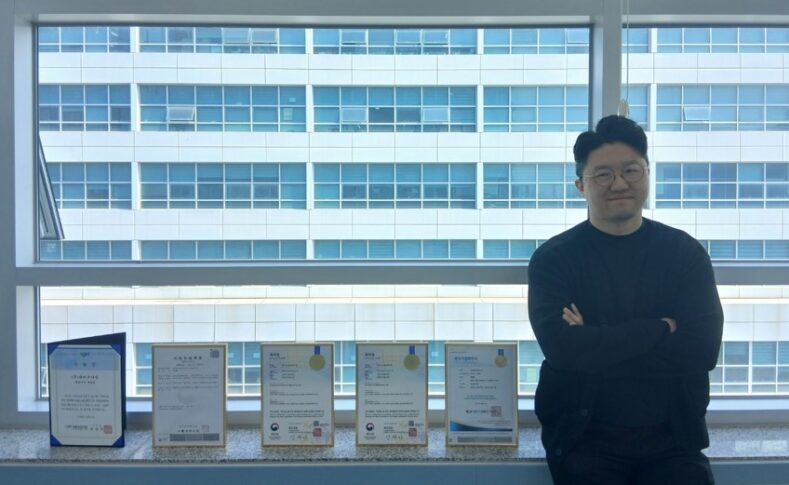
CEO Park Jang-heung expressed his ambition, saying, “Beyond innovative technological capabilities, we want to establish ourselves as a technology partner that our customers can trust.”
Five Nine's technology is evaluated as a future-oriented industrial model that simultaneously seeks to solve not only resource supply issues through waste recycling, but also strengthen national resource security and environmental issues. Attention is focused on whether their approach of redefining the value of waste and converting it into a high value-added resource can present a new standard for the circular economy.
You must be logged in to post a comment.