



Until a few years ago, most of the premium carbonated water enjoyed at Jeju hotels and cafes was imported. Even though Jeju has the highest density of hotels and cafes in the country, it was difficult to find domestically produced premium carbonated water that utilized local resources.
However, 'Tansan Oreum', a carbonated water product using Jeju lava seawater, has been selected as the official sponsor of APEC 2025, and is raising the status of premium beverages in Korea on the international stage. CEO Lee Gwang-hee (38), who transformed from a photo studio operator to a food and beverage brand founder, aims to grow into a global water brand that stands shoulder to shoulder with Evian and Perrier after three years of technology development and market verification. CEO Lee Gwang-hee has laid out his vision as "a brand that introduces Jeju's nature to the world."
From a labor-intensive photo studio to a scalable brand
His entrepreneurial journey began with an unexpected experience. After moving to Jeju, he ran a concept photo studio with nature as the background for five years, but he realized the structural limitations of time and sales. The decisive moment was his wife’s pregnancy.
“The idea came to me when I saw my wife, who had to avoid spicy foods during pregnancy, drinking carbonated water frequently. Minerals are important for the formation of the fetal blood and flesh (extracellular fluid). Carbonation has the effect of relieving indigestion and bloating during pregnancy, so I saw the potential as a healthy alternative drink.”
The market research results presented a clear opportunity. Jeju had the highest density of hotels and cafes in the country, but most of them were using imported glass bottled carbonated water. I was convinced that this demand could be replaced with domestic premium products. And I immediately started developing carbonated water based on Jeju lava seawater.
The brand name 'Tansan Oreum' has a hidden strategic intention. It combines the image of Jeju's volcanic crater terrain, Oreum, and carbon dioxide rising upwards. It is not simply a borrowing of a place name, but contains a philosophy that elevates both the brand and consumers.
A notable part of the initial product strategy is the bold pivot. They started out with the concept of ‘flower scent’ to differentiate themselves, but consumer testing showed a high level of resistance. So they quickly shifted their direction to the citrus series. They currently have a product line centered on Jeju fruits, including plain, tangerine, hallabong, and lemon.
The continued success of Wadi's crowdfunding has become decisive evidence of market verification. CEO Lee Kwang-hee used funding not as a simple sales channel, but as an opportunity to collect consumer response data. The branding strategy centered on keywords such as 'Jeju', 'strong carbonation', and 'zero calories', and the emotional message of 'Adding Jeju to your daily life' were effective.
“After funding, we improved the glass bottle from the ready-made bottle to our own mold based on actual consumer feedback. We are also continuously upgrading details from label adhesiveness to product taste balance.”
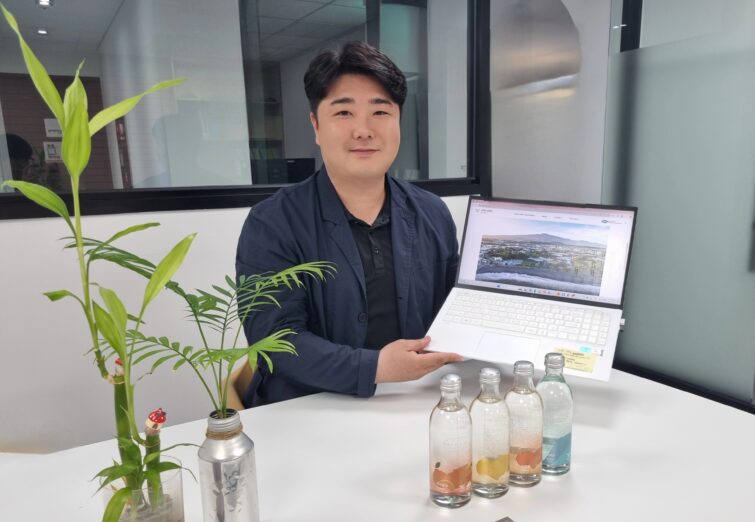
3 years of technology development and implementation of Jeju philosophy
The differentiating factor of Carbonated Oreum is its own ‘micro-carbonation technology’ that was developed over a period of three years. The initial product received feedback that the bubble size was uneven and the taste was rough. To solve this, the micro-bubble generation device and injection timing control algorithm were improved.
“The key is to uniformly size the bubbles during the carbonation process and precisely control the injection time and pressure. As a result, we were able to achieve a ‘soft yet strong refreshing sensation’ with small bubbles but high carbonation density.”
The raw material of the product, Jeju lava seawater, is a symbolic material that shows the brand philosophy. Unlike existing mineral water that uses groundwater, it is a mineral water based on seawater, so there is no risk of depletion and it reduces the burden on the ecosystem. It is also an alternative approach to the depletion of groundwater and sinkhole problems in the Jeju region.
Environmental considerations are embedded throughout the entire product design. Reusable glass bottles are used instead of disposable ones. Recycled raw materials are used in the production process. CEO Lee Kwang-hee emphasized, “Customers are not simply consuming beverages, but are consuming Jeju’s emotions and philosophy.”
The main consumer group is women in their 30s and 40s. They value health and emotions and tend to express their lifestyle through consumption. During the product development stage, preferred fragrance combinations and package designs were derived through 1:1 interviews and tasting evaluations with actual consumers.
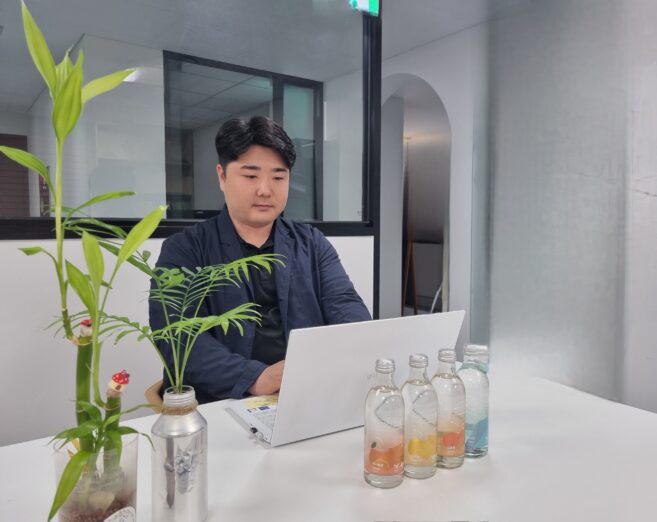
From APEC sponsor to global brand
Being selected as the official sponsor of APEC 2025 serves as a bridgehead for Tansan Oreum’s global expansion. It is an opportunity to promote ‘Jeju Premium Carbonated Water’ at an international event attended by domestic and international political and business figures and global buyers.
“Tansan Oreum’s eco-friendly, local, and clean-label-oriented brand identity is in line with the global food and beverage market trends. Through this sponsorship, we plan to accelerate our entry into global channels such as hotels, resorts, and airport duty-free shops.”
The product line is composed mainly of citrus products for permanent sale. We are also considering limited edition seasonal products. In the mid to long term, we are also planning to develop non-alcoholic sparkling products or sparkling mixers using Jeju fruits and herbs.
CEO Lee Kwang-hee's vision for 10 years from now is clear. Carbonated Oreum will be available in all domestic hotels and cafes, and Jeju mineral carbonated water will become the standard in overseas premium distribution channels. The ultimate goal is to grow into a global premium water brand that competes with Evian and Perrier.
The concern for sustainability is also specific. The goal is to invest a portion of sales in marine waste cleanup and ocean conservation programs, thereby creating a virtuous cycle of brand growth and improvement of Jeju’s marine environment.
“Tansan Oreum will become a brand that realizes a sustainable flow that is born from nature, passes through people, and returns to nature again.”
Lee Gwang-hee, the CEO of the 8th Jeju The Big Tomorrow Center, also expressed regret about the local startup ecosystem. He pointed out that institutional support is limited due to the lack of legal definitions or ordinances for local creators. In particular, he emphasized the need for a local startup fostering system, given Jeju’s characteristics of having many startups centered on nature, tourism, and content rather than tech.
“We need to get away from the idea that we have to be perfectly prepared to start. Most startups are a series of trial and error and verification processes. Even in an environment with limited resources like Jeju, if you have creativity and sincerity to grow with the region, the path will open.”
The journey of carbonated water that started with Jeju lava seawater is now expanding to the global stage. Based on the brand competitiveness verified on the international platform called APEC, attention is being paid to the growth potential of CEO Lee Kwang-hee's vision of a 'global premium water brand'.
※ This interview is part of a series planned in collaboration with startup media Venture Square, targeting excellent startups recommended by the Association in celebration of its 30th anniversary. It will be divided into three areas: 'AI·Data·Digital Solutions', 'Bio·Food·Local Brands', and 'Content·Culture·Web 3.0'.
You must be logged in to post a comment.