


Just over a decade ago, the domestic electric bicycle market was a complete mess. The market was polarized between high-priced imported products and low-priced Chinese products, unclear after-sales service, and designs and performance that did not take practical use into account. Consumers had difficulty finding bicycles that suited their needs, and post-purchase management was daunting. In this market vacuum, Motovelo appeared in 2017.
“How about a cup of strong coffee?” Before the interview began, CEO Lee Jong-ho recommended an espresso that he personally made. His fingertips had a heavy craftsman’s aura. From the meticulousness of making coffee to the philosophy of making electric bicycles, he gave off a strong impression as someone who puts his heart into everything.
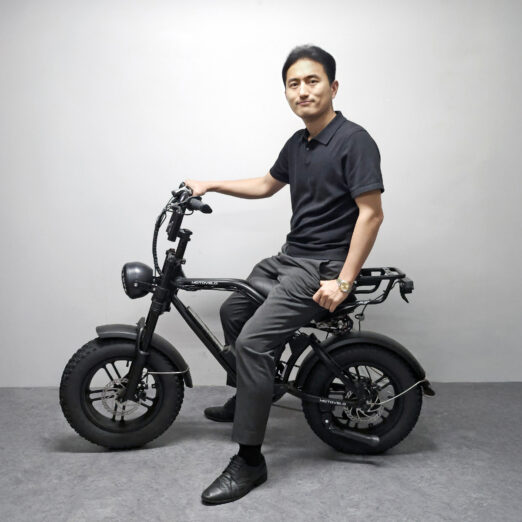
CEO Lee Jong-ho is confident that electric bicycles are not just vehicles, but a lifestyle and the center of future mobility. Motovelo, which established its position in the domestic electric bicycle market in just seven years since its establishment in 2017, has grown into a company with annual sales of 20 billion won. It is evaluated that the strategy of targeting consumer needs with a segmented lineup for delivery, commuting, and family use was effective.

“When I first started out, I visited about 500 bicycle stores one by one.” At the time, he said he went to bicycle stores all over the country wearing jeans and a T-shirt. “Consumer needs related to delivery skyrocketed before and after COVID-19. We accurately captured this through market research and launched an electric bicycle that can be equipped with a delivery box and can travel long distances at the right time. We also planned a family mobility product that can be used with children. These products fit the trend of the times.”
Even during the interview, CEO Lee Jong-ho's cell phone rang nonstop. From problems with the production line to meeting schedules with overseas buyers, he was involved in every matter.
“Just a moment,” he said, taking the call and giving a short instruction. “There is a problem with the new battery inspection process. We do not compromise on quality.”
I thought that this obsession with detail might be the secret to Motovelo’s quality competitiveness.
CEO Lee Jong-ho expressed regret about the fact that the word 'startup' is mainly limited to software-based IT companies. "The fact that most successful startups are software-based is related to the reality of the manufacturing industry in Korea. However, global companies such as DJI, Tesla, and Xiaomi also started as manufacturing-based startups." His voice was filled with the earnest desire to have the value of hardware startups recognized.
CEO Lee Jong-ho showed us a prototype of a new electric bicycle that is scheduled to be released in the middle of the interview. He emphasized, “The current business environment is the era of the Internet of Things or ICT,” while running his fingers over the curves and welds of the frame. “The future is a business model that meets consumer needs by adding IT to hardware.” Under this philosophy, Motovelo aims to grow from a simple electric bicycle manufacturer to an ICT platform company.
Having established a factory in Dongguan, China, expanded domestic production lines, and established a global production dualization system, Motovelo is now targeting overseas markets. He secured production competitiveness by establishing a local corporation in China, and now plans to advance step by step into Southeast Asia, the Americas, and Europe. His finger was drawing Motovelo’s future territory on the map.
“While Asia is more likely to use it for daily life, Europe and the Americas are more likely to use it for leisure.” CEO Lee Jong-ho pointed to sample products and explained the regional characteristics in detail. “This is a model for the Southeast Asian market, and that is a product that meets European standards. It is important to develop products that fit the culture and needs of each region.”
The electric bike market has been greatly affected by various regulatory changes in recent years. CEO Lee Jong-ho pointed out that “as times change, the concept of transportation has changed. The sky has opened up and micro-mobility has emerged, but the roads, infrastructure, and licensing systems designed for cars in the past do not fit the reality.” He has continuously proposed a rational education-centered licensing system and road infrastructure improvement to the government by gathering the voices of the industry.
Motovelo’s A/S network is dense. CEO Lee Jong-ho emphasized the importance of ‘brand experience’ while pointing to a map showing four direct A/S centers and 400 partner stores nationwide. “In many cases, purchasing decisions for electric bicycles are made through actual riding or reviews from people with similar needs. After-sales service is our core value.”

At the end of the interview, when asked about Motovelo’s future in five years, CEO Lee Jong-ho’s eyes hardened. “Motovelo will become a mobility-based ICT specialized brand, not a hardware-based mobility brand.”
He stood up and drew his own vision for the future on the conference room whiteboard and explained, “We are continuously expanding related business divisions and personnel to transform from a simple manufacturing company into an IT platform company.”
He delivered his final message with a serious expression. “It is unfortunate that mobility products such as electric bicycles and electric scooters are perceived as being limited to young people or for specific purposes. Overseas, they have already replaced a large portion of the bicycle market and have become a part of daily life.”
He emphasized, “Mobility companies that advance into the global market can emerge even in Korea. We will show that possibility.”
CEO Lee Jong-ho was a craftsman who dreamed of future mobility through the harmony of steel and electronic circuits. The electric bicycles born from his fingertips were not just a means of transportation, but were becoming part of our lives as a fusion of the environment, lifestyle, and technology.

You must be logged in to post a comment.