



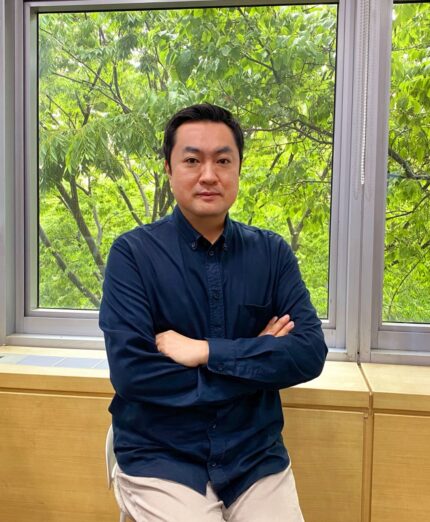
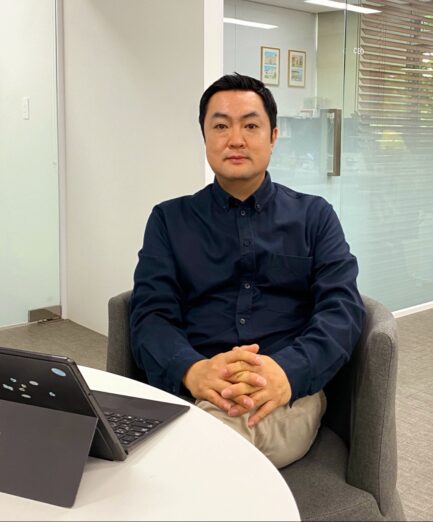
In front of a table with a cold cup of espresso, CEO Choi Hyun-seok speaks passionately, gesturing with his hands. His expression shows his confidence in the future of digital fashion, but at the same time, he also feels a balanced perspective that faces the harsh reality of the market.
“What tech companies often miss is not technical perfection, but actual use in the market.” CEO Choi Hyun-seok’s words are not simply praise for technology, but rather the cool-headedness of a startup leader who has experienced countless trials and errors.
The Value of Fashion Redefined in the Digital World
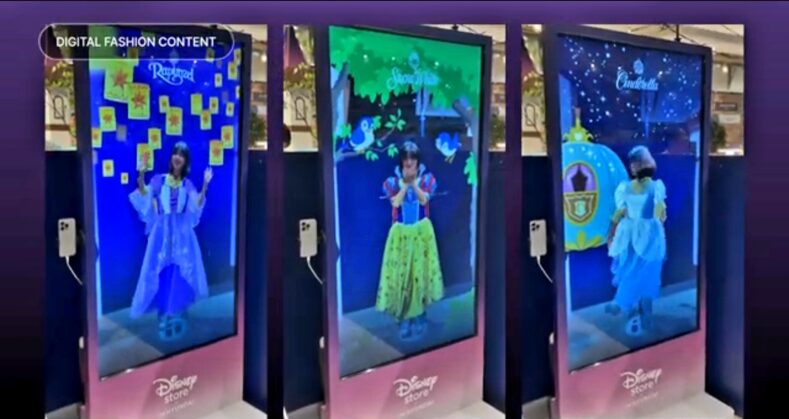
This is a common scene in large department store pop-up stores. People are crowded in a small space, and long lines form in front of the fitting room. However, in stores where Passker’s AR fitting solution has been introduced, the scenery is different. It has become a familiar sight to see AI virtually fitting various clothes in real time for customers standing in front of a screen.
“In the past, digital fashion was limited to accessories or visual objects that simply decorated game characters. However, now, it is opening up completely new industry horizons through linkages with the metaverse, NFT, and the real economy.”
While listening to his explanation, I experienced Passker's AR fitting system on site. When I touched the product I wanted, the selected clothes were naturally put on the screen where my appearance was reflected. I was able to try out various styles by changing the color and size, and if I liked a product, I could scan the QR code and buy it right away. The entire process was completed in just a few minutes.
After going through this experience, I could feel that CEO Choi Hyun-seok’s words, “a fundamental change in the way fashion brands and consumers communicate,” were not mere rhetoric.
A perfect harmony of technology and creativity
I was able to see a demonstration of Passker's AI lookbook solution. It was impressive to see how one actual clothing photo was transformed into dozens of professional lookbook images with various models, backgrounds, and poses.
“What I am always grateful for from our members is that they are constantly improving their services despite their emotional wounds.” CEO Choi Hyun-seok’s voice was filled with sincere gratitude. He seemed to place greater importance on the process of overcoming difficulties together with his members than on the glamorous appearance of a technology startup.
“Many technology platforms become frameworks that limit creativity. We want to do the opposite and create tools that allow designers to use their imagination more freely.”
However, CEO Choi Hyun-seok also showed caution against excessive optimism about technology. “Although AI is evolving rapidly and frighteningly, the AI fitting field is still on a long journey. Especially in areas like fashion where emotion and aesthetics are important, a technical approach alone has its limitations.”
This statement reveals his sense of balance, which is not to fall into the trap of technological supremacy and not to lose sight of the essence of fashion. In fact, Passker has proven its technological prowess by applying for eight patents, but CEO Choi Hyun-seok emphasized, “The difference is ultimately the know-how accumulated through use in the market.”
Steps towards a sustainable future
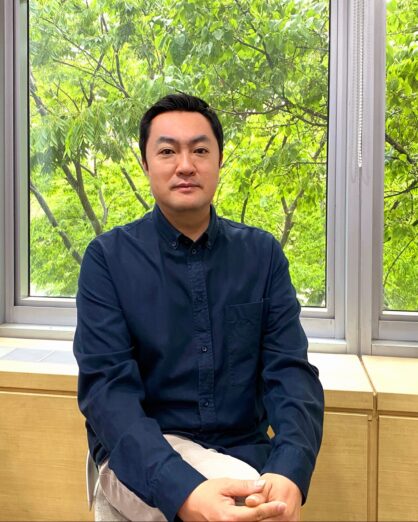
CEO Choi Hyun-seok’s voice became even more serious when he talked about sustainability. “I don’t think digital fashion is an ‘absolute solution’ to environmental problems.” I listened to his honest confession. “However, if used correctly, it can be a powerful ‘catalyst’ for the sustainability of the fashion industry.”
During the interview, he paused for a moment and then continued, “I am a father of two sons. I work with the hope that the world I leave to my children will be a better place than it is now.” His words conveyed his sincere concerns as a person, not just as an entrepreneur.
CEO Choi Hyun-seok gave specific examples of how digital sampling can reduce the use of real fabrics and materials, prevent overproduction, and reduce dependence on physical consumption. However, his expression showed a cool-headedness that recognized the gap between ideals and reality.
“The key is ‘conscious digitalization.’ The technology itself is value-neutral, but the results vary depending on the philosophy and goals for which it is used.”
On the other hand, he also expressed concern about the current market situation. “The market environment has not been good recently, so we are also adjusting the speed of our entry into Japan.” It was impressive that he did not hide the realistic challenges he faced as a startup CEO.
The future of digital fashion with infinite possibilities
At the end of the interview, when asked about his vision for the next five years, CEO Choi Hyun-seok was lost in thought for a moment. “To be honest, the current market environment is not good, so it is burdensome to talk about the distant future.” His honest confession made us realize the realistic difficulties of the startup ecosystem.
Nevertheless, he presented four goals: building the world's No. 1 digital fashion platform, completing an open digital fashion ecosystem, providing AI-based hyper-personalized fashion experience, and being recognized as a solution for sustainable fashion.
“We aim to create an ecosystem where designers can generate real revenue and fandom, rather than a simple ‘showcase.’”



Global expansion and expansion of fashion tech
In February, FNS Holdings attracted its first overseas investment from Japan's Digital Hollywood. Digital Hollywood is an educational company under Culture Convenience Club (CCC), which owns the famous Japanese bookstore Tsutaya. In July 2022, it signed a business agreement with FNS Holdings for joint research in the fashion technology field.
“The biggest challenge in entering the global market is localization, so I feel reassured that I am working with Digital Hollywood.” His expression brightened. “Starting with the Japanese market, our goal is to activate digital fashion globally, prevent indiscriminate product production, and build a sustainable fashion ecosystem.”
This investment is significant in that it is a follow-up investment following the KRW 10 billion Series B round in April 2022. Takeshi Yoshimura, CEO of Digital Hollywood, said, “The technological fusion based on FNS Holdings’ accumulated know-how and expertise is impressive.”
CEO Choi Hyun-seok recently explained the phenomenon of fashion tech startups receiving attention even in a market environment where investment is frozen. “The global fashion industry is currently one of the world’s top five industries with a size of approximately 1.7 trillion dollars, and is expected to form a super-large market of approximately 2 trillion dollars by 2026. Fashion tech will be the key driving force behind this high growth.”
He also mentioned the achievements of other startups active in the same fashion tech field. He emphasized the growth potential of the domestic fashion tech ecosystem, reporting that eco-friendly material basewear company 'Supui', fashion marketing platform 'Stylemate', and generative AI-based fashion startup 'Viceversa' have recently succeeded in attracting investment.
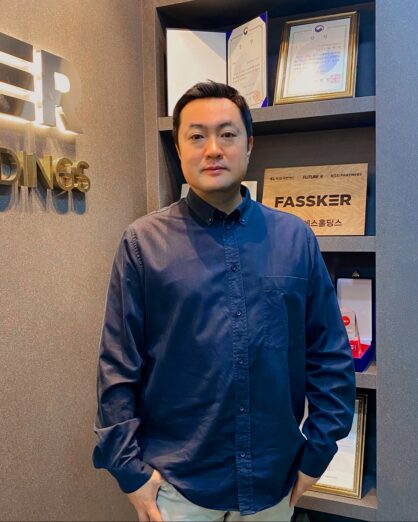
CEO Choi Hyun-seok introduced Passker’s latest projects. From global luxury brands to sportswear and collaborations with indie designers, Passker has already produced content for over 140 brands and in 7 countries.
His eyes still showed confidence in the bright future of digital fashion. At the same time, he also felt a coolness in facing realistic challenges. Passker’s journey is heading towards an undefined and unknown territory, just like the digital fashion industry itself.

You must be logged in to post a comment.