



“The economic situation facing our venture companies is dire. Disastrous regulations, the ongoing three-year-old phenomenon, difficulties in securing funds, global tariff policies, and other domestic and international uncertainties are hindering the growth of venture companies.”
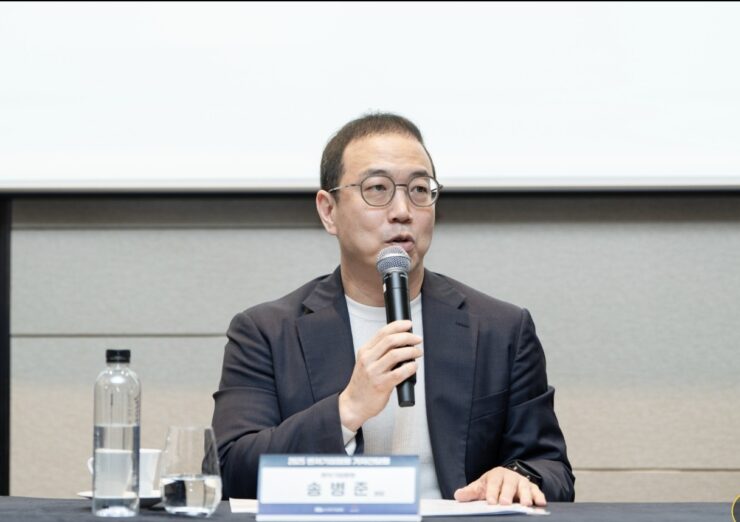
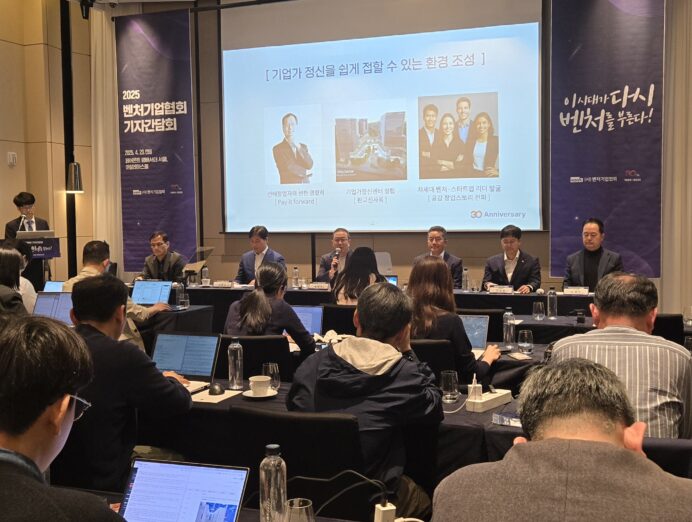
At the '2025 Venture Business Association Press Conference' held at the Fairmont Ambassador Seoul Azalea Hall in Yeongdeungpo-gu, Seoul on the 29th, Association Chairman Song Byeong-jun appealed to the venture industry about its crisis. The event was held in a serious atmosphere with about 70 industry officials and reporters in attendance.
Venture industry records first deficit… “Restoration of venture ecosystem that leads innovation beyond survival is urgent”
Association Chairman Song Byeong-jun diagnosed the current situation as “the worst situation, with innovative technology-based startups decreasing and venture companies recording operating losses.” In fact, according to a survey on venture companies, the average operating profit per company is -1.1 billion won. This is the first time a deficit has been recorded since the survey.
Song Byung-jun, the 12th Chairman of the Korea Venture Business Association (and Chairman of Com2uS), has come up with measures to save venture businesses just two months after taking office. Standing on stage in a dark gray casual jacket, he presented a goal of expanding the venture investment market, currently worth 12 trillion won, to 50 trillion won.
This press conference was the first official press conference since the inauguration of Chairman Song Byeong-jun. It was a place to announce the main business direction and policy tasks of the Venture Business Association, which celebrated its 30th anniversary this year. At the entrance to the conference room, there was a slogan that said, “30 years of venture, this era calls for venture again.”
“Regulation is the most effective policy to save businesses without a budget”
Chairman Song Byeong-jun presented restoration of the venture ecosystem, regulatory innovation, establishment of a private-sector-led AX ecosystem platform, expansion of entrepreneurship, and expansion of the association's scope as key projects to be promoted during his term. He emphasized each key issue with strength in his voice during his presentation.
Regarding regulatory innovation, he emphasized that it is “the most effective and efficient policy tool that can support companies without a budget.” According to a survey of venture companies, 73% of the responding companies answered that “Korea’s industrial regulation intensity is stronger than that of other countries,” and 42.5% answered that it is “very strong.”
Association Chairman Song Byeong-jun pointed out that “the existing imperial regulatory system, regulations on the entry of new industries, and newly emerging regulations are working in combination to hinder innovation and slow down economic growth.”
“Flexible working hours and expanded financial support are essential for ventures to make a comeback”
On this day, the association announced three key policy tasks: strengthening financial liquidity in the innovative industry, making working hours more flexible, and introducing a regulatory innovation standard system.
Association Chairman Song Byeong-jun expressed concern, saying, “All major indicators related to the venture ecosystem have been trending downward since 2021,” and “In particular, the number of technology-based startups has been decreasing for three consecutive years.”
In order to expand the venture investment market, the association is pushing for mandatory investment in venture startups (5% or more) for 68 statutory funds and allowing retirement pension venture investment. It also proposed raising the venture fund income deduction rate from 5% to 10% and the private venture fund tax deduction rate from 8% to 15%.
Regarding flexible working hours, he said, “The basic principle is to leave it to the autonomy of companies based on labor-management agreement,” and requested, “Expand the overtime work unit from weekly to monthly, quarterly, half-yearly, and yearly, and allow an exception to the 52-hour workweek for key R&D personnel at venture companies.”
The regulatory innovation standard system is a way to apply the regulatory standards of advanced innovation countries such as the United States to Korea. Association Chairman Song Byeong-jun said, “It is right to boldly give advance approval to industries that have already been proven through trial and error.”
Venture 30th Anniversary Commemorative Project and Association Expansion
This year marks the 30th anniversary of the establishment of the Venture Business Association in 1995. The association has designated December 1st to 5th as ‘Venture Week’ and plans to hold various commemorative events. The association introduced the 30th anniversary logo and event schedule through the screen.
Under the slogan, “This era calls for ventures again,” we are carrying out public relations campaigns, SNS challenges, social contribution activities with member companies, and a project to discover 30 next-generation leaders. We also plan to establish the “Korea Entrepreneurship Center” in the new Pangyo building.
Chairman Song Byung-jun announced that he has recruited leading companies in various industries, including AI, cultural content, and beauty, as executives to expand the association’s scope. Newly joining the association are Furiosa AI, Able Corporation, Toss, SM Entertainment, Leonez, Grace, and Stage 5.
“Venture companies desperate for survival feel a greater sense of responsibility”
The meeting was also attended by association executives including Senior Vice President Lee Yong-gyun (CEO of Alsquare), Vice President Kim Ki-hyeok (CEO of SWM), and Director Oh Sang-hoon (CEO of Luxrobo) who shared current issues in the industry.
Chairman Song Byeong-jun emphasized, “Challenging and discovering new markets in Korea is the mission that venture companies must have,” and “We will continue to challenge and innovate to create opportunities for Korea to make another leap forward.”
He then said about his thoughts after two months in office, “I feel a great sense of responsibility as I am working hard myself,” and “I want to play a role in supporting the economy by making sure that the voices of innovative companies in the venture industry are heard well.” He added, “Recently, many ventures and startups are desperate to reduce costs. And they are focused on survival,” and “These companies must survive in order to innovate and build up the national economy.”
During the Q&A session, a question was raised about the “limitations of the first generation of venture companies.” One reporter pointed out the social role of venture companies, saying, “Because they grew only with a focus on technology, they failed to form a national consensus.”
In response, Director Oh Sang-hoon said, “I will show you a case of young entrepreneurs like us succeeding,” and “I will actively explore overseas markets and work to gain national attention.” Association Chairman Song Byeong-jun also responded, “We need to reflect on the entrepreneurial spirit and build consensus.”
According to the Korea Venture Business Association, currently, 38,000 venture businesses nationwide are generating sales of 242 trillion won (about 10% of GDP) and employing 985,000 people. There are 908 venture businesses with sales of over 100 billion won, and 25 with sales of over 1 trillion won.
You must be logged in to post a comment.