



Securing spatial information security superiority with domestic technology
Building a virtuous cycle where B2C freebies lead to B2B service sales
“We will leap forward as a global unicorn through an IPO next year”
The question of “Is it possible?” never left my mind. Up until now, interior design had relied on the hands and imagination of professionals. I imagined the space I would complete by looking at the drawings on paper. I estimated the overall atmosphere with a few material samples. Even if I wanted to place the furniture I wanted, I had no choice but to follow the experts who said, “That would be difficult in terms of space.” The estimates were unclear, and additional costs after the contract was taken for granted as a custom.
However, the screen displayed on the tablet that Lee Joo-seong, CEO of Archisketch (42), brought with him, instantly blew away any doubts. With just a few touches of the finger, the empty space was filled with a completed interior. When one piece of furniture was moved to a different location, the lighting and atmosphere naturally changed. What was even more surprising was the real-time moving estimate with each change.
“Interior design has traditionally been the domain of professionals, with consumers having to imagine the end result. We are eliminating this uncertainty.”
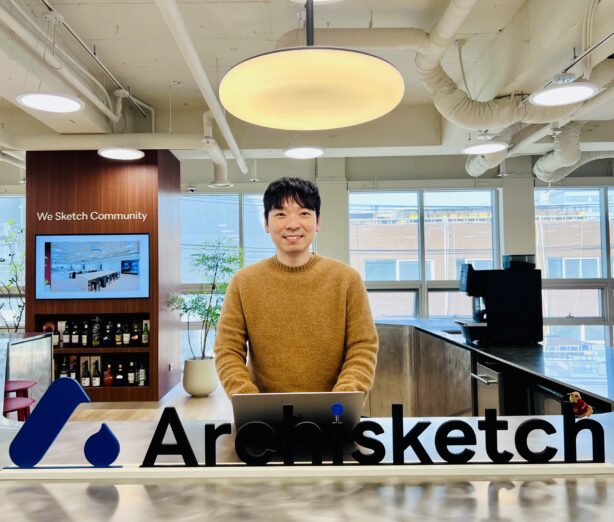
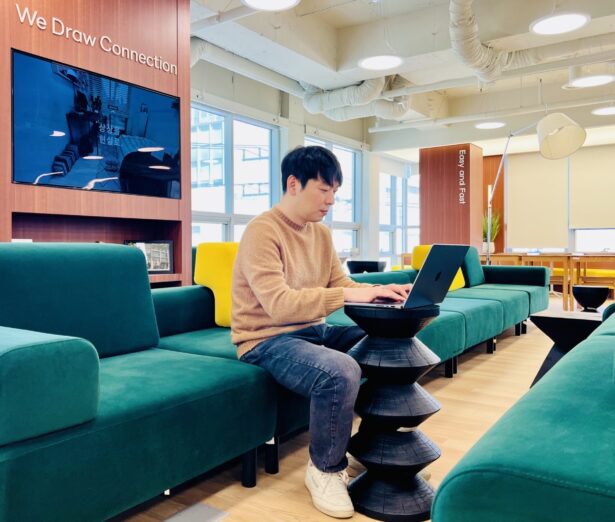
Lee Ju-seong, CEO of Archisketch, whom we met at the Seongsu-dong, Seoul office, expressed his determination to solve the chronic problems of the interior industry—opaque estimates and consumer distrust—with technology. Across the conference room, designers were seen concentrating on 3D modeling work in front of monitors. Next to them, various material samples and color charts were hanging on the wall.
“That’s the problem we’re trying to solve. We’re trying to make it real, not imagined.”
Founded in 2018, Archisketch is a proptech company that develops 3D interior solutions. It has also attracted investment from Alsquare, a leading domestic commercial real estate comprehensive service provider. It recently launched a 3D interior community mobile app that uses AI and is aiming for an IPO next year. It is growing despite the real estate market slump, recording sales growth of over 150% compared to last year.
Solving Security Risks with Domestic Technology… “Chinese Product Anxiety is Our Opportunity”
Recently, as the possibility of domestic spatial information leaks through Chinese software has emerged as a social issue, tensions in the related industries are rising. CEO Lee Ju-seong pointed to a tablet on the conference room table and spoke with a firm expression.
“Domestic spatial information must be safely managed using domestic technology and on domestic servers. Archisketch stores all data only on domestic cloud servers and processes it only with its own technology.”
He emphasized the process of guiding compliance with related laws, such as the Spatial Information Management Act, from the contract stage with clients. In particular, he did not hide the fact that the recent controversy over Chinese software was actually an opportunity for Archisketch, which is based on domestic technology.
“Customer anxiety is leading to our trust. Safe spatial information management through domestic technology and servers is not an option but a necessity.”
“A people-centered design platform, not just a simple photo”
His voice became filled with passion as he began talking about his recently released 3D interior community mobile app. He explained that the app is not simply a space to show pretty interior photos, but rather aims to be a “participatory design ecosystem” where designers, users, and brands can communicate together.
“What we’re building is something like a ‘GitHub for design’ – an ecosystem for sharing, collaborating, and evolving designs, not code.”
In particular, he revealed plans to strengthen creative-centered functions such as ‘virtual space feedback,’ ‘visual proposal sharing,’ and ‘design lab.’ Projects with famous brands such as ‘Today’s House,’ ‘Shinsegae Casa,’ ‘Duoback,’ and ‘LG Objet Collection’ have already been carried out through this platform.
What’s impressive is that the platform provides designers with opportunities to generate income through their creative activities. “We regularly hold ‘3D Design Challenges’ to create collaboration opportunities between famous brands and designers. This is our way of contributing to the development of the interior design industry even in a recessionary economy.”
“An opaque market where 10,000 won worth of materials are sold for 100,000 won, solved with AI”
The opacity of the interior market has long been pointed out as a problem. Lee Ju-seong put down his tablet, clasped his hands together, and spoke with a serious expression.
“What worries consumers the most is the suspicion that ‘Is it just me who is paying a high price?’ Through the ‘Smart Estimate Matching System,’ we are creating a transparent market where material costs and construction unit prices can be compared at a glance.”
He predicted that if they could check the price right away while adding or changing the interior in real time, trust would be built and the probability of a contract would increase. “There may be resistance because it is different from existing practices, but when winning one more order becomes important in a recession, transparency in the transaction will be a great weapon.”
“B2B SaaS but expanding the market with free service… 3.2% of 1 million annual users convert to paid service”
Although Archisketch is a B2B SaaS company, it is taking the strategy of providing its services free of charge to individual users. CEO Lee Ju-seong explained, “It is a structure where individual usage experiences directly lead to B2B.”
“Free services are a key driver of engagement, allowing individuals to experience the capabilities of our platform and connect with business referrals. Our annual conversion rate of 1 million users is approximately 3.2%, and many of these are in-house designers at companies with 100 or more employees.”
The core of the paid model to be released this year is said to be 'cloud collaboration tools', 'AI proposal automation', and 'team-based style analysis'. CEO Lee Ju-seong emphasized the philosophy that "balance is maintained by providing meaningful utility to both individuals and companies."
Global Expansion and IPO Strategy… “Building a Global Network for Design”
Akisketch has already entered Japan, Vietnam, and Malaysia, and is preparing to enter Taiwan and the United States. CEO Lee Ju-seong explained that each country has very different design tastes. “Japan is strong in ‘high-density detail,’ Vietnam in ‘futuristic sensibility,’ and Malaysia in ‘practicality.’”
He said that he is prioritizing 'risk management' and 'global compliance' as he prepares for listing next year. His words, "The inflow of funds through listing will be a catalyst for technology investment and overseas expansion," were full of confidence.
At the end of the interview, CEO Lee Ju-seong presented specific growth milestones, such as establishing a foothold in the North American market by 2026 and commercializing an AI interior design agent by 2027.
“We will position ourselves not as a simple proptech company, but as a platform company leading the digital transformation of the interior design industry.”
As I was wrapping up the interview, the last words that CEO Lee Ju-seong said were impressive.
“The vision of creating a world where anyone can easily design their own space remains unchanged. In that world, interior design will no longer be a lottery, but an art.”
You must be logged in to post a comment.