



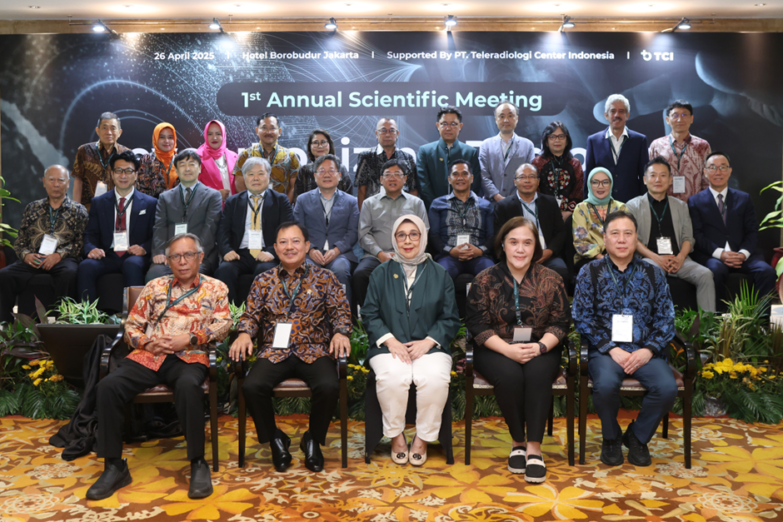
HealthHub, a medical imaging solution specialist, announced that it has successfully held an inauguration ceremony and the '2nd Asia Pacific Region Radiology Expert Invitation Symposium' on the 26th to announce the establishment of a medical imaging remote interpretation center in Indonesia and the full-scale start of remote interpretation services across Indonesia together with its local joint venture PT. Teleradiologi Center Indonesia (hereinafter PT. TCI).
Health Hub established PT. TCI in December last year to contribute to the development of Indonesia’s healthcare system by strengthening its medical image interpretation capabilities. The inauguration ceremony was attended by the Indonesian Radiology Specialists Association (PDSRKI) and the Interpreter Training Institute (LPMRKI) under the Ministry of Health, which formalized the supply of a remote interpretation platform and AI-based diagnostic assistance solutions and provided an opportunity to publicize the excellence of K-medicine. 13 major local media outlets, including Metro TV, Media Indonesia, and RRI.id, visited the event and engaged in a heated competition to cover the event, confirming the high interest of the media.
The 2nd Asia Pacific Radiology Symposium, which was held afterwards, was held under the theme of ‘Tuberculosis Screening and the Future of Radiology through AI’, and was attended by approximately 1,200 Indonesian radiologists, as well as PDSRKI, HIPTEK, organizations under the Ministry of Health, and telemedicine and medical imaging experts from Korea and Japan.
The symposium began with opening remarks and congratulatory remarks by Prof. Aziza G. Iksan (CEO of PT. TCI and President of the Indonesian Society of Thoracic Radiology), Prof. Daehee Kang (President of the Korean Society of Telemedicine and former Dean of Seoul National University College of Medicine), and former Minister of Health Terawan (currently Special Advisor to the President), emphasizing that PT. TCI can play an important role in the development of digital healthcare and telemedicine in Indonesia.
In the keynote speech, Dr. Nurdopo Baskoro (President of PDSRKI) diagnosed the current status and issues of medical imaging infrastructure in Indonesia, and Professor Aziza explained the importance and role of radiology in tuberculosis screening. Next, Professor Lee Ki-nam (former Secretary General of the International Society of Thoracic Radiology) shared theories on pulmonary tuberculosis image analysis and Korean cases, and Professor Kang Dae-hee introduced the current status of telemedicine development and tuberculosis management system in Korea. Professor Norio Nakata of Jikei University Hospital in Japan presented the latest AI technology introduced in the field of medical image interpretation, and Advisor Yoshitomo Furusawa of Irimoto Medical shared the current status and cases of remote interpretation in Japan to conclude the symposium.
The event specifically addressed the shortage of radiologists in Indonesia, which has the second highest tuberculosis incidence rate in the world, and the need for a remote interpretation platform and AI-based mass screening system to address this issue.
HealthHub has been building a remote interpretation infrastructure by supplying cloud-based PACS (Picture Archiving & Communication System) to large public hospitals in Indonesia since 2023, and recently, it has been providing SaaS-based PACS and AI diagnosis services for the first time in Indonesia. Through this, various institutions such as hospitals, radiology clinics, and examination centers can easily participate in the remote interpretation platform, and it is also receiving attention from the government by starting the development of the 'Indonesian National Tuberculosis AI' with PDSRKI and LPMRKI.
Health Hub CEO Kim Ki-poong said, “We will continue to expand our remote medical imaging interpretation service based on PT. TCI, and contribute to the digital transformation and innovation of Indonesia’s healthcare through collaboration with the government and medical institutions.”
- See more related articles
You must be logged in to post a comment.