



-Successful transition from advertising-centric to IP business… Expansion into three major areas: kids, games, and entertainment
-Focusing on core business based on financial stability… “Expecting first surplus this year”
-Discovering future-oriented creators… Going beyond trends to evaluate sustainability
Founded in 2015, Sandbox Network (hereinafter referred to as Sandbox) grew rapidly with popular creators such as Dotty at a time when the concept of MCN (Multi-Channel Network) was unfamiliar. In particular, it has been proving the potential of the MCN business by standing out in the kids content sector and pioneering the domestic MCN market.
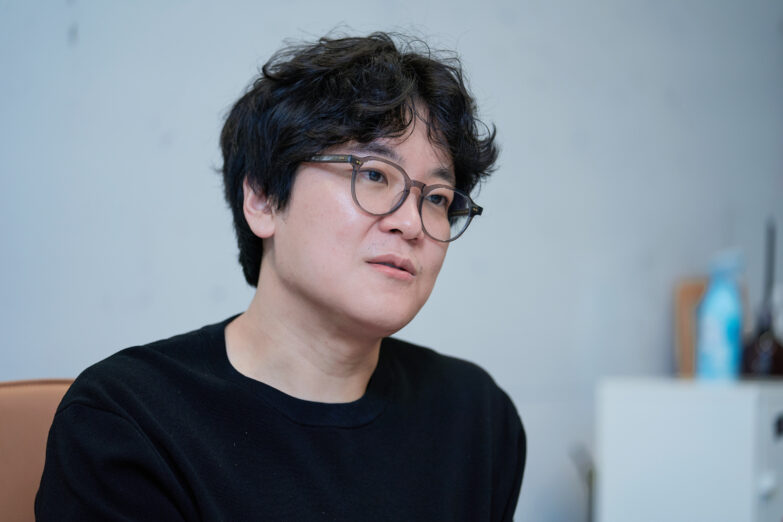
Lee Pil-seong, CEO of Sandbox, who we met at the office in Yongsan-gu, Seoul, emphasized mutual growth with creators as the company celebrated its 10th anniversary. “Sandbox’s customers are creators. It is important to continue what we have been doing and show trust as a partner,” he said. “The digital content industry is changing organically with the broadcasting and entertainment markets. The TV market’s shift to digital will accelerate further in the future. Sandbox will grow together with creators at the center of this change.”
“ The digital content market is entering a mature phase .”
The representative assessed that the MCN industry is in the initial stages of entering market maturity.
“A market is a place where the competitive environment changes according to changes in supply and demand. In the early stages of the market, demand greatly exceeded supply, so the market conditions were good. However, as time passed, supply increased explosively, competition became fierce, and the market environment worsened. Currently, supply and demand are in proper balance, and while some participants are leaving the market, other participants are finding their own unique roles. Through this process, the market is gradually stabilizing. The current MCN market can be said to be a market entering the early stages of maturity.”
Sandbox has been making strategic changes, expanding or reducing its business in response to market changes. Recently, as the MCN market has stabilized and entered a mature phase, Sandbox’s strategy has also been re-established. “In the past, we aimed to be a multiplayer that could demonstrate capabilities in all areas, but now we are concentrating our capabilities on our core businesses, namely IP (intellectual property rights) business and creator management,” said CEO Lee.
■ Reorganization into an IP-centered business
“We defined Sandbox as a ‘digital entertainment’ company, but I don’t think we understood that meaning exactly at the time. Since MCN itself was a new industry, we tried various things without a clear direction. There was confusion about our corporate identity during the continuous growth process, but after 10 years, we established our core business. We are focusing on digital platforms such as YouTube and social media. We came to the conclusion that Sandbox’s core business is to develop an entertainment business based on IP created on these digital platforms.”
Sandbox has been going through trial and error amidst the changes in the MCN market. It reestablished its identity as a ‘digital entertainment’ company around 2022, but it has also had to go through transitional changes such as restructuring its organization. This may have been an inevitable price to pay as a market leader.
Sandbox's redefinition of its business as 'digital entertainment' is not a simple change of terminology, but rather a fundamental paradigm shift in its business model and direction.
The core of this change lies in the transition to an IP-centered business structure. The representative emphasized that the essence of digital entertainment is to expand business centered on IPs formed through content production. This is a strategic approach that goes beyond the role of existing MCNs, which were limited to simply managing creator channels and distributing profits.
The transition to digital entertainment is also essential in terms of business sustainability. The existing MCN model is structured primarily on advertising revenue, making it vulnerable to market volatility and platform policy changes. The transition to digital entertainment means strengthening the OSMU (One Source Multi Use) strategy, which develops diversified revenue sources such as publishing, goods, licensing, and offline events.
This also implies a shift in thinking from creator-centered to IP-centered. Rather than relying solely on the popularity of individual creators, it is about evolving the content and characters they create into independent IPs to create sustainable value.
The redefinition as digital entertainment is also an expression of Sandbox’s strategic will to strengthen its competitiveness in an expanded market that transcends the boundaries of the existing entertainment industry. At a time when traditional media and entertainment companies are expanding into the digital realm, Sandbox has clearly established its vision to establish itself as a key player in the entertainment market based on its unique competitiveness as a digital native company.
Although advertising still accounts for the largest portion of sales, Sandbox's ultimate goal as a digital entertainment company is to expand its IP-based business.
■ IPization of kids, games, and entertainment content
Currently, Sandbox is operating with three business divisions: Kids, Games, and Entertainment, following the change in business from advertising-centered to IP-centered.
The kids content area has already evolved into a complete IP business model. Sandbox publishes an average of 60 books a year, and major publications are achieving success by being listed on bookstore bestsellers. Characters such as 'Baek & Ah', 'Red Underwear Yako', and 'Ddusik' have successfully established IP monetization through the publishing business. In addition to book publishing, IP is being utilized in various fields such as performances, musicals, goods, licensing, and animation production. CEO Lee said, "There are limits to a revenue structure centered on advertising. By quickly changing direction to the IP business, we were able to effectively expand our business area."
The subculture sector, including games, is in a transitional phase of shifting its business model from advertising-centered to IP-centered. It is expanding its business areas to digital licensing businesses such as merchandise businesses utilizing game streamers and virtual YouTubers with secured fandoms, offline event and pop-up store operations, music production with virtual YouTubers, and music videos, emoticons, and V-coloring utilizing this. CEO Lee explained, “There is a significant overlap between the game broadcast viewer base and the fan base that enjoys animation and subculture. In this area, new content forms such as virtual YouTubers are emerging and rapidly evolving into IP. In the past, we mainly relied on advertising or sponsorship revenue, but now we are diversifying our revenue through various IP businesses such as merchandise, events, and concerts.”
The success of IP in the fields of kids, games, and subcultures is due to the existence of a strong fandom. In addition, kids content and virtual YouTubers can have unique IP value independently of the creators, making it relatively easy to expand into the IP business.
The general entertainment (broadcasting and entertainment) sector, where it is difficult to have IPs for characters or worldviews separate from content creators, is a sector where the transition to IP business is occurring slowly. Sandbox is exploring IP business in the general entertainment sector in various ways.
■ Sustainable Creator Discovery Strategy
Influencer preferences are also evolving along with social changes. In the past, influencers who showed off their flashy lifestyles were in the spotlight, but now creators who show a friendly and natural side are gaining popularity. Representative examples include 'Haejju' and 'Jongjibubu'. 'Haejju' shares content about everyday life in Australia, while 'Jongjibubu' draws sympathy from many people with their friendly family image, like a neighboring family.
Sandbox is paying attention to these changes in creator trends and is discovering creators through in-depth analysis that goes beyond simple subscriber counts or views. The three key factors that Sandbox focuses on are as follows.
First, the sustainability of the content. Sandbox analyzes the fundamental reasons why viewers seek out the content and evaluates whether it has value that can be maintained in the long term, rather than being a temporary trend or a coincidental viral hit.
Second, it is to identify the creator's core strengths. We evaluate where the strengths lie among the individual's charm (charisma, friendliness, and fun personality), knowledge and expertise (deep understanding of a specific field), and content planning ability (original ideas, ability to identify trends). Most creators show strengths in a specific area, so we provide customized growth strategies that fit this.
Third, it is an evaluation from a future-oriented perspective. It considers 'values that will not change even after several decades' and 'the direction of change in the next 10 years'. Specifically, it predicts social changes and trends such as respect for diversity, the rise of family-centered values, and cross-cultural content, and discovers creators who fit these.
These three principles demonstrate Sandbox's philosophy of building sustainable partnerships with creators that can coexist with them over the long term, beyond temporary popularity or buzz.
Currently, Sandbox is partnering with approximately 300 teams of creators and providing comprehensive services such as content development and growth support, business consulting, and back-office operations. Through this systematic support, it plays an important role in strengthening the foundation for sustainable activities of creators.
“ This will be the first year of turning a profit ”
Sandbox is expected to turn a profit in 2025. The CEO said, “We improved our operating loss a lot last year, and it is almost certain that we will turn a profit this year. We plan to focus more on our main business based on financial stability.” This is the result of Sandbox focusing on its main business and reorganizing its business structure.
Lastly, the representative also emphasized the importance of entering the global market for the sustainable growth of the industry. “The Korean market is structured so that profitability decreases when competition becomes fierce. In the end, we have no choice but to look to the global market,” he said. “Because global expansion requires investment, it is difficult for leading companies to jump in as ‘first penguins.’ If there is support at the government level, more companies will be able to challenge the global market.”
Since its founding, Sandbox has worked with approximately 2,000 teams of creators. Now, with a clearer vision and strategy, it is creating a new paradigm for digital entertainment. The future of Sandbox, which builds a sustainable business model through healthy growth of the creator economy and maximization of IP value, is anticipated.
You must be logged in to post a comment.