



“Wireless IoT Revolution Reduces Cooling Costs by 24%”… Introduced at Lotte Mart Nam Saigon Branch, etc.

“The air conditioning system was operating normally. But at 2 p.m., the temperature in the first-floor store suddenly soared. Our system identified the cause. The air curtain at the entrance was broken. We detected this immediately and took action.”
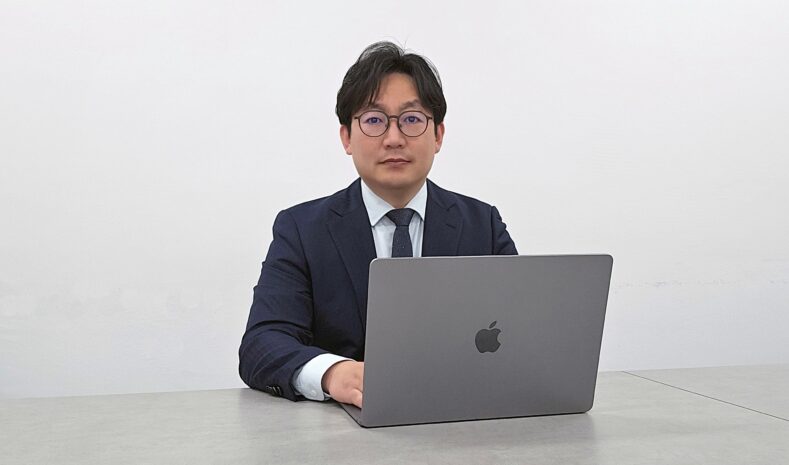
A cafe in Gangnam, Seoul. Kim Jeong-seok (44), CEO of Cloud &, unfolded his tablet and showed the real-time energy data of Lotte Mart Nam Saigon branch. The screen showed the building’s temperature, power usage, and air conditioner operation status in detail, like a patient’s medical chart. Between the colorful graphs and figures, he continued his explanation as if he were a specialist reading a medical certificate.
“It’s not just a number. It’s the pulse of the building.”
The 'PorestN' platform developed by CloudN looks into the energy consumption of a building in real time, diagnoses problems, and prescribes prescriptions. Just as a doctor analyzes a patient's records, this technology, which monitors the 'energy pulse' of a building 24 hours a day, has expanded beyond Korea to the Southeast Asian market.
Even during the interview, the notification sound from CEO Kim Jeong-seok's tablet kept ringing.
“Our distribution center cold storage warehouse in Ho Chi Minh City, Vietnam, is seeing an increase in energy usage of 15% over normal. I’ll have to check with our local team to see what’s going on.”
“Being able to manage the energy status of buildings around the world in real time like this is the power of digital transformation,” he said with a smile.
Shining a light on blind spots in facility management
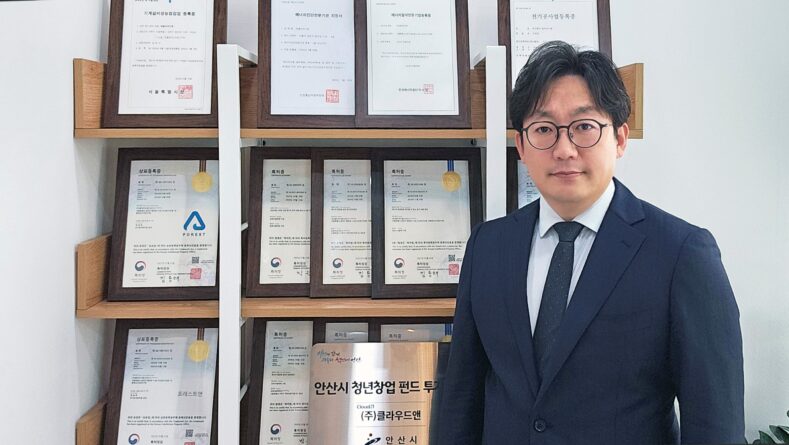
CEO Kim Jeong-seok took a sip of coffee and recalled the founding of Cloud& in 2015.
“Energy consumed in buildings accounts for a significant portion of total energy usage, but it was left in a blind spot of management. The building I worked in before had electricity bills of tens of millions of won every month, but I didn’t know exactly where and how it was being consumed.”
Cloud&’s starting point was this problem awareness.
“That’s why we set a mission to ‘take responsibility for the life of the building,’” he explained. “It’s not just about managing facilities, but helping buildings function smarter and safer.”
CEO Kim Jeong-seok pointed out the limitations of existing building energy management, which relies on expensive wired-based facilities. The solution was a wireless-based solution that combined a cloud-based platform and IoT technology.
“At that time, BEMS (Building Energy Management System) was an expensive solution that could only be introduced to large buildings. It cost hundreds of millions of won. We wanted to reduce this to one-tenth of the cost while creating an efficient system.”
The core competitiveness of the PorestN platform is a low-cost, high-efficiency system that utilizes LoRaWAN communication and self-developed IoT devices. CEO Kim Jeong-seok showed off a small sensor device he developed himself. This device, which is the size of a palm, is installed throughout the building to collect data.
“The wireless-based approach not only significantly reduces installation and maintenance costs, but also has less communication interference and can be applied reliably over a wide area. Since there is no need to lay cables, it can be easily applied to old buildings.”
CEO Kim Jeong-seok proudly explained while scrolling through the success stories stored on his tablet.
“Lotte Mart Nam Saigon Branch reduced its annual power consumption by 24% after implementing this solution. A large hospital in Seoul reduced its annual energy costs by about 20% despite its special nature of being open 24 hours a day. A complex shopping mall in Daejeon also saw similar results.”
He continued, pointing to colorful graphs and charts on the screen. “It’s not just a numbers game. Our system uses user-friendly data visualization and AI-based pattern analysis to identify energy waste in real time. It’s like a doctor looking at a patient’s blood test results to identify a disease.”
Customized prescriptions by building type, expanding treatment area to Southeast Asia
He emphasized that each building has its own unique characteristics, like a patient with a different constitution.
“Instead of a ‘one size fits all’ approach, we provide building type-specific algorithms and sensor configurations. That’s the key.”
He continued his explanation, making gestures with both hands.
“For hypermarkets, the key focus is on operating hours and energy usage for refrigeration and freezing equipment. On the other hand, for hospitals, patient safety and continuity are important, so they focus on predictive maintenance and emergency response systems. Hotels are different. This customized approach is the strength of our platform.”
His interest in the Southeast Asian market was particularly keen.
“Southeast Asia has a huge demand for energy management due to high electricity prices and long cooling periods. In Thailand and Vietnam alone, cooling is required all year round, and there are many places where electricity prices are higher than in Korea. We are already working with local companies in Thailand, Vietnam, Indonesia, and Singapore.”
CEO Kim Jeong-seok’s eyes sparkled. “When I went to Ho Chi Minh last month, the president of a large local distribution company saw our system and said, ‘This is magic.’”
He is currently carrying out various research and development projects, including the '24 Materials and Components Technology Development Project and the '25 Ultra-Gap Startup 1000+ Project, and also revealed additional research and development plans.
“Based on core technologies in building energy management, we will use it for R&D in expanding business areas such as FEMS (Factory Energy Management System) and building infrastructure for entering the global market. Specifically, we plan to invest in improving predictive control algorithms, developing new IoT devices, and improving UX/UI tailored to Southeast Asia. We are also in the process of recruiting excellent development talent.”
Manage the future of your building with data-driven predictions
CEO Kim Jeong-seok stood up from his seat and walked to the window. Pointing to the tall buildings outside, he shared his vision for the future.
“All those buildings you see are just energy-consuming structures now. But we want to make them ‘thinking buildings.’”
He explained about the international joint research with AI researchers from Nanyang Technological University in Singapore and Korea University. The project aims to commercialize predictive control technology.
“It should not simply show the current status, but be able to predict tomorrow’s weather, the demand for personnel next week, and the equipment load a month from now. That’s what makes a truly smart building.”
He returned to his seat and turned to the tablet. It was ten years' worth of energy data for a building.
“This big data, collected from various buildings over the years, is like a gold mine. Beyond simple energy savings, it can predict equipment failures, detect fire hazards, and even give advance warning of major disasters.”
He also emphasized the contribution in terms of ESG and carbon neutrality. “After introducing our solution, Lotte Mart reduced carbon emissions by thousands of tons per year. This is equivalent to the effect of planting tens of thousands of trees. I am proud that we are providing practical help to companies in their ESG management.”
Cloud&’s plans for Series A investment are ambitious. CEO Kim Jeong-seok’s first goal is to establish corporations in major Southeast Asian countries within three to five years.
“Our dream is to create a ‘building life cycle integrated platform.’ We want to build a system that helps make data-based decisions throughout the entire life cycle of a building, from design, construction, operation, maintenance, and disposal.”
His voice was full of confidence. “We will integrate all of this into one: smart building CAD/BIM solution linkage, CMMS, reconstruction simulation.”
CEO Kim Jeong-seok added one last word. “I see the building not as a simple structure, but as a ‘living entity’ that needs to be constantly managed. It’s like the relationship between a patient and a doctor. I want to become the building’s lifelong doctor.”
You must be logged in to post a comment.